Tarta de Queso: Spain’s Iconic Cheesecake
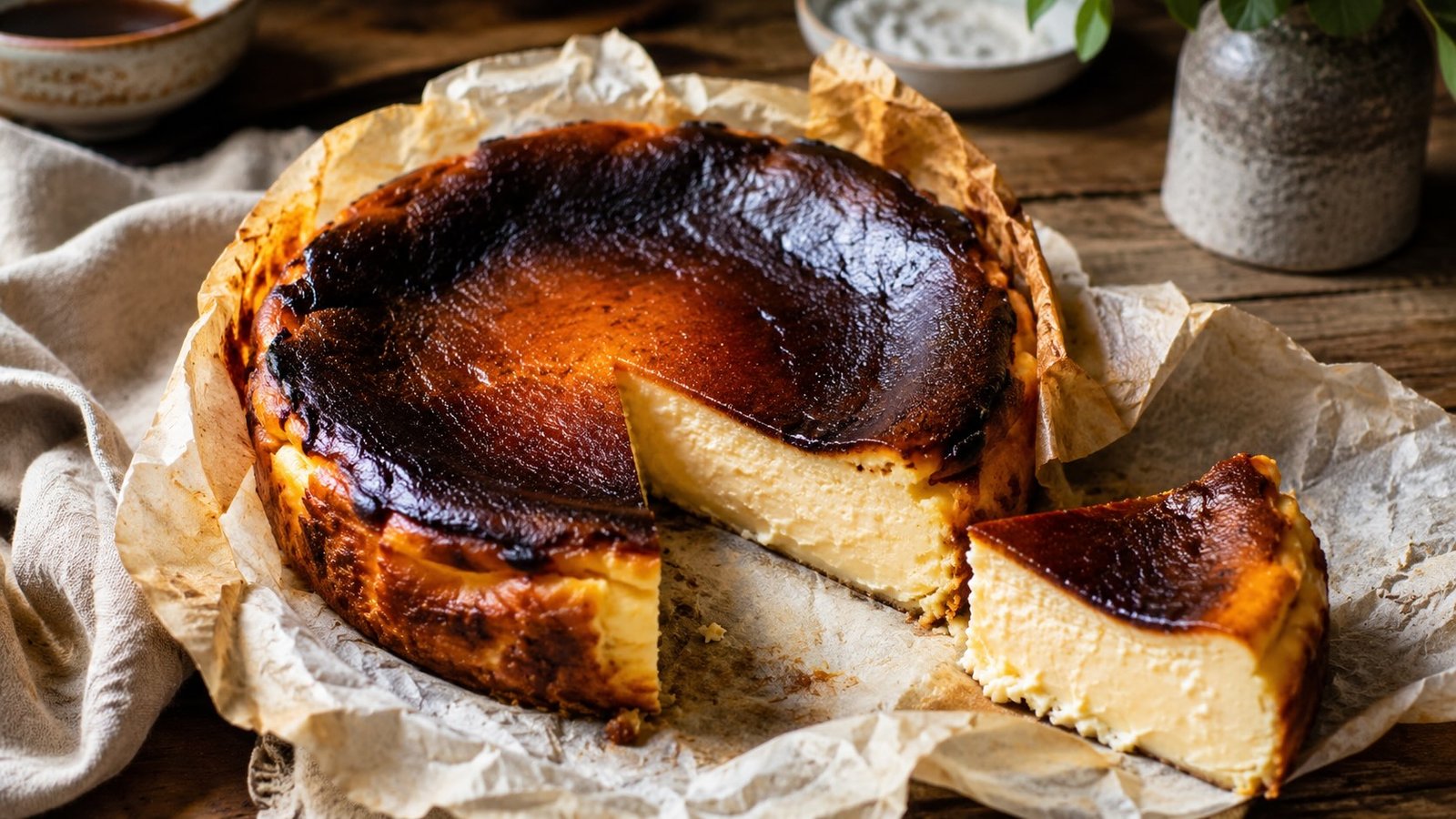
Tarta de queso is the Spanish cheesecake that looks as if someone forgot it in the oven, then somehow became a national treasure. It is golden, cracked, soft in the centre, and usually served without apology. No biscuit base, no neat little fruit coulis, no architectural fuss. Just cheese, eggs, sugar, cream, heat, and faith.
Its most famous modern version comes from the Basque Country, especially from San Sebastián. There, the now-iconic burnt Basque cheesecake became a restaurant legend. La Viña, a bar in San Sebastián, helped turn it into a global obsession. However, Spanish cheesecake itself is much older than one fashionable slice with a suntan.
Cheesecakes have been around for centuries in Europe. Spain, with its deep dairy traditions, had every reason to create its own versions. Fresh cheeses, sheep’s milk cheeses, soft curds, honey, eggs and local ovens all played their part. In many regions, tarta de queso was never one single thing. It was a family dessert, a village dessert, and a “use what we have” dessert.
That is part of its charm. In Galicia, you may find cheesecakes made with soft, mild cheeses and a gentler finish. In Cantabria, quesada pasiega is a close cousin, made with fresh cheese or curd, eggs, sugar, butter and flour. It is firmer, more rustic, and beautifully old-fashioned. In Asturias, creamy dairy gives local cheesecakes a rich, farmhouse personality. Meanwhile, the Basque version goes for drama. It rises, burns, collapses, and still wins the room.
The burnt top is not a mistake. Well, not anymore. High heat caramelises the sugar and dairy on the surface. As a result, you get a deep, bittersweet flavour that balances the creamy centre. The outside sets, the middle stays soft, and the whole thing tastes like cheesecake decided to stop being polite.
What makes tarta de queso special is its texture. A New York cheesecake is dense and proud of it. A classic British cheesecake often leans on a biscuit base and a chilled filling. Tarta de queso, however, is more relaxed. It can be custardy, wobbly, silky, or almost molten. The best ones feel slightly underdone in the centre, which is exactly the point.
The flavour is also beautifully direct. Good cream cheese brings softness. Eggs add structure and richness. Cream makes it lush. Sugar keeps things cheerful. A little flour or cornflour may help it hold together, although some versions skip it. Then the oven does the final magic trick.
Regional varieties depend heavily on the cheese. Some cooks use only cream cheese for a smooth, modern texture. Others add goat’s cheese for tang. Some include blue cheese in tiny amounts, which sounds alarming until you taste it. It gives depth without turning the pudding into a cheese board with trust issues.
There are also home-style versions with yoghurt, ricotta, requesón or curd cheese. These can be lighter and more delicate. However, the restaurant-style Basque version is usually richer and more theatrical. It wants a dark top, a trembling middle, and a room full of people pretending they will only have a small slice.
Drinks matter here, because tarta de queso is rich. Coffee is the obvious friend. A strong espresso cuts through the creaminess and makes the caramelised top taste even better. Meanwhile, a glass of chilled sherry can be wonderful. Try a sweet Pedro Ximénez if you want dessert on dessert, though be warned, subtlety has left the building.
For a lighter pairing, cava works nicely. Its bubbles clean the palate. A late-harvest white wine can also work, especially with a tangier cheesecake. However, avoid anything too heavy if the tart is already rich. You are eating a cake made mostly of cheese and cream, not training for a medieval banquet.
Other foods can complement it beautifully. Fresh berries bring acidity and colour. Roasted figs add softness and perfume. A spoonful of berry compote is lovely, although the tart really does not need much decoration. Toasted almonds can add crunch. A little orange zest on the side can make the whole plate feel brighter.
Still, the best accompaniment may be restraint. Tarta de queso is not shy. Serve it after grilled fish, roast vegetables, simple chicken, tapas, or a light salad-based meal. After a heavy stew, it can feel like an enthusiastic second dinner.
Health benefits are not exactly the headline act, but there are a few sensible points. Cheese and eggs provide protein. Dairy brings calcium. Eggs also contain nutrients such as vitamin B12 and choline. So yes, this dessert has more going on than plain sugar.
However, let us not pretend it is a spa treatment. Tarta de queso is usually high in saturated fat, sugar and calories. That is not a scandal. It is dessert. A modest slice is the civilised approach. People watching cholesterol, blood sugar or overall saturated fat intake should treat it as an occasional pleasure.
The good news is that it is satisfying. Because it is rich, a smaller portion can feel complete. You can also make lighter versions with some yoghurt or lower-fat soft cheese, although the texture will change. Still, sometimes the original deserves to be left alone. Not every dessert needs to be sent to reform school.
Where can you find tarta de queso? In Spain, it appears in bars, restaurants, bakeries and family kitchens. San Sebastián remains the spiritual capital of the burnt version. Madrid and Barcelona also have excellent examples, from traditional taverns to modern bakeries. In the UK, Spanish restaurants and Basque-inspired places often serve it, usually as “Basque cheesecake” or “burnt cheesecake”.
You can also find it at food markets, specialist bakeries and online cake shops. However, homemade tarta de queso has one major advantage. You control the wobble. Also, you get to eat the slightly collapsed middle with a spoon before anyone else notices.
Tarta de Queso Recipe
For a classic burnt Basque-style tarta de queso, use a deep 20cm springform tin. Line it with two large sheets of baking parchment, pressing them into the tin so the paper rises above the edge. It will look messy. That is correct. This cake is not here for origami.
You will need 600g full-fat cream cheese, 200g caster sugar, four large eggs, 300ml double cream, one teaspoon vanilla extract, a small pinch of salt, and 25g plain flour. You may also add one teaspoon of lemon zest if you want a fresher flavour.
Heat the oven to 220°C fan, or 240°C conventional. The high temperature matters. It creates the dark top and soft centre.
Put the cream cheese and sugar into a large bowl. Beat until smooth and glossy. Add the eggs one at a time, mixing well after each addition. Pour in the cream, vanilla and salt. Beat again until the mixture looks silky. Sift in the flour, then mix gently until no dry patches remain.
Pour the batter into the lined tin. Tap the tin lightly on the worktop to remove large air bubbles. Bake for 28 to 35 minutes. The top should be deeply brown, even slightly burnt in places. The centre should still wobble when you move the tin.
Remove it from the oven and let it cool completely in the tin. It will rise proudly, then collapse. Do not panic. That sunken centre is part of the charm. Chill it for at least four hours, although overnight is better.
Serve at cool room temperature rather than fridge-cold. This gives the centre a softer, creamier texture. Slice it with a warm knife, or simply surrender and use a spoon.
A little sea salt on top is excellent. Fresh berries are welcome. Coffee is almost compulsory. Silence at the table usually means success.