Crostata di Ricotta: Italy’s Creamy Answer to Cheesecake
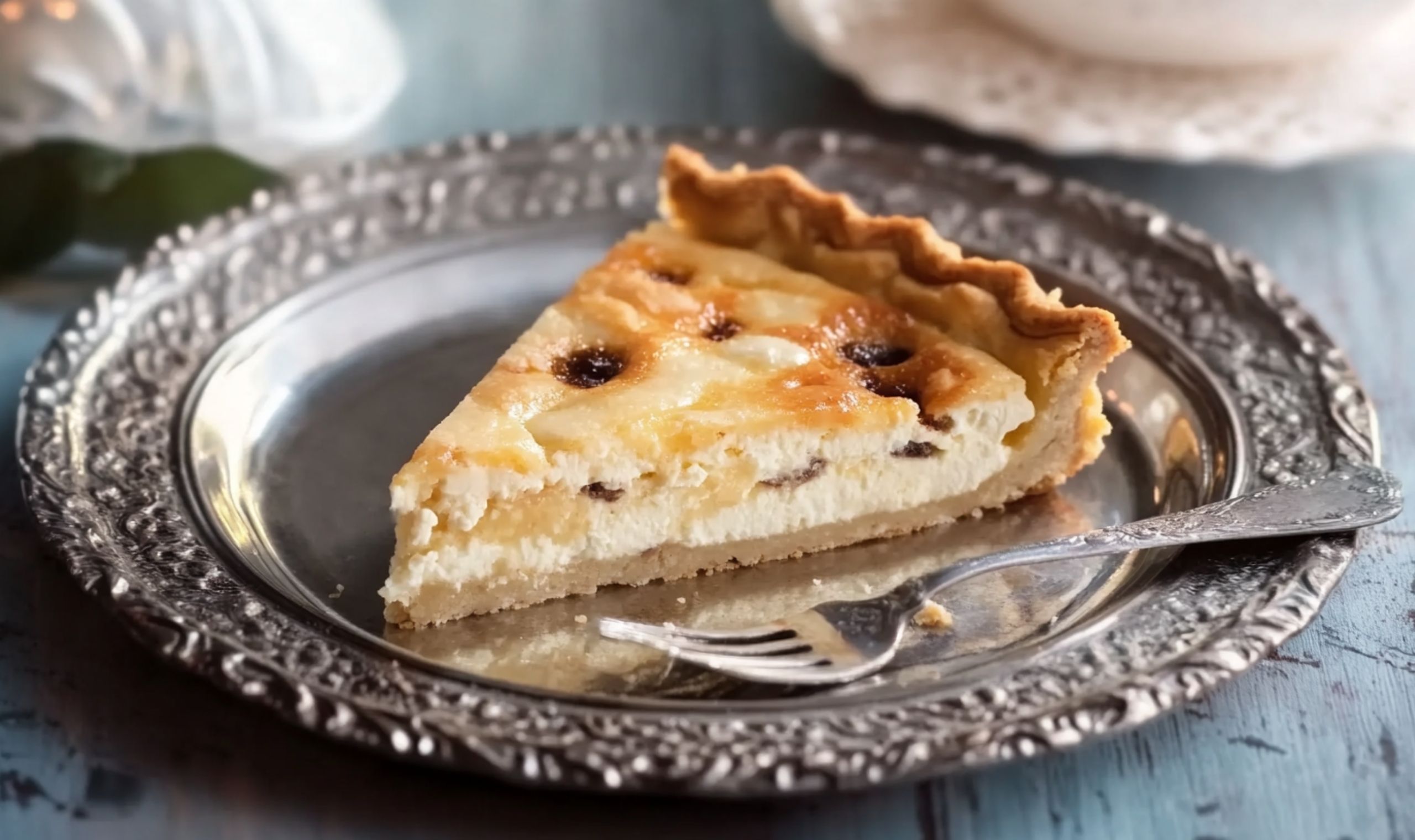
Crostata di ricotta is what happens when Italian pastry decides that cheesecake has become unnecessarily complicated. There is no biscuit base requiring aggressive compression with a drinking glass. Nor is there a towering filling that must cool inside the oven under conditions resembling a diplomatic negotiation. Instead, buttery pastry holds sweetened ricotta, citrus zest and, quite often, chocolate or fruit.
The result sits somewhere between a tart, a pie and a restrained cheesecake. It feels rich without becoming exhausting. Better still, it looks charming even when the lattice is slightly crooked. Italian baking has always understood that perfection can appear suspiciously industrial.
Crostata itself has a remarkably long history. Recipes bearing the name appeared in Italian cookery manuscripts during the fifteenth century. Early versions could contain cheese, fruit, meat or other ingredients beneath pastry. Over time, the word came to describe the familiar Italian tart made with pasta frolla, a sweet and crumbly shortcrust pastry.
Ricotta made an obvious partner. Italians had long used this fresh whey cheese in both savoury and sweet dishes. It was widely available, relatively economical and capable of accepting almost any flavour placed beside it. Sugar transformed it into a delicate cream, while eggs helped it set during baking.
Although crostata di ricotta is made across Italy, it has particularly strong associations with Rome and central Italy. Roman versions commonly flavour the filling with lemon, orange, cinnamon or small pieces of dark chocolate. It may appear at Sunday lunch, Easter celebrations or whenever somebody has bought too much ricotta and needs to create a convincing explanation.
Rome’s Jewish culinary tradition produced two especially celebrated relatives. Crostata di ricotta e cioccolato combines sweet ricotta with dark chocolate, often beneath a rustic pastry top. It remains closely associated with the old Jewish Ghetto, although versions are now found throughout Rome.
Even more famous is crostata di ricotta e visciole. This version pairs ricotta with intensely tart visciole, small sour cherries traditionally made into jam. The sharp fruit cuts through the mild, creamy cheese and prevents the tart from becoming excessively polite.
Its history is linked to restrictions imposed upon Rome’s Jewish community. According to a widely repeated account, eighteenth-century papal rules prevented Jewish traders from selling dairy products. Bakers supposedly concealed ricotta beneath pastry, combining it with dark cherry preserves so that the forbidden ingredient was less obvious. The story is difficult to prove in every detail, but it reflects the resourcefulness that shaped Roman Jewish cooking.
At Boccione, the celebrated bakery in Rome’s Jewish Quarter, ricotta tarts are famously rustic. Their tops can look deeply browned, cracked and almost scorched. Yet customers continue to queue, demonstrating that attractive imperfection remains one of Italy’s more successful exports.
Elsewhere, crostata di ricotta changes according to local tastes and family habits. Sicilian versions naturally lean towards the flavours found in cannoli. They may include dark chocolate, candied orange peel, cinnamon or pistachios. Sheep’s-milk ricotta gives the filling greater depth and a faint savoury tang.
In southern Italy, cooks sometimes add raisins soaked in rum, Marsala or another sweet wine. Campania has its own grand ricotta pastry tradition, represented by pastiera. That Easter pie includes cooked wheat and orange blossom water, creating something more aromatic and ceremonial than an everyday crostata.
Other variations feature pear, lemon curd, berries, figs or apricot preserve. Some are open-faced beneath a lattice. Others hide the filling under a complete pastry lid. Strictly speaking, a fully covered tart might be called a torta rather than a crostata, but ordinary usage has cheerfully ignored this technical objection.
What makes the tart special is its balance. Pasta frolla is sweeter and more tender than standard British shortcrust. It should crumble gently rather than shatter across the table. Meanwhile, ricotta creates a filling that is creamy but not densely fatty.
The texture depends heavily on the cheese. Properly drained ricotta produces a smooth filling that holds its shape. Wet ricotta can create a soggy base and loose centre. This is not tragic, although serving it elegantly may require confidence and a large spoon.
Sheep’s-milk ricotta is traditional in many parts of Italy and has a fuller flavour. Cow’s-milk ricotta is milder and easier to find in Britain. Either works, provided it is fresh and drained for several hours. Ricotta sold in small supermarket tubs can be watery, so overnight draining is often worthwhile.
Dark chocolate is perhaps the most dependable addition. It gives bitterness, texture and enough drama to satisfy people who believe every dessert requires chocolate. Citrus zest is equally important because it lifts the dairy flavour. Vanilla can join the proceedings, although too much will make the tart taste more like commercial cheesecake.
Coffee is the obvious companion. An espresso provides bitterness after the sweet filling, while cappuccino makes the tart suitable for breakfast. Italians do eat crostata in the morning, which is excellent news for anyone tired of pretending that granola is exciting.
For wine, choose something sweet but fresh. Moscato d’Asti works well because its bubbles and acidity lighten the ricotta. Vin Santo suits versions containing raisins, almonds or citrus. Marsala complements chocolate and candied peel, although a modest glass is advisable unless lunch has no scheduled ending.
Tea also works surprisingly well. Earl Grey echoes the citrus zest, while a lighter black tea allows the ricotta to remain the main attraction. Avoid heavily tannic tea brewed into submission. The tart deserves accompaniment, not disciplinary action.
Fresh fruit makes the best supporting dish. Strawberries, raspberries, cherries or sliced oranges add acidity and colour. A spoonful of sour cherry compote is especially effective. Toasted almonds or pistachios provide crunch, while softly whipped cream is available for those who regard ricotta as insufficient dairy.
After a meal, serve the crostata following something simple and savoury. Roast chicken, grilled fish or a vegetable pasta leave enough room for it. A heavy lasagne followed by a large slice may require an afternoon devoted entirely to horizontal activities.
Ricotta contains protein and calcium, and it is usually lighter than cream cheese or mascarpone. Therefore, crostata di ricotta can feel less heavy than many cheesecakes. The filling may also contain less saturated fat, depending on the ricotta and recipe used.
Nevertheless, this remains pastry filled with sweetened cheese. Butter, sugar and eggs are not transformed into wellness ingredients merely because lemon zest is present. Portion size matters, particularly when chocolate, jam or candied fruit joins the filling.
People with lactose intolerance may still react to ricotta, although its lactose content varies. Gluten-free pastry can be used successfully, but it needs careful handling because pasta frolla is naturally delicate. Anyone with an egg or dairy allergy will require a substantially adapted recipe rather than optimistic substitution.
In Italy, look for crostata di ricotta in pasticcerie, neighbourhood bakeries and Roman trattorias. Rome’s Jewish Quarter remains the most atmospheric place to try the ricotta-and-cherry or ricotta-and-chocolate versions. However, availability can be unpredictable because traditional bakeries often sell whatever was baked that morning.
In Britain, Italian delicatessens and specialist bakeries occasionally offer it, especially near Easter. Fortunately, it is an excellent tart to make at home. The ingredients are ordinary, the method is forgiving and an imperfect lattice merely proves that no factory was involved.
Classic Crostata di Ricotta Recipe
This recipe makes one 23cm tart and serves eight to ten people.
For the pasta frolla
300g plain flour
150g cold unsalted butter, cubed
120g caster sugar
1 large egg
1 large egg yolk
Finely grated zest of 1 unwaxed lemon
1 teaspoon vanilla extract
¼ teaspoon fine salt
For the ricotta filling
500g full-fat ricotta, well drained
120g caster sugar
2 large eggs
Finely grated zest of 1 unwaxed orange
1 teaspoon vanilla extract
½ teaspoon ground cinnamon
80g dark chocolate, finely chopped
1 tablespoon cornflour
Icing sugar, for serving
Place the ricotta in a sieve over a bowl. Cover and refrigerate for at least four hours, preferably overnight. This removes excess whey and prevents the filling from becoming watery.
Put the flour, sugar and salt into a large bowl. Add the cold butter and rub it into the flour with your fingertips. Continue until the mixture resembles coarse breadcrumbs.
Add the egg, egg yolk, lemon zest and vanilla. Mix gently until the dough begins to form large clumps. Bring it together with your hands, but do not knead it for long. Overworked pastry becomes tough, presumably out of resentment.
Flatten the dough into a disc and wrap it. Refrigerate for at least 45 minutes.
Meanwhile, prepare the filling. Push the drained ricotta through a fine sieve for an especially smooth texture. Alternatively, beat it briefly with a wooden spoon.
Add the sugar and mix until combined. Beat in the eggs one at a time, followed by the orange zest, vanilla, cinnamon and cornflour. Fold through the chopped chocolate.
Heat the oven to 180°C, or 160°C fan. Grease a 23cm loose-bottomed tart tin.
Set aside roughly one-third of the chilled pastry for the lattice. Roll the remaining dough between two sheets of baking paper until it is about 4mm thick.
Line the tin with the pastry, pressing it carefully into the corners. Trim the edge, leaving a slight overhang because the dough may shrink. Prick the base lightly with a fork.
Spoon in the ricotta filling and smooth the surface. Roll out the reserved pastry and cut it into strips. Arrange the strips over the filling in a simple lattice pattern.
Press the ends against the pastry edge and trim away any excess. Brush the lattice lightly with a little beaten egg or milk, if desired.
Bake for 45–55 minutes. The pastry should be golden, while the centre should look set but retain a slight wobble. Cover the edge loosely with foil if it browns too quickly.
Leave the crostata in the tin until completely cool. Then refrigerate it for at least two hours, allowing the filling to firm and the flavours to settle.
Remove it from the tin and dust lightly with icing sugar. Serve at cool room temperature rather than directly from the fridge. Add sour cherry compote, fresh berries or nothing at all. This tart has survived centuries of Italian family opinions and can certainly manage without decoration.