Karidopita, the Greek Walnut Cake
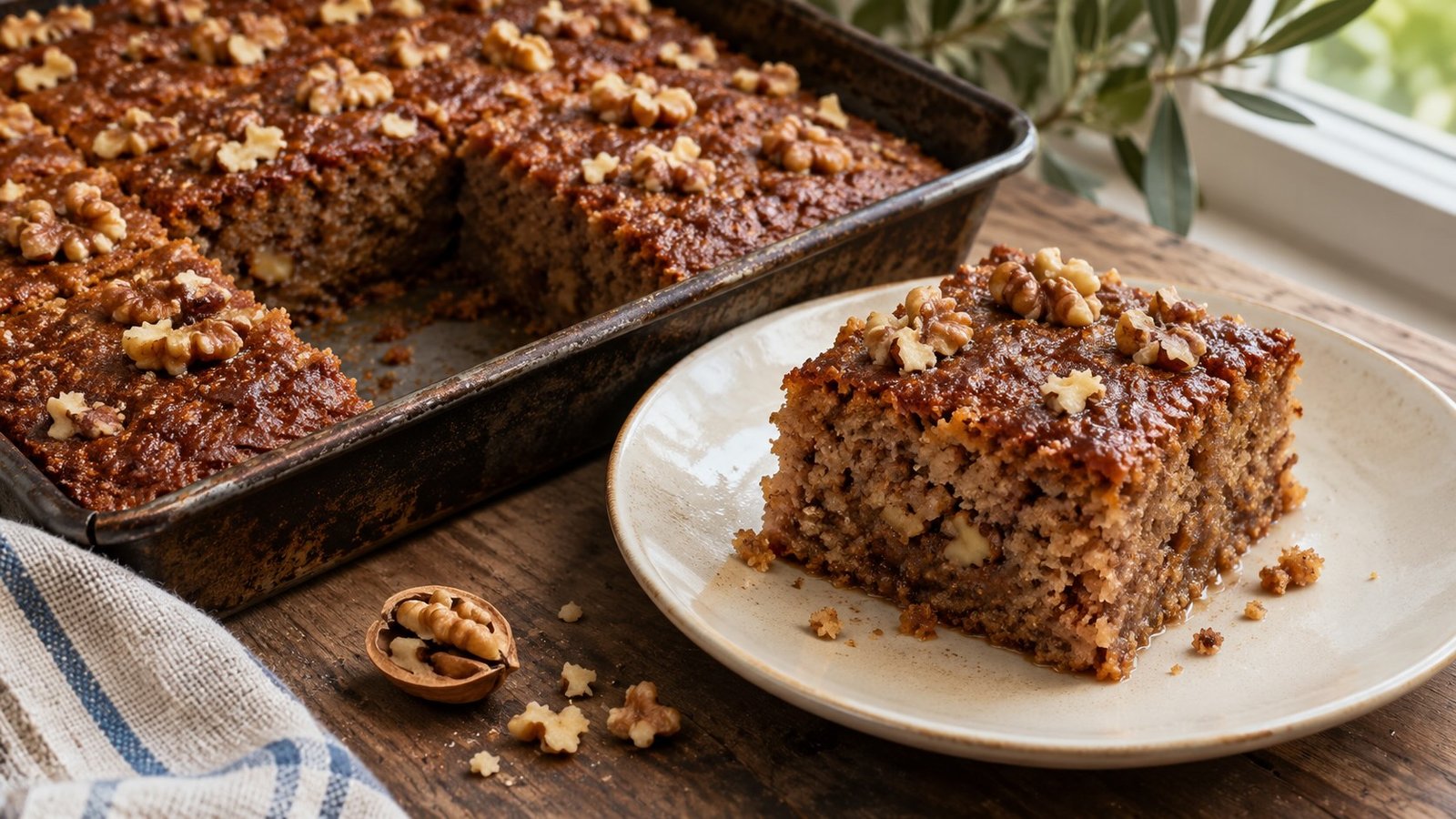
The first time you pour syrup over a karidopita, you may feel you’ve made a terrible mistake. There’s a respectable walnut cake in the tin, and now there appears to be a small lake. Give it a minute, though, and the liquid starts to disappear around the edges. By the time the kettle boils, the cake has swallowed most of it. What looked like a baking accident turns out to be the whole point.
Karidopita, also spelled karydopita, takes its name from the Greek words for walnut and pie. The name might lead you to expect pastry, but you’ll find a spiced cake with a soft, nutty crumb. It belongs to the Greek family of syrup-soaked sweets known as siropiasta. The cake’s precise birthplace is hard to pin down. Its kinship with sweets such as revani, a syrup-soaked semolina cake, is easier to taste. Both rely on the baker doing something that would alarm anyone guarding a Victoria sponge. Authentic experiences in Greece
Across Greece, the batter varies with the cook. Greek chef Akis Petretzikis uses flour, while a recipe from Mills of Crete uses semolina for a gently grainy crumb. Other cooks add fine breadcrumbs, which give the sponge enough body to hold its syrup. Likewise, the flavourings change from kitchen to kitchen. Cinnamon and cloves give the cake a warm, almost wintry smell. Orange zest keeps it bright, while a splash of brandy takes it in a deeper, fruitier direction. Akis Petretzikis
What makes it worth baking is the contrast between the bitter edge of the walnuts and the sweetness of the syrup. Chop some nuts finely so they flavour the whole sponge. Leave the rest a little coarser, though, so each forkful has something to bite into. A squeeze of lemon gives the syrup a clean finish. Once the cake has rested, the spice reaches right into the centre, and even the corner pieces stay moist.
Serve a small square with strong, unsweetened Greek coffee. Its bitterness works particularly well with the walnuts. Alternatively, try black tea with lemon or a small glass of sweet Muscat from Samos. If you’re serving the cake after dinner, spoon some thick Greek yoghurt alongside it and add a few orange segments. The yoghurt’s tang suits the syrup, while the fresh orange picks up the zest in the sponge. Vanilla ice cream also works, especially if you like your pudding to put up very little resistance.
Walnuts bring fibre and unsaturated fats, including the plant omega-3 fat ALA. Still, the syrup makes this a decidedly sweet cake, and a modest square goes a surprisingly long way. This version contains walnuts, wheat and eggs. If you’re baking for someone with a nut allergy, choose a different dessert.
Karidopita Recipe
This flour-based karidopita makes 12 squares in a 20 cm square tin. Allow about 25 minutes to prepare it, 35–40 minutes to bake and at least 2 hours for the syrup to soak in.
For the syrup, you’ll need 250 g caster sugar, 250 ml water, 2 strips of lemon peel and 1 tbsp lemon juice. For the cake, gather 4 large eggs, 130 g caster sugar, 100 ml sunflower oil, 160 g plain flour, 2 tsp baking powder, 2 tsp ground cinnamon, ¼ tsp ground cloves, ¼ tsp fine salt, the finely grated zest of 1 orange and 180 g walnuts. Finely chop half the walnuts and roughly chop the rest.
First, stir the syrup ingredients together in a saucepan over medium heat until the sugar dissolves. Bring to the boil, simmer for 5 minutes, then set aside to cool. Meanwhile, heat the oven to 180°C (160°C fan) and grease and line the tin with baking parchment.
Whisk the eggs and sugar for about 5 minutes, until pale and thick. Slowly whisk in the oil. In a separate bowl, mix the flour, baking powder, spices and salt. Fold the dry ingredients into the egg mixture, then fold in the orange zest and walnuts. Scrape into the tin and bake for 35–40 minutes, until a skewer comes out clean.
Finally, remove the lemon peel and poke holes all over the hot cake with a skewer. Spoon the cooled syrup evenly over the surface in several passes, letting each one soak in before adding more. Leave the cake in the tin for at least 2 hours. Then cut it into squares and serve at room temperature.