Chicken Empanada: The Sweet and Savoury Filipino Pastry Pocket
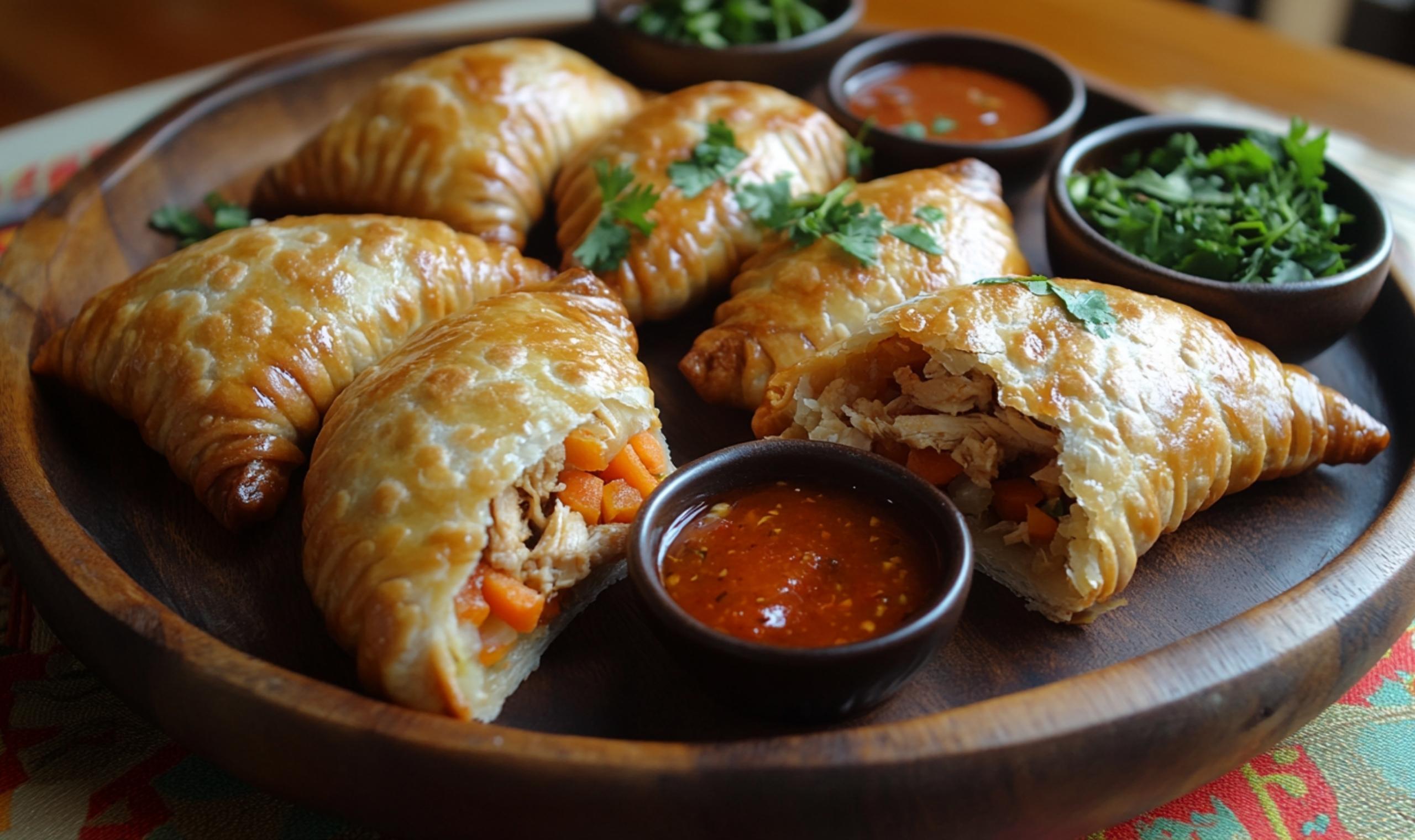
Chicken empanada is what happens when a sensible pastry pocket develops a generous personality. Its golden shell promises a modest snack. Then you bite through buttery pastry and meet chicken, potatoes, carrots, peas and raisins, all competing cheerfully for attention.
This is not the fiery, cumin-heavy empanada associated with parts of Latin America. The Filipino version usually takes a gentler route. It is savoury, slightly sweet and reassuringly substantial. In fact, one empanada may be a snack, but two are clearly lunch pretending to be an accident.
The wider empanada story begins in the Iberian Peninsula. Its name comes from the Spanish verb empanar, meaning to wrap or coat something in bread. Early Spanish empanadas were often large pies filled with meat, fish or vegetables. They were sliced rather than carried individually in paper bags by hungry commuters.
Spain brought empanadas to the Philippines during more than three centuries of colonial rule. However, Filipino cooks did not simply photocopy the Spanish recipe. They adapted it to local tastes, ingredients and domestic habits. The result became sweeter, softer and distinctly Filipino.
Chicken was an obvious filling. It was familiar, economical and able to absorb seasoning without becoming argumentative. Potatoes and carrots added substance, while peas brought colour. Raisins supplied the sweet note that makes first-time eaters pause briefly, then reach for another.
That mixture resembles picadillo, the seasoned minced-meat preparation found across former Spanish territories. Yet Filipino chicken empanada usually tastes milder and sweeter. Some recipes use shredded chicken, while others prefer finely diced meat. Both camps are convinced that civilisation depends upon their choice.
The pastry also matters. A classic Filipino chicken empanada uses wheat flour, butter or margarine, egg and a little sugar. The finished shell should be tender and lightly flaky rather than aggressively crisp. It must hold the filling securely, but it should not require the jaw strength of a Victorian dockworker.
Baked chicken empanadas are especially common in homes, bakeries and cafés. Fried versions exist too, although they produce a crisper, richer experience. Baking gives the pastry a polished golden surface and makes the filling feel slightly less indulgent. This is useful if you enjoy bargaining with yourself about butter.
Chicken empanada is eaten throughout the Philippines, yet the country’s empanada family is remarkably diverse. The famous Ilocos empanada from northern Luzon is practically a different species. Its shell is made from rice flour rather than wheat, and it is fried until dramatically crisp.
In Ilocos Norte, annatto often gives the shell a vivid orange colour. Typical fillings include shredded green papaya, mung bean sprouts, local longganisa sausage and egg. Vigan-style empanadas from Ilocos Sur tend to be paler, with a thinner shell. They are usually served with sharp local vinegar, which cuts through the richness with admirable efficiency.
Elsewhere, regional cooks have continued the tradition of treating rules as polite suggestions. Bulacan is known for empanada de kaliskis, whose layered pastry resembles fish scales. Danao in Cebu has a sweet-savoury version containing chorizo and chayote. It may even receive a dusting of sugar after frying.
Zamboanga offers empanadas containing sweet potato and chickpeas, often accompanied by sweet vinegar. Dessert empanadas appear as well, filled with coconut, caramel, custard, nuts or peanut butter. Apparently, once a culture perfects the pastry pocket, restraint becomes entirely optional.
Still, the everyday chicken empanada occupies a special place. It is portable but feels homemade. It can appear at breakfast, merienda, parties, school events or family gatherings. Moreover, it travels well, which makes it ideal for lunchboxes and journeys.
What makes it special is the balance. Rich pastry meets savoury chicken, earthy vegetables and small explosions of raisin sweetness. No single ingredient dominates. Instead, each bite shifts slightly, depending on whether the spoon that filled it was feeling generous with potato or unusually enthusiastic about peas.
Texture plays an equally important role. The shell should crumble gently at the edges. Inside, the filling should remain moist without turning watery. The potato absorbs cooking juices, while the carrots retain a faint bite. Meanwhile, the raisins soften and disappear into the mixture until they suddenly announce themselves.
A sharp dipping sauce can make the experience even better. Try cane vinegar mixed with chopped garlic, chilli and black pepper. Banana ketchup is another thoroughly Filipino companion. Its sweet acidity works surprisingly well, although the combination may alarm anyone who believes pastry must behave formally.
For drinks, calamansi juice is a bright, refreshing choice. Its citrus sharpness balances the buttery crust. Iced tea also works, particularly when lightly sweetened. On a warm afternoon, a cold lager complements fried empanadas and asks very few questions.
Coffee is the traditional ally of many bakery snacks, and chicken empanada is no exception. A smooth black coffee offsets the sweetness in the pastry. Alternatively, serve it with salabat, a Filipino ginger tea. Its warmth and spice make the chicken filling taste even more comforting.
Chicken empanadas can become part of a larger meal. Serve them beside a crisp cucumber and tomato salad dressed with vinegar. Pickled papaya, known as atchara, provides crunch and acidity. A bowl of light vegetable soup also turns two pastries into something that can be described as a balanced supper.
At parties, they sit happily beside lumpia, pancit noodles and grilled chicken skewers. However, avoid surrounding them entirely with fried food unless everyone has cancelled their afternoon plans. Fresh fruit, pickles and leafy salads bring much-needed contrast.
Nutritionally, chicken provides protein, while the vegetables contribute fibre, vitamins and minerals. Baking rather than deep-frying reduces added oil. Using skinless chicken also keeps the filling leaner. Furthermore, homemade versions allow you to control salt, sugar and portion size.
Nevertheless, the pastry contains butter and refined flour, so chicken empanadas are not secretly salad. Potatoes and raisins add carbohydrates, while commercial versions may contain more sugar or saturated fat. Enjoying one with vegetables is sensible. Eating six directly from a cooling tray is a lifestyle choice.
People managing diabetes may prefer less sugar in the dough and fewer raisins. Those limiting sodium can reduce soy sauce or stock powder. For a lighter filling, increase the carrots and peas while slightly reducing the potato. Wholemeal flour can replace part of the white flour, though the pastry will become less delicate.
In the Philippines, chicken empanadas are easy to find in neighbourhood bakeries, shopping-centre food stalls and cafés. Families also sell them through markets and home-based businesses. Recipes vary enormously, so sampling several is not greed. It is comparative cultural research.
Outside the Philippines, look in Filipino bakeries, supermarkets and restaurants. In the UK, larger Filipino communities in London and other major cities support specialist cafés and grocery shops. Frozen empanadas may also appear in Asian supermarkets, although a freshly baked one remains far more persuasive.
Making them at home takes time, but the process is forgiving. The filling can be prepared a day ahead. Pastry scraps can be rerolled once, and imperfect crimping merely proves that no industrial machine was emotionally involved.
Filipino Chicken Empanada Recipe
This recipe makes approximately twelve medium empanadas.
For the pastry, you will need 400g plain flour, 40g caster sugar, one teaspoon fine salt and 200g cold unsalted butter. You will also need one large egg and about 80ml cold water. Keep an additional beaten egg ready for glazing.
For the filling, prepare 450g boneless skinless chicken thighs or breasts. You will also need two tablespoons vegetable oil, one small onion and three garlic cloves. Finely dice one medium potato and one carrot.
Measure 80g frozen peas, 50g raisins, one tablespoon soy sauce and 120ml chicken stock. Add half a teaspoon paprika, half a teaspoon ground black pepper and salt to taste. Chicken thighs give a juicier result, although breast works perfectly well.
First, make the pastry. Combine the flour, sugar and salt in a large bowl. Cut the cold butter into small cubes, then rub it into the flour. Stop when the mixture resembles coarse breadcrumbs with a few pea-sized pieces remaining.
Beat the egg with 60ml of the cold water. Add it gradually to the flour mixture, stirring with a fork. Add the remaining water only when needed. The dough should come together without becoming sticky.
Shape the dough into a flat disc and wrap it well. Refrigerate for at least 30 minutes. This rest allows the flour to hydrate and the butter to firm again.
Meanwhile, cut the chicken into very small pieces. Heat the oil in a wide frying pan over medium heat. Cook the onion for three minutes, then add the garlic. Stir for another 30 seconds.
Add the chicken and cook until it loses its raw colour. Stir in the potato, carrot, soy sauce, paprika and black pepper. Pour in the stock, then cover and simmer gently for about ten minutes.
Add the peas and raisins. Continue cooking uncovered until the vegetables are tender and nearly all the liquid has evaporated. The mixture must be moist but not wet, or the pastry may become soggy.
Taste and adjust the seasoning. Transfer the filling to a shallow dish and let it cool completely. Warm filling melts butter in the pastry, which is rarely the sort of drama anyone needs.
Heat the oven to 190°C, or 170°C fan. Line two baking trays with baking paper.
Roll the chilled dough to about 3mm thick on a lightly floured surface. Cut out circles measuring roughly 13–14cm across. Gather and reroll the scraps once.
Place two generous tablespoons of filling on one half of each circle. Leave a clear border around the edge. Lightly brush the border with water, fold the pastry over and press firmly to seal.
Crimp the edges with a fork or twist them into a traditional rope pattern. Place the empanadas on the prepared trays. Chill them for another 15 minutes if the pastry has become soft.
Brush each empanada with beaten egg. Pierce the top once with a small knife so steam can escape. Bake for 22–28 minutes, until deeply golden.
Allow them to rest for ten minutes before serving. They are excellent warm, but they also taste good at room temperature. Serve with garlic vinegar, banana ketchup, calamansi wedges or a crisp salad.
Store cooled empanadas in the refrigerator for up to three days. Reheat them in a 180°C oven until hot and crisp. Avoid the microwave unless you prefer your pastry with the emotional resilience of a damp envelope.