Poke Cake: A Soft, Soaked, Slightly Silly Slice of Dessert History
Poke cake is one of those desserts that sounds slightly alarming until you meet it. A cake that asks to be stabbed, soaked, chilled, covered, and then admired? Very dramatic. Very American. Also very effective.
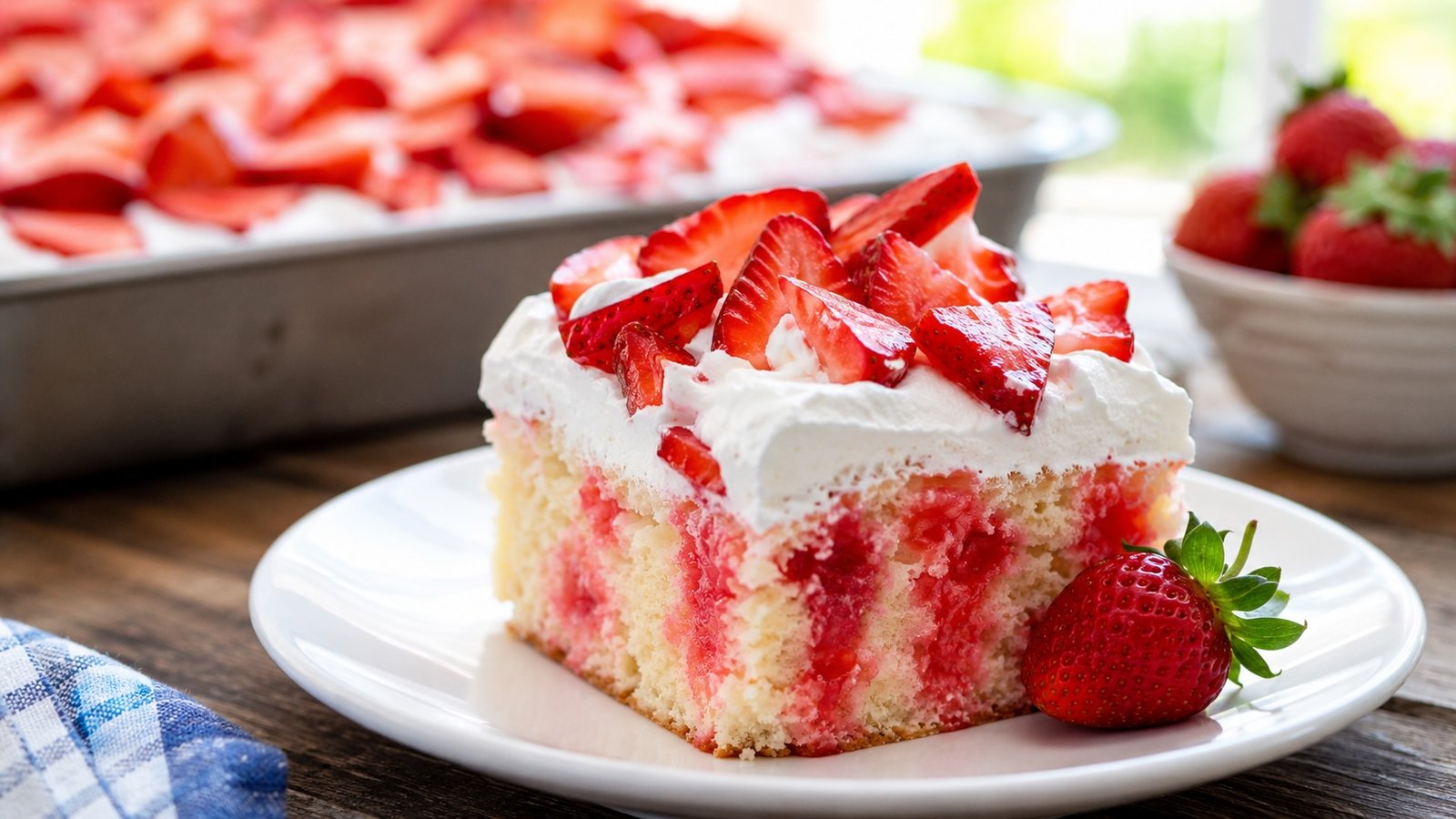
At its simplest, poke cake is a baked cake with holes poked into it. Those holes are then filled with something sweet. It might be jelly, pudding, fruit syrup, condensed milk, caramel, chocolate sauce, or whatever else looks guilty in the cupboard. The filling sinks into the crumb and creates stripes, pockets, streaks, and soft little surprises. However, the real magic is not just flavour. It is texture. Poke cake is moist, playful, forgiving, and proudly unserious.
It belongs to the great family of “why make life harder?” desserts. Sheet cake? Fine. Box mix? Absolutely. Whipped topping? Bring it over. It may never win a minimalist patisserie award in Paris, but that is not its job. Its job is to sit in a large dish at a party and disappear slice by slice.
Poke cake is strongly linked to Jell-O and the great American convenience-food imagination of the 1970s. The cake was popularised as a way to use gelatin in baking, rather than leaving it to wobble alone in a bowl like a nervous science experiment. Early versions usually involved a white sheet cake, holes made with a fork, and colourful gelatin poured over the top. The cake was then chilled and covered with whipped topping. It was bright, easy, and very much at home beside casseroles, potlucks, pool parties, and plastic serving spoons.
Some food-history writers point to Jell-O advertising and recipe campaigns in the 1970s and early 1980s as the moment poke cake became a recognisable household dessert. One later advertising example was a “Moist and Fruity Rainbow Cake”, which used gelatin poured into a poked cake and finished with whipped topping.
The idea, though, feels older than the brand. Humans have been soaking cakes for centuries, mostly because dry cake is a betrayal. Rum cakes, syrup cakes, baba au rhum, tres leches, lemon drizzle, and syrup-soaked semolina cakes all work on a related principle. Bake something absorbent. Then give it something delicious to drink. Poke cake simply adds holes and a certain suburban confidence.
The classic American poke cake is usually made with white cake and fruit-flavoured gelatin. Strawberry is probably the prom queen of the category. Raspberry, lime, orange, cherry, and lemon also appear often, sometimes with colours so cheerful they look as though they might glow under disco lights.
In the American South, poke cake sits comfortably among easy sheet cakes, potluck desserts, and church-supper favourites. It has enjoyed renewed popularity, with modern fillings including condensed milk, fruit purée, flavoured syrups, and more.
Chocolate poke cake is another major branch of the family tree. Instead of gelatin, it might use chocolate pudding, hot fudge sauce, caramel, or sweetened condensed milk. Add whipped cream and crushed chocolate bars on top, and suddenly the cake has gone from nostalgic to fully irresponsible, in the best possible way.
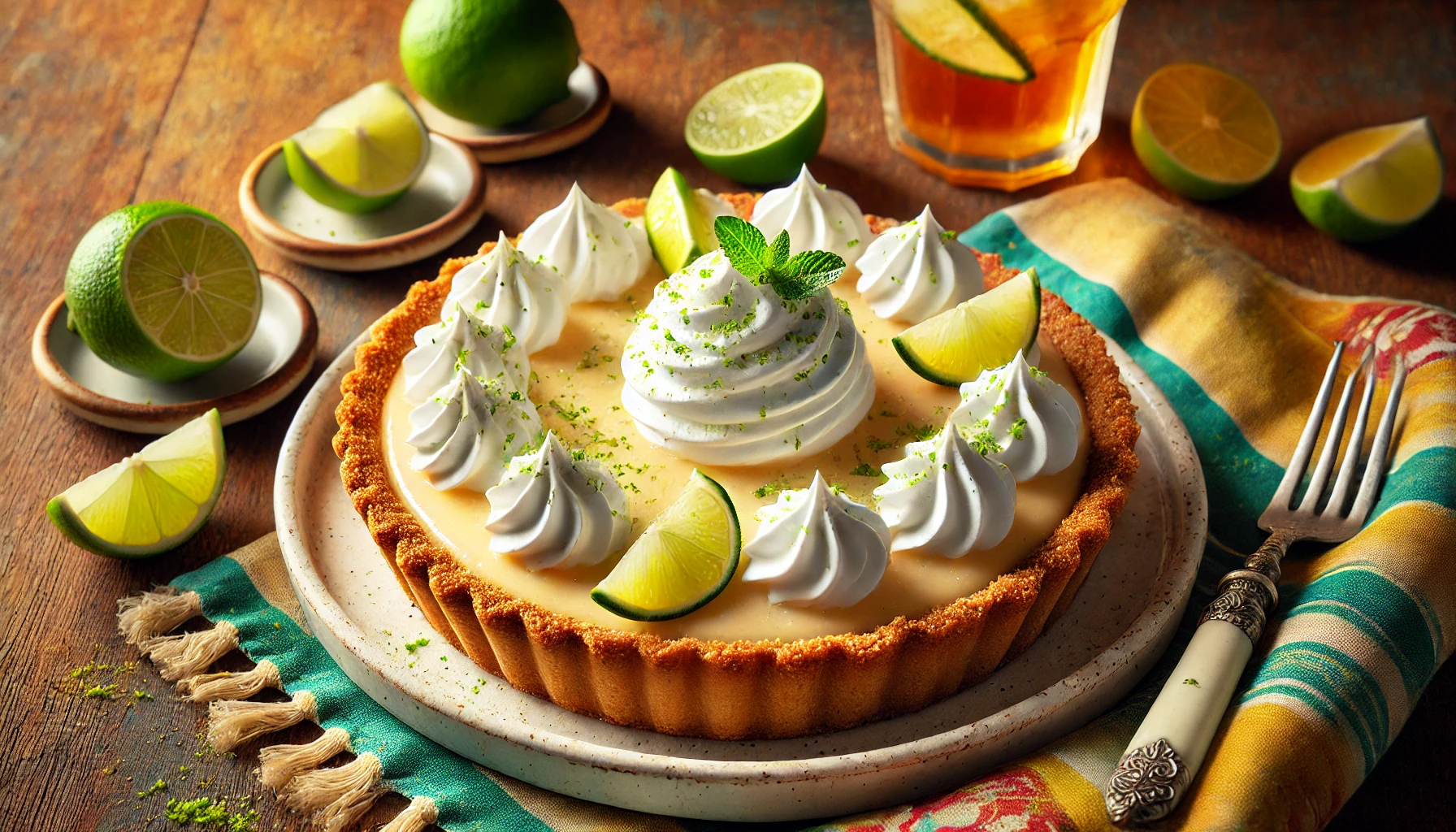
Then there are citrus versions. Lemon poke cake works beautifully because sharpness saves sweetness from becoming too polite. Key lime poke cake brings a tart, creamy edge. Orange creamsicle versions lean into childhood nostalgia, especially when topped with vanilla whipped cream.
Tres leches is not exactly a poke cake, but it is definitely a close cousin. It is a Latin American sponge cake soaked with three milks, usually evaporated milk, condensed milk, and cream or whole milk. Its airy sponge allows the soak to work without turning the cake into a sad puddle. Modern recipes often borrow from both worlds, creating tres leches poke cakes with deliberate holes and generous milk-based fillings.
Recently, more refined versions have appeared too. Some bakers use homemade fruit gels, tea infusions, hibiscus, lemon curd, berry compote, or mascarpone cream. So yes, poke cake has put on linen trousers and become slightly more sophisticated.
Poke cake is special because it breaks a baking rule very openly. Most cakes ask you not to interfere too much. Poke cake asks for minor violence. You bake it, then attack it with a wooden spoon handle. Finally, you reward the damage with filling.
That is the secret. The holes create channels. The filling moves through the cake, so every slice gets flavour inside rather than just on top. It also means the cake stays moist for days. In fact, poke cake often tastes better after chilling overnight. The flavours settle. The crumb softens. The whole thing becomes more confident.
There is also a democratic charm to it. You do not need a piping bag, a sugar thermometer, or the emotional resilience required for French macarons. You need a cake, a spoon, and the willingness to poke holes without overthinking it. Frankly, more things in life should be this clear.
With fruity poke cakes, tea is a very good friend. Earl Grey works with lemon, raspberry, and orange versions. Meanwhile, a simple black tea helps cut through sweetness. Iced tea also makes sense, especially for strawberry or lime poke cake on a warm afternoon.
Coffee pairs best with chocolate, caramel, coconut, and condensed milk versions. A flat white or Americano stops the cake from becoming too sugary. However, avoid very sweet coffee drinks unless you are planning a full dessert-based nap.
For something stronger, try a small glass of dessert wine with citrus or berry poke cake. Moscato works with strawberry and peach. A late-harvest Riesling suits lemon. Dark rum or coffee liqueur can sit nicely beside chocolate poke cake, though the cake may already be doing quite enough.
Milk is still the classic choice. Cold milk with chocolate poke cake is childish in the best possible way. No apology required.
Poke cake is rich, so it likes simple company. Fresh berries are excellent with vanilla, lemon, and strawberry versions. Sliced peaches, mango, or pineapple can work well with tropical flavours. However, keep the fruit fresh rather than syrupy, unless you want dessert to become a committee meeting of sugar.
A small bowl of yoghurt or crème fraîche can also help. The tang balances the sweetness. Toasted nuts bring crunch, especially almonds, pecans, or pistachios. Coconut flakes are lovely with lime, pineapple, or chocolate.
For a party table, serve poke cake with savoury snacks first. Something salty makes the cake taste even better. Pretzels, cheese straws, or crisp little crackers do the job nicely. Naturally, nobody will admit this is strategic. They will just come back for another slice.
Let us not pretend poke cake is a wellness food wearing a whipped cream hat. It is cake. It usually contains sugar, refined flour, fat, and a sweet filling. Many versions also use instant gelatin, pudding mix, whipped topping, or condensed milk. So, moderation matters.
That said, food does not need to be medicinal to have value. Shared desserts have social benefits. They create pleasure, memory, and the small domestic theatre of someone saying, “Who made this?” before taking another slice.
You can also make lighter choices. Use a homemade sponge with less sugar. Choose fruit purée instead of bright gelatin. Top it with lightly whipped cream rather than a very sweet frosting. Add fresh berries. Make smaller slices. However, do not remove all joy in the name of improvement. That way lies disappointment and dry oat biscuits.
People with dietary needs should check ingredients carefully. Gelatin is usually animal-derived, so it may not suit vegetarians. Some whipped toppings contain stabilisers or dairy derivatives. Gluten-free cake bases work well, though they may absorb filling differently. Meanwhile, diabetic guests or anyone managing blood sugar may need a smaller portion or a lower-sugar version.
Poke cake is most common in the United States. You may find it at potlucks, diners, family gatherings, bake sales, and home kitchens. It is less common in British bakeries, where traybakes, drizzle cakes, Victoria sponge, and trifles have historically had more space on the table.
However, the internet has made every dessert globally available. Search for poke cake recipes and you will find strawberry, chocolate, lemon, Oreo, coconut, caramel, pumpkin, red velvet, and tres leches versions. In the UK, it is easiest to make at home. Supermarkets already sell everything required: sponge ingredients, jelly crystals, pudding mix, cream, fruit, and chocolate sauce. No special pilgrimage needed.
Strawberry and Cream Poke Cake Recipe
This version keeps the retro spirit but tastes fresh and bright. It uses a simple vanilla sponge, strawberry jelly, real strawberries, and softly whipped cream.
Ingredients
For the cake, use 225g unsalted butter, softened, 225g caster sugar, four large eggs, 225g self-raising flour, two teaspoons vanilla extract, two tablespoons milk, and a pinch of salt.
For the strawberry filling, use one 135g packet strawberry jelly, 250ml boiling water, 150ml cold water, and 150g fresh strawberries, finely chopped or lightly crushed.
And for the topping, use 300ml double cream, two tablespoons icing sugar, one teaspoon vanilla extract, and extra strawberries for decoration.
Method
Heat the oven to 180°C, or 160°C fan. Grease and line a 23 x 33cm baking tin.
Beat the butter and sugar until pale and fluffy. Add the eggs one at a time, mixing well after each addition. Stir in the vanilla. Fold in the flour and salt, then loosen the batter with the milk. Spoon it into the tin and smooth the surface.
Bake for about 25 to 30 minutes, until golden and springy. A skewer should come out clean. Let the cake cool in the tin for 15 minutes.
Use the handle of a wooden spoon to poke holes across the cake. Leave a little space between each hole, because this is cake, not roadworks.
Dissolve the strawberry jelly in boiling water. Stir in the cold water, then add the chopped strawberries. Let it cool slightly, but do not allow it to set. Slowly pour the mixture over the cake, aiming for the holes. Some will sit on top. That is fine. It knows what it is doing.
Chill the cake for at least four hours, preferably overnight. The longer rest gives the filling time to settle into the crumb.
Whip the cream with icing sugar and vanilla until soft peaks form. Spread it over the chilled cake. Decorate with sliced strawberries. Serve cold, in generous squares.
The result is soft, sweet, fruity, and faintly ridiculous. In other words, a proper poke cake.