Ensaimada: Mallorca’s Sweet Spiral with a Surprisingly Porky Secret
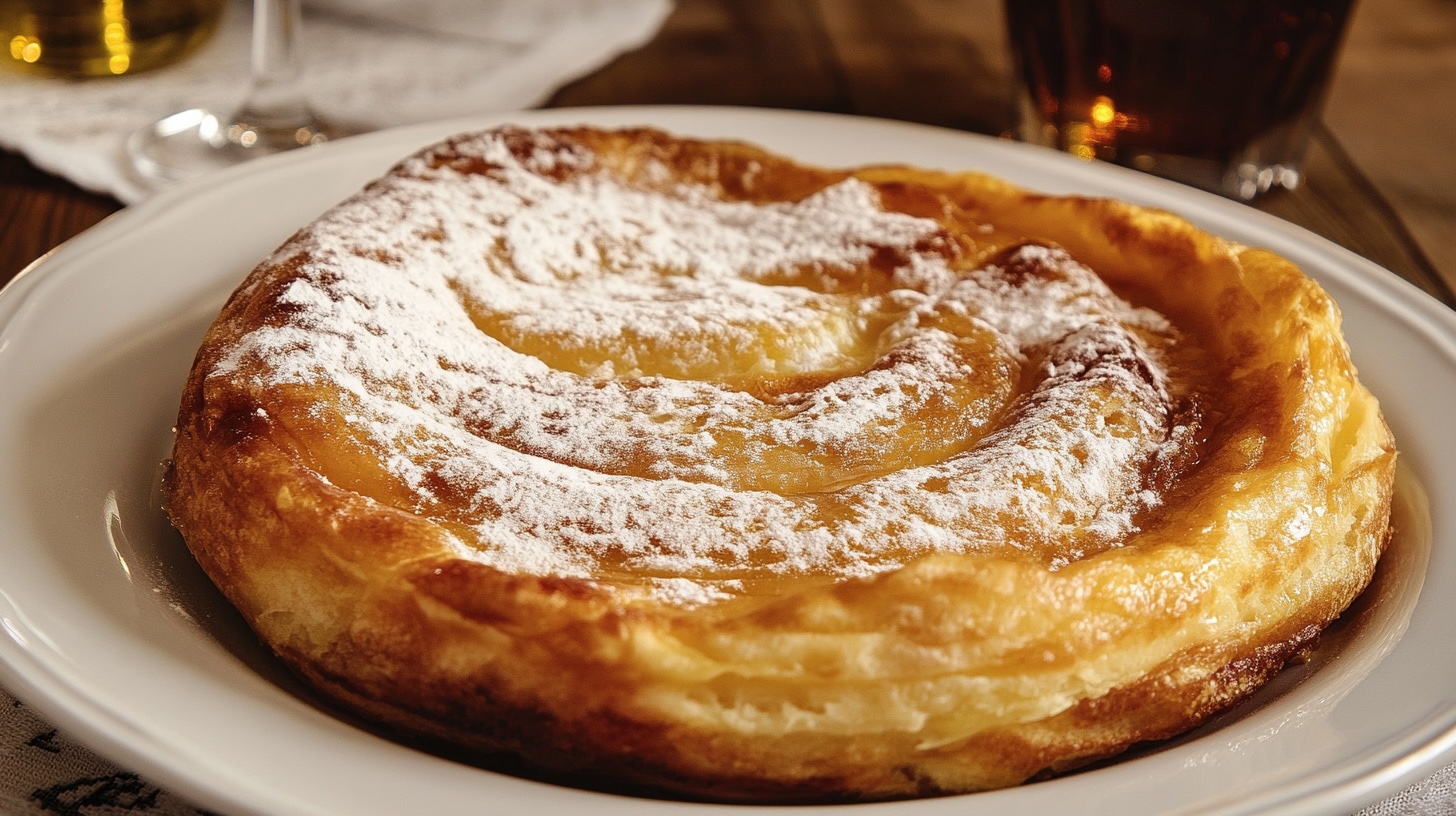
An ensaimada looks rather innocent. It arrives as a pale golden spiral, generously dusted with icing sugar and tucked inside a flat cardboard box. Yet beneath that snowy surface sits one of Mallorca’s most distinctive culinary creations. It is soft, elastic, flaky and faintly rich, with layers that pull apart like edible silk.
The pastry is closely associated with breakfast, afternoon coffee and family celebrations across Mallorca. However, visitors often encounter it somewhere less romantic: Palma Airport. Large octagonal ensaimada boxes appear in departure lounges like ceremonial shields. Travellers carry them aboard aircraft with the solemn determination of people transporting fragile works of art.
The name comes from saïm, the Mallorcan word for pork lard. This ingredient is spread across dough that has been stretched until nearly transparent. Afterwards, the dough is rolled into a long rope and shaped into its characteristic spiral. The lard separates the delicate layers during baking, creating the pastry’s unusual combination of softness and flakiness.
Officially recognised Ensaimada de Mallorca is made with strong flour, water, sugar, eggs, starter dough and pork lard. The product received Protected Geographical Indication status in the European Union in 2003. Therefore, pastries carrying the protected name must be produced in Mallorca according to defined standards.
Its precise origins remain uncertain, which naturally makes the story far more entertaining. Several theories connect the spiral to Mallorca’s Islamic past. Some researchers compare it with coiled pastries made using butter, olive oil or sheep’s milk fat. Others see similarities with Jewish festive breads and the baking traditions of Mallorca’s historic Jewish community.
However, neither theory provides a neat family certificate naming the pastry’s inventor. Food history rarely behaves so politely. Recipes change as communities meet, convert, migrate and adapt to available ingredients. The modern use of pork lard may have developed after Mallorca became Christian, transforming an earlier Mediterranean pastry into something culturally acceptable in a new religious landscape.
Written references to ensaimada appeared by the seventeenth century. During the eighteenth century, it became increasingly popular among wealthier Mallorcans, who served it with hot chocolate. By the nineteenth century, the pastry was travelling beyond the island. It had begun its transformation from local speciality into edible ambassador.
The classic version is the ensaïmada llisa, or plain ensaimada. Despite the name, there is nothing disappointingly plain about it. Its pleasures come from fermentation, texture and a thick veil of icing sugar. A good one feels light in the hand but reveals a web of fine layers when torn open.
Perhaps the best-known filled variety contains cabell d’àngel, meaning “angel hair”. This is not evidence of alarming bakery practices. It is a translucent preserve traditionally made from fig-leaf gourd and sugar. The filling adds moisture, sweetness and a slightly fibrous texture. Historically, it also helped ensaimadas remain softer during long journeys.
Other versions contain pastry cream, chocolate, whipped cream or apricot. Meanwhile, festive bakeries may produce creations filled with almond paste, nougat or sweetened pumpkin. Mallorca also has a savoury-sweet variety called ensaïmada de tallades. It traditionally includes pieces of sobrasada and candied pumpkin, particularly around Carnival. The combination sounds eccentric until you taste it. Then it becomes suspiciously logical.
The pastry has also travelled remarkably well. In the Philippines, Spanish colonial influence helped inspire the local ensaymada. However, the Filipino version has developed its own personality. It is usually smaller, richer and more brioche-like. Butter, sugar and grated cheese frequently cover the top. Some versions are filled with purple ube or finished with lavish buttercream.
Puerto Rico also has a related pastry called mallorca. It is commonly sliced, buttered and served with coffee. Moreover, it may become a breakfast sandwich filled with ham, cheese or eggs. Mallorca created the spiral; other cultures cheerfully gave it new clothes.
What makes traditional ensaimada special is not an exotic shopping list. Instead, its character comes from technique and patience. The dough must develop enough gluten to stretch without tearing. It is then pulled into a vast, thin membrane, coated with lard and rolled tightly.
After shaping, the spiral needs a long, slow rise. Many bakers leave it overnight. Consequently, the flavour becomes more complex while the dough expands into its soft, airy structure. Rush the process and you may produce a respectable sweet bun. You will not produce a memorable ensaimada.
Coffee is the obvious companion. A strong espresso cuts through the sweetness, while café con leche suits breakfast particularly well. Traditionally, thick Spanish hot chocolate creates a more indulgent pairing. The pastry can be dipped, although dignity may be lost quite rapidly.
For something cooler, try almond milk, especially Mallorcan-style almond drinks. Alternatively, a lightly sweet dessert wine can accompany a filled ensaimada. Moscatel works well with angel-hair preserve or cream. A dry sparkling wine is better with chocolate or richer fillings because its acidity keeps everything lively.
Fresh berries, oranges or grilled peaches make useful partners when serving ensaimada as dessert. Their acidity balances the lard and sugar. Also, a spoonful of plain yoghurt or crème fraîche offers freshness without overwhelming the pastry. For brunch, serve a plain ensaimada beside Manchego, cured ham and sliced tomatoes. Sweet pastry with salty food is hardly scandalous; humanity has been putting jam on toast beside bacon for generations.
Nutritionally, ensaimada is best regarded as pleasure rather than medicine. It supplies carbohydrates for energy, while eggs contribute some protein and micronutrients. However, the pastry also contains sugar and saturated fat. Filled versions can be considerably richer.
Portion size matters more than dramatic declarations about “good” or “bad” foods. A modest slice with fruit and coffee can fit comfortably into a balanced diet. Still, traditional ensaimada is unsuitable for vegetarians who avoid animal fat. It also contains gluten and eggs, while cream-filled varieties may contain dairy.
In Mallorca, ensaimadas are available in traditional bakeries throughout Palma, Inca, Sóller and smaller towns. Look for the official PGI seal when authenticity matters. Not every spiral sold on the island carries certification, although many independent bakeries produce excellent pastries using family methods.
Outside Spain, specialist Spanish bakeries and delicatessens sometimes stock imported ensaimadas. Filipino bakeries are another excellent destination, although their ensaymada belongs to a distinct tradition. Otherwise, making one at home is entirely possible. It merely requires strong flour, patience and a willingness to spread pork lard across an alarmingly large sheet of dough.
Traditional Mallorcan-Style Ensaimada Recipe
This recipe makes one large ensaimada, serving approximately eight people.
Ensaimada Ingredients
For the starter, use 50g strong white bread flour, 40ml lukewarm water and 3g fast-action dried yeast.
For the main dough, use 300g strong white bread flour, 80g caster sugar, one large egg, 90ml lukewarm water, the prepared starter and half a teaspoon of fine salt.
You will also need 100g softened pork lard, a little neutral oil for handling the dough and plenty of icing sugar for finishing.
Method
Mix the starter ingredients in a small bowl. Cover it and leave for about one hour, until swollen and bubbly.
Place the flour, sugar and salt in a large mixing bowl. Add the egg, water and active starter. Mix until a rough dough forms.
Knead the dough for ten to fifteen minutes. It should become smooth, elastic and slightly tacky. A stand mixer with a dough hook makes this easier, although Mallorcan bakers managed without one for centuries and probably judged nobody quietly.
Cover the dough and leave it to rest for thirty minutes. Meanwhile, lightly oil a large work surface.
Roll the dough into a long rectangle. Then stretch it gently with your hands. Work from the centre towards the edges until the sheet becomes extremely thin and almost transparent. Small tears are not catastrophic.
Spread the softened pork lard evenly across the entire surface. Starting from one long edge, roll the dough into a tight rope. Stretch the rope gently as you work, making it longer and thinner.
Leave the rope to rest for twenty minutes. Afterwards, stretch it again without forcing it.
Line a large baking tray with baking parchment. Coil the dough loosely into a spiral, leaving visible space between each ring. The gaps are essential because the dough will expand considerably.
Cover the tray loosely with lightly oiled cling film or a clean cloth. Leave the ensaimada to rise overnight in a cool room, ideally for ten to fourteen hours. By morning, the spiral should look airy and considerably larger.
Heat the oven to 190°C, or 170°C fan. Bake for approximately eighteen to twenty-five minutes. The surface should be lightly golden rather than dark brown.
Allow the ensaimada to cool completely. Finally, cover it with a generous snowfall of icing sugar. Tear it apart with your hands or slice it into wedges.
Serve with strong coffee, hot chocolate or fresh fruit. Then place the remaining piece somewhere safe, because everyone will insist they are completely full before quietly returning to the kitchen.