Chvishtari: Svaneti’s Crisp and Cheesy Mountain Bread
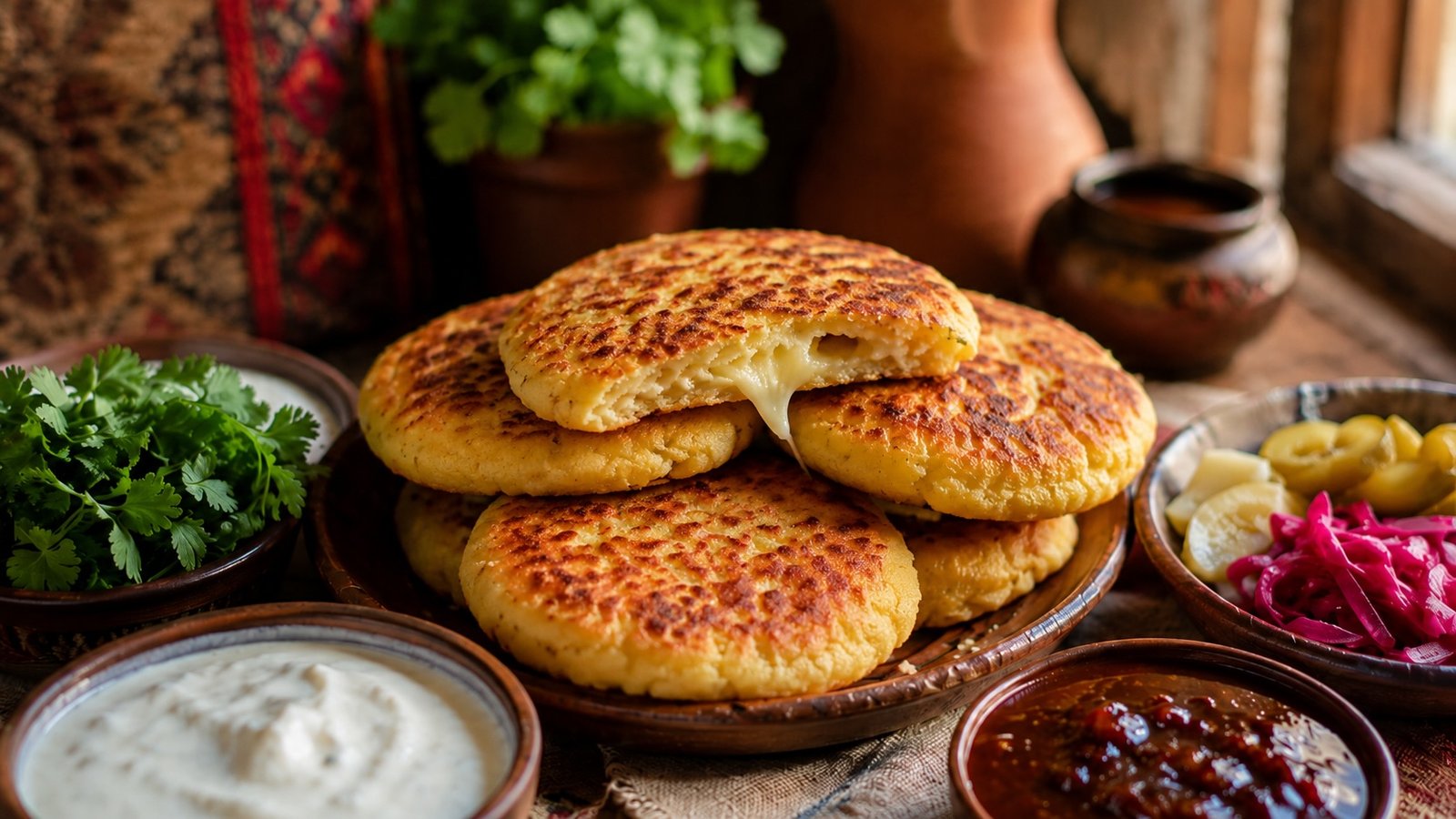
Chvishtari is what happens when ordinary cornbread decides that modesty has been greatly overrated. Golden outside, tender within and packed with melted cheese, it belongs to Georgia’s magnificent family of comforting breads. Yet calling it simply “cheesy cornbread” feels rather unfair. That phrase suggests a dependable side dish. Chvishtari arrives at the table sizzling, fragrant and entirely capable of becoming the meal itself.
Its homeland lies in western Georgia, particularly Svaneti and neighbouring Samegrelo. Svaneti is a mountainous region of dramatic peaks, medieval stone towers and villages that have spent centuries perfecting the art of surviving winter. Unsurprisingly, its cooking favours ingredients that provide warmth, energy and emotional reinforcement.
Chvishtari is usually made from corn flour or finely ground cornmeal mixed with Georgian cheese. Sulguni is the classic choice. The dough is shaped into thick patties, then fried or baked until crisp and lightly browned. Inside, the cheese softens into salty, stretchy pockets.
Georgia’s official tourism information describes chvishtari as a culinary hallmark of both Svaneti and Samegrelo. Traditional mixtures may use warm milk, matsoni or whey, alongside corn flour and sulguni. Smoked sulguni is especially prized because it adds a deeper, almost fireside flavour.
The story of chvishtari begins with mchadi, Georgia’s plain cornbread. Mchadi is generally made from cornmeal, water and salt. It is practical, filling and admirably free from drama. Chvishtari takes that foundation and adds cheese, dairy and, in many recipes, egg. In other words, mchadi pays the household bills while chvishtari orders another bottle of wine.
The name is also linked to Georgia’s older relationship with millet. Before maize became widespread, millet was an important grain in the region. Corn gradually replaced it, but elements of the older bread tradition survived in names and cooking habits. Some Svan versions still incorporate ground millet, giving the patties a nuttier flavour and slightly firmer texture.
Food traditions rarely follow neat administrative borders. Consequently, both Svan and Megrelian cooks have their own ways of making chvishtari. Svaneti is commonly identified as its place of origin, while Samegrelo developed a closely related regional version known as chishdvaar.
Recipes vary from household to household. Some cooks mix grated cheese throughout the dough. Others hide larger chunks inside, creating small molten surprises. A few recipes use only corn flour, cheese, water and salt. Richer versions add milk, matsoni, kefir or egg.
The shape varies too. Chvishtari may appear as a round patty, a flattened oval or a small elongated cake. Pan-frying produces the most seductive crust. However, baking is useful when feeding a crowd or attempting to keep the kitchen marginally respectable.
What makes chvishtari special is its contrast of textures. The exterior becomes crisp and toasted, while the centre stays soft. Corn brings gentle sweetness and an earthy aroma. Meanwhile, sulguni contributes saltiness, acidity and that essential elastic pull.
Fresh sulguni has a springy texture and pleasantly sour flavour. Unfortunately, it is not always easy to find outside Georgia. A mixture of low-moisture mozzarella and feta offers a useful substitute. Mozzarella supplies stretch, while feta provides salt and character. Halloumi can also work, although it melts less enthusiastically.
Chvishtari should be eaten hot. Once cold, the cheese firms and the cornmeal becomes denser. Reheating restores some of the pleasure, but the first few minutes from the pan are the main event.
At a Georgian table, chvishtari can accompany soups, stews, grilled meats and vegetable dishes. It is particularly good beside lobio, Georgia’s richly seasoned bean stew. The bread absorbs the savoury juices, while its cheese softens the earthy beans. Plain yoghurt or matsoni provides a cool, tangy contrast.
Fresh salads also work well. Try tomatoes, cucumber, red onion and herbs with a sharp dressing. Pickled vegetables cut through the richness beautifully. Moreover, tkemali, Georgia’s sour plum sauce, adds enough acidity to keep each mouthful lively.
For breakfast, serve chvishtari with yoghurt, herbs and perhaps a fried egg. At lunch, pair it with roasted peppers or aubergines. During dinner, place a generous platter in the middle of the table and watch everyone abandon the serving utensils.
Georgian amber wine is a fascinating match. Its tannic structure and savoury notes stand up to the cheese. A crisp white wine, particularly one with good acidity, is another reliable partner. Light red wines can work too, especially when chvishtari accompanies meat.
Beer is a simpler choice and arguably requires less philosophical discussion. A clean lager refreshes the palate, while a wheat beer complements the sweetness of corn. For a non-alcoholic pairing, try sparkling mineral water, tart cherry juice or black tea.
Nutritionally, chvishtari offers carbohydrates from corn and protein from cheese. Cornmeal also supplies some fibre, magnesium and several B vitamins. Cheese contributes calcium and protein. Therefore, a couple of patties can be genuinely satisfying.
However, chvishtari is not exactly a wellness retreat. Cheese can bring considerable salt and saturated fat. Frying adds further calories, particularly when the patties absorb too much oil. Portion size matters, although molten cheese has never shown much respect for sensible intentions.
Corn itself is naturally gluten-free. Still, anyone with coeliac disease should check that the cornmeal was processed without cross-contamination. Dairy-free chvishtari is possible with plant-based cheese, though the texture and flavour will differ.
In Georgia, the best place to try chvishtari is naturally Svaneti. Guesthouses and family-run restaurants around Mestia often serve traditional mountain dishes. It is also widely found in Samegrelo and at Georgian restaurants in Tbilisi. The dish is recognised as one of the proud staples of Svan cuisine.
Outside Georgia, look for it in Georgian restaurants, bakeries and specialist Caucasian food shops. Menus may spell the name as chvishtari, chishdvaar or tchvishtari. Sulguni can sometimes be found in Eastern European or Georgian grocers. Otherwise, the mozzarella-and-feta solution performs honourably.
Chvishtari Recipe
This recipe makes eight medium patties. Serve them immediately, preferably while everyone is already sitting down.
Ingredients
300g fine white or yellow cornmeal
250g sulguni, grated or finely chopped
Alternatively, 175g low-moisture mozzarella and 75g feta
One large egg
150–200ml warm whole milk, kefir or plain yoghurt thinned with water
Half a teaspoon of salt, depending on the cheese
Half a teaspoon of baking powder
Two tablespoons of melted butter
Two to three tablespoons of neutral oil, for frying
Plain yoghurt, herbs or tkemali, to serve
Method
Place the cornmeal, baking powder and salt in a large bowl. Mix well, then add the grated cheese. Reserve a few larger cheese pieces when you want particularly molten centres.
Add the egg and melted butter. Pour in 150ml of the warm milk or kefir. Mix with your hand or a sturdy spoon until a soft, mouldable dough forms.
The mixture should hold together without flowing or crumbling. Add more liquid one tablespoon at a time when it feels dry. Cornmeal absorbs moisture gradually, so give it a minute before becoming generous with the milk.
Leave the dough to rest for ten minutes. This helps the cornmeal hydrate and makes shaping easier.
Divide the mixture into eight portions. Shape each piece into a thick oval or round patty, roughly two centimetres deep. Press a reserved piece of cheese into the centre, then seal the dough around it.
Heat a thin layer of oil in a heavy frying pan over medium heat. Add the patties without overcrowding the pan. Reduce the heat slightly and cook for four to five minutes.
Once the undersides are golden, turn the patties carefully. Cook the second side for another four minutes. Covering the pan briefly helps the centres cook and the cheese melt.
Transfer the chvishtari to kitchen paper for only a moment. Serve while hot, with yoghurt, fresh herbs, pickles or sour plum sauce.
The crust should crack gently beneath your fingers. Then the cheese should stretch, the corn should smell toasted, and all plans to eat only one should collapse immediately.