Keema Pie: The Spiced Shepherd’s Pie Britain Needed
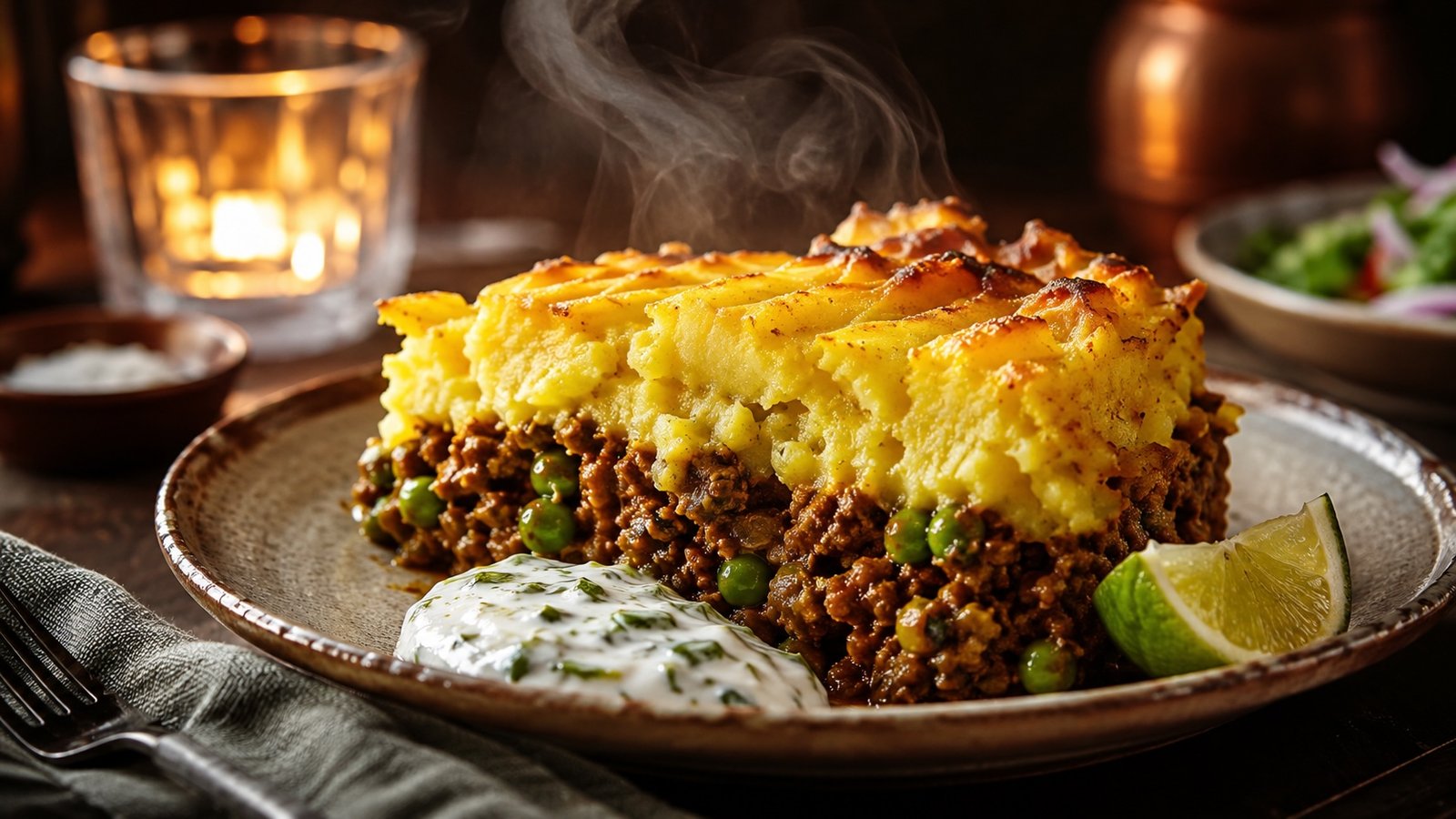
Keema pie is what happens when two great comfort-food traditions meet in a warm kitchen and refuse to leave. On one side, there is keema: fragrant minced meat cooked with onions, ginger, garlic and spices. On the other, there is the British habit of placing savoury meat beneath a generous blanket of mashed potato.
Together, they create something familiar but far more animated than an ordinary shepherd’s pie. It has the reassuring golden topping, the bubbling edges and the promise of leftovers. However, beneath that respectable potato roof, things are considerably livelier.
The word keema, also written as qeema, simply refers to minced meat. It is used across India, Pakistan and Bangladesh, especially for dishes made with lamb, mutton, goat or beef. The name is connected to Turkic words for minced meat, including the modern Turkish kıyma.
Keema dishes are often linked with the cooking traditions of northern India and the Mughal courts. Minced meat was cooked with aromatic spices, sometimes enriched with yoghurt, and served with rice or bread. Keema matar, the familiar combination of mince and peas, became particularly popular across India and Pakistan.
Keema was never confined to one strict formula. It could be dry or saucy, fiery or mild, luxurious or extremely practical. Peas might be added for sweetness, while potatoes created the hearty household favourite known as aloo keema. Elsewhere, cooks used the mixture to fill samosas, naan and other breads.
The pie element, meanwhile, comes from an unmistakably British direction. Shepherd’s pie traditionally uses minced lamb topped with mashed potato. Cottage pie follows the same pattern but uses beef. Consequently, a lamb keema pie is technically a highly travelled shepherd’s pie, while a beef version is its equally well-stamped cottage cousin.
There is no single historic moment when somebody officially invented keema pie. No royal decree survives, and no Victorian cook appears to have claimed it with suspicious confidence. Instead, the dish is best understood as a modern British–South Asian hybrid.
That makes perfect sense. British home cooking has absorbed South Asian flavours for generations. At the same time, South Asian families in Britain have adapted familiar recipes to local ingredients and weekday routines. Keema pie belongs naturally to that shared kitchen, where culinary rules are respected until dinner needs to be ready.
Some versions cover the mince with plain mashed potato. Others add turmeric, cumin, coriander, chilli or garam masala to the topping. A little grated cheddar may also appear, because Britain rarely sees a potato surface without wondering whether cheese could improve it.
The filling varies just as widely. Lamb gives the pie a deep, slightly sweet richness that stands up well to warm spices. Beef creates a sturdier and more savoury result. Chicken or turkey produce a lighter pie, although they benefit from extra oil, yoghurt or stock.
Vegetarian keema pies use lentils, mushrooms, soya mince, paneer or finely chopped vegetables. These are not merely apologetic substitutes. Mushrooms bring earthy depth, while lentils hold spices beautifully. In fact, plant-based keema is common enough that the idea of keema no longer depends entirely on meat.
Regional inspiration can change the pie completely. A Punjabi-style filling may feature peas, tomatoes and assertive garam masala. Pakistani versions often favour beef or mutton and can carry a stronger chilli warmth. Mumbai-inspired keema may lean towards the flavours associated with keema pav, normally served with buttered bread rolls.
For a richer Mughlai mood, yoghurt, cardamom and cinnamon can soften the sharper spices. Alternatively, a southern-style interpretation might include curry leaves, mustard seeds and coconut. Purists may raise an eyebrow, but they will probably still finish their portion.
What makes keema pie special is its balance. The filling is aromatic, savoury and gently hot. By contrast, the potato is creamy and calming. Each spoonful delivers spice, sweetness, richness and softness, followed by the crisp edges everyone quietly competes for.
Moreover, the pie improves as it rests. The spices settle into the meat, while the filling becomes thick enough to hold beneath the mash. It is therefore ideal for preparing ahead, refrigerating and baking when required.
A cold lager is an excellent partner. Its bitterness and carbonation cut through the lamb and butter without fighting the spices. Pale ale also works, particularly when the pie has a robust tomato-based filling.
For wine, choose something fruity rather than aggressively tannic. An off-dry Riesling handles chilli beautifully, while a juicy Grenache suits lamb. A light Shiraz can work too, provided it does not arrive wearing the vinous equivalent of heavy boots.
Non-alcoholic choices deserve equal attention. Mango lassi cools the palate, although it can feel quite substantial beside a potato-topped pie. Sparkling lime water is fresher. Meanwhile, masala chai makes an unexpectedly cosy match, especially on a cold evening when sensible behaviour has already been abandoned.
Keema pie rarely needs another carbohydrate. Nevertheless, naan will probably appear if invited, and nobody has ever successfully prevented bread from joining a sauce-rich dinner. A crisp cucumber and tomato salad is more useful, particularly with lemon juice, red onion and fresh coriander.
Minted yoghurt is almost essential. It brings freshness and gives cautious diners somewhere to shelter from the chilli. Pickled onions, mango chutney or lime pickle add sharper contrasts. Roasted cauliflower also complements the spices without making the meal excessively heavy.
Nutritionally, keema pie can provide protein, iron and vitamin B12 from the meat. Peas contribute fibre, while tomatoes, onions, ginger and spices add useful plant compounds. However, the final nutritional profile depends heavily on the mince, butter and quantity of potato.
Lamb mince can be high in saturated fat, so leaner meat may suit those watching their intake. Turkey, chicken or plant-based alternatives can reduce the overall fat level. Additionally, using olive oil and semi-skimmed milk in the mash makes the topping lighter without turning it into a punishment.
Portion size matters because this pie is remarkably persuasive. One serving can become two while everyone discusses how filling it is. A generous vegetable side helps create a more balanced plate and slows the mysterious disappearance of the crusty corners.
Keema pie now appears in British home kitchens, gastropubs, modern Indian restaurants and recipe collections. Yet it remains less standardised than shepherd’s pie. That is part of its charm: every cook can adjust the meat, spice level and topping.
Ready-made versions occasionally appear in supermarket ranges and independent pie shops, particularly during colder months. However, the most satisfying keema pie is usually homemade. It requires no exotic technique, and the ingredients are widely available in British supermarkets or South Asian grocers.
Keema Pie Recipe
This recipe makes a comforting lamb keema pie with peas and a lightly spiced potato topping. It serves six sensible people, or four people who have stopped pretending.
For the keema filling
- 2 tablespoons vegetable oil
- 1 large onion, finely chopped
- 3 garlic cloves, crushed
- 20g fresh ginger, grated
- 1 green chilli, finely chopped
- 1 teaspoon cumin seeds
- 1 teaspoon ground coriander
- 1 teaspoon ground cumin
- ½ teaspoon turmeric
- 1 teaspoon garam masala
- 500g lamb mince
- 2 tablespoons tomato purée
- 400g tin chopped tomatoes
- 100ml lamb or chicken stock
- 150g frozen peas
- 2 tablespoons chopped fresh coriander
- 1 tablespoon lemon juice
- Salt and black pepper
For the potato topping
- 1kg floury potatoes, peeled and chopped
- 50g butter
- 100ml warm milk
- ½ teaspoon ground turmeric
- ½ teaspoon garam masala
- 3 tablespoons chopped fresh coriander
- 50g mature cheddar, grated, optional
- Salt and black pepper
Heat the oil in a large frying pan over a medium heat. Add the cumin seeds and cook for about thirty seconds, until fragrant.
Stir in the onion with a pinch of salt. Cook gently for eight to ten minutes, until soft and lightly golden. Add the garlic, ginger and chilli, then cook for another two minutes.
Sprinkle in the ground coriander, cumin and turmeric. Stir for thirty seconds, taking care not to burn the spices.
Add the lamb mince and increase the heat. Break it apart with a wooden spoon, then cook until browned. Drain away excessive fat if necessary, although leaving a little behind gives the filling better flavour.
Mix in the tomato purée and cook for one minute. Add the chopped tomatoes and stock, then season with salt and pepper.
Lower the heat and simmer uncovered for twenty to twenty-five minutes. The filling should become rich and fairly thick, not watery. Stir in the peas during the final five minutes.
Remove the pan from the heat. Add the garam masala, coriander and lemon juice. Taste and adjust the seasoning, remembering that the potato topping will soften the flavour.
Meanwhile, put the potatoes into a large saucepan of salted water. Bring to the boil and cook for fifteen to twenty minutes, until completely tender.
Drain the potatoes thoroughly and return them to the hot pan for one minute. This allows excess steam to escape and prevents watery mash.
Mash with the butter, warm milk, turmeric and garam masala. Stir in the coriander, then season generously with salt and pepper.
Heat the oven to 200°C, or 180°C fan. Spoon the keema into a large baking dish and spread it evenly.
Carefully place the mash over the filling. Start around the edges, which helps prevent the filling from escaping upwards. Roughen the surface with a fork to create plenty of crisp ridges.
Scatter over the cheddar, when using. Bake for twenty-five to thirty minutes, until the top is golden and the filling bubbles around the sides.
Leave the pie to rest for ten minutes before serving. Pair it with minted yoghurt, cucumber salad and lime pickle. Then defend the crispy corners with whatever level of diplomacy seems appropriate.