Upside-Down Onion Tart: When Humble Onions Become French Luxury
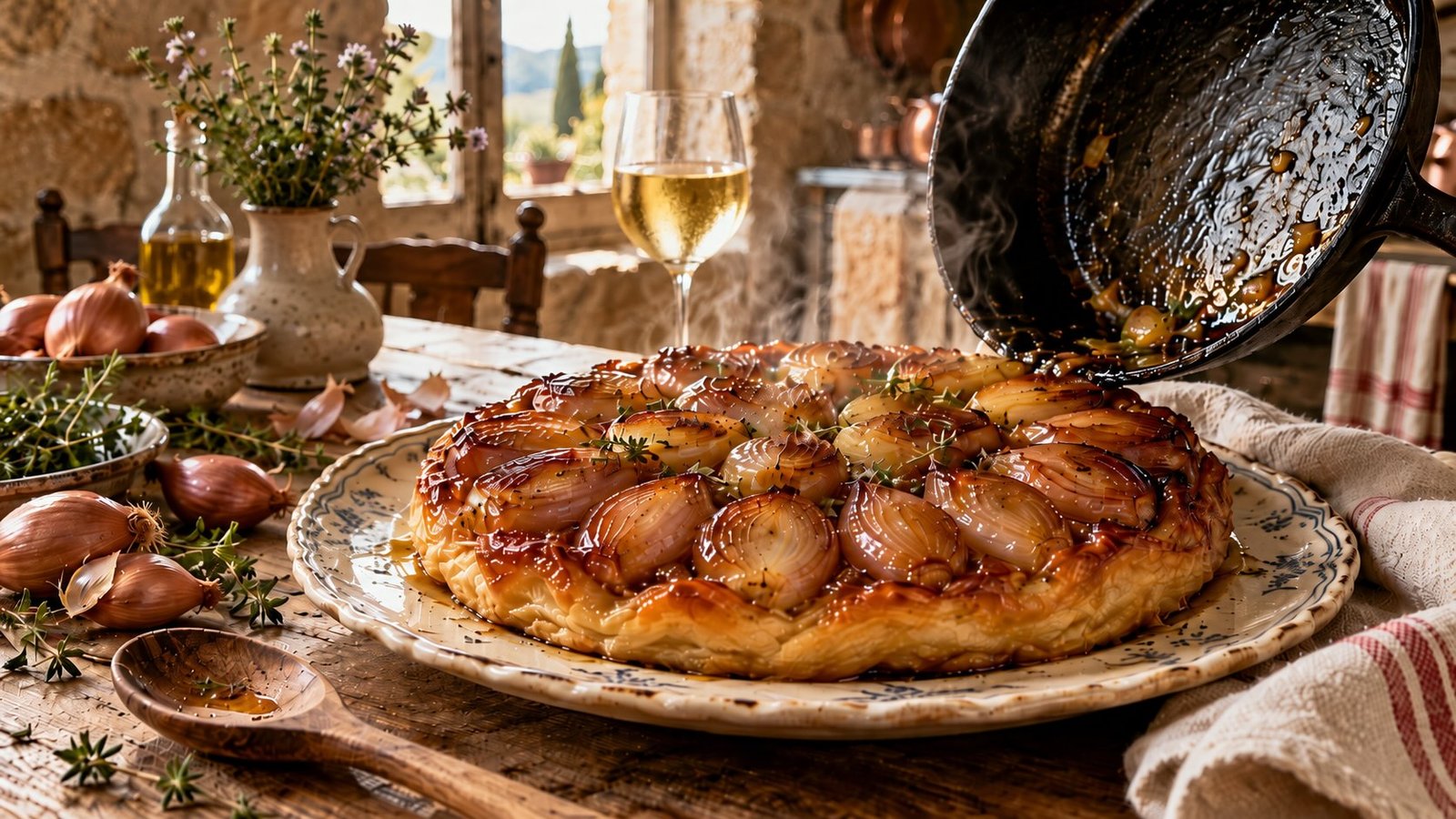
There is something wonderfully cheeky about an upside-down onion tart. Take one of the cheapest vegetables in the kitchen, add butter, pastry and a little French confidence, and suddenly dinner looks expensive. The humble onion, normally condemned to supporting roles in soups and stews, becomes the undisputed star. Better still, its transformation requires surprisingly little effort.
An upside-down onion tart belongs to the family of savoury tartes Tatin. It combines deeply caramelised onions with crisp, buttery pastry. However, unlike an ordinary tart, everything happens backwards. The onions cook underneath, the pastry bakes on top, and the whole creation gets flipped before serving. It sounds suspiciously like a kitchen accident, which is precisely where the story begins.
The original tarte Tatin emerged from the French town of Lamotte-Beuvron, where sisters Stéphanie and Caroline Tatin operated a hotel during the late nineteenth century. According to popular legend, an apple tart went wrong, and one sister rescued it by placing pastry over the fruit. The resulting dessert became famous, although historians question whether the accident actually happened.
Upside-down fruit tarts existed long before the sisters. Nevertheless, the Tatin name became synonymous with caramelised ingredients beneath a golden pastry crust. Eventually, inventive cooks realised that apples need not enjoy exclusive rights to this treatment. Onions, with their remarkable natural sweetness, were obvious candidates.
The exact origins of the savoury onion version remain unclear. Rather than a centuries-old regional speciality, it is a relatively modern adaptation of the classic French technique. Today, it appears in bistros, contemporary cookbooks and enthusiastic home kitchens across Europe.
What makes the dish special is the extraordinary transformation of an ordinary ingredient. Raw onions can be sharp, pungent and occasionally antisocial. However, gentle cooking softens their character and concentrates their sweetness. Butter contributes richness, while thyme adds an earthy fragrance. A little balsamic vinegar provides acidity and prevents everything from becoming excessively sweet.
The cooking method offers another advantage. Because the pastry sits above the onions, it can puff and crisp without absorbing too much moisture. Meanwhile, the vegetables caramelise directly against the hot pan. When inverted, they reveal an attractive pattern of glossy circles beneath the golden crust.
Naturally, the dramatic reversal is part of the entertainment. Place a plate over the frying pan, turn everything upside down and hope for the best. Occasionally, an onion refuses to leave the pan. Fortunately, a spoon and a little discretion usually resolve the disagreement.
Regional interpretations give the tart considerable personality. In France, shallot versions are particularly elegant, often featuring thyme and goat’s cheese. Smaller shallots become tender, glossy and almost jewel-like during cooking. Larger yellow onions, meanwhile, produce a sweeter, more rustic appearance.
British cooks have enthusiastically embraced red onion tarte Tatin. Some versions feature mature Cheddar, while others use Stilton for a sharper contrast. Creamy Lancashire cheese also works beautifully. Moreover, red onions create dramatic burgundy colours that make the finished tart particularly photogenic.
Mediterranean variations introduce rosemary, olives, Parmesan or roasted garlic. Italian-inspired versions sometimes use a splash of balsamic vinegar for additional depth. However, restraint is essential. The onions should remain the principal attraction, not disappear beneath an ambitious collection of toppings.
An upside-down onion tart is also remarkably versatile. Serve small slices as a starter, or offer generous portions with salad for lunch. It makes an excellent vegetarian supper and looks sufficiently impressive for a dinner party. Furthermore, it tastes wonderful warm, so there is no need for frantic last-minute serving.
Choosing the right drink is another pleasure. A dry Loire Valley Chenin Blanc complements the sweetness while providing refreshing acidity. Alternatively, a lightly oaked Chardonnay harmonises beautifully with the buttery pastry. For red wine enthusiasts, Pinot Noir offers gentle tannins and delicate fruit flavours.
Beer lovers need not feel excluded. A traditional British bitter provides malty notes and pleasant bitterness. French cider is another excellent companion, particularly when the tart contains sharp goat’s cheese. For a non-alcoholic option, try sparkling apple juice with lemon or unsweetened iced tea.
As for accompaniments, simplicity usually wins. Rocket salad with lemon vinaigrette provides a refreshing, peppery contrast. Watercress and chicory work equally well, while steamed green beans with mustard dressing make a more substantial plate. Roasted beetroot also complements the onions, especially alongside creamy cheese.
Despite its indulgent appearance, the tart contains some nutritionally valuable ingredients. Onions provide fibre, vitamin C and plant compounds such as quercetin. They also contain prebiotic fructans, which can support beneficial intestinal bacteria. However, cooking affects certain nutrients, and pastry inevitably changes the nutritional equation.
Butter and puff pastry contribute saturated fat and calories, so portion size matters. Additionally, onions may cause digestive discomfort for people sensitive to fructans, particularly those following a low-FODMAP diet. The sensible approach is to enjoy the tart as part of a balanced meal rather than pretend it is a disguised health supplement.
Finding one outside your own kitchen is relatively straightforward. French-inspired bistros, independent cafés and seasonal British restaurants occasionally feature onion or shallot tarte Tatin. Look particularly for vegetarian starters accompanied by goat’s cheese or dressed leaves. Nevertheless, the homemade version offers one unbeatable advantage: complete control over the caramelisation.
Recipe: Classic Upside-Down Onion Tart with Thyme and Goat’s Cheese
Serves: 4–6
Preparation: 20 minutes
Cooking: 45–55 minutes
Ingredients
- 5–6 medium red onions
- 320 g ready-rolled all-butter puff pastry
- 40 g unsalted butter
- 2 tablespoons olive oil
- 1 tablespoon soft brown sugar
- 2 tablespoons balsamic vinegar
- 1 teaspoon fresh thyme leaves
- 1 teaspoon Dijon mustard
- 80 g soft goat’s cheese
- Sea salt and freshly ground black pepper
Method
Preheat the oven to 200°C (180°C fan). Peel the onions and cut them horizontally into thick halves. Keep the layers intact so they hold their shape during cooking.
Melt the butter with olive oil in a 24 cm ovenproof frying pan. Add the sugar and stir gently. Arrange the onions cut-side down, packing them closely together.
Cook over medium-low heat for 15–20 minutes until golden and tender. Avoid moving them unnecessarily. Next, add balsamic vinegar, thyme, salt and pepper. Continue cooking until the liquid becomes a glossy glaze.
Remove the pan from the heat. Cut the pastry into a circle slightly larger than the pan. Spread Dijon mustard over one side, then place it mustard-side down over the onions. Tuck the edges carefully inside.
Bake for 25–30 minutes until the pastry becomes puffed and deeply golden. Remove from the oven and rest for five minutes. Place a serving plate over the pan, then carefully invert everything using oven gloves.
Finally, scatter crumbled goat’s cheese and fresh thyme over the tart. Serve warm with a peppery salad and a glass of crisp white wine.
The upside-down onion tart proves that culinary sophistication does not require expensive ingredients. Sometimes, all you need is patience, pastry and the courage to turn dinner upside down.
Post Comment