Spanakopita: Greek Delicious Spinach and Feta Pie
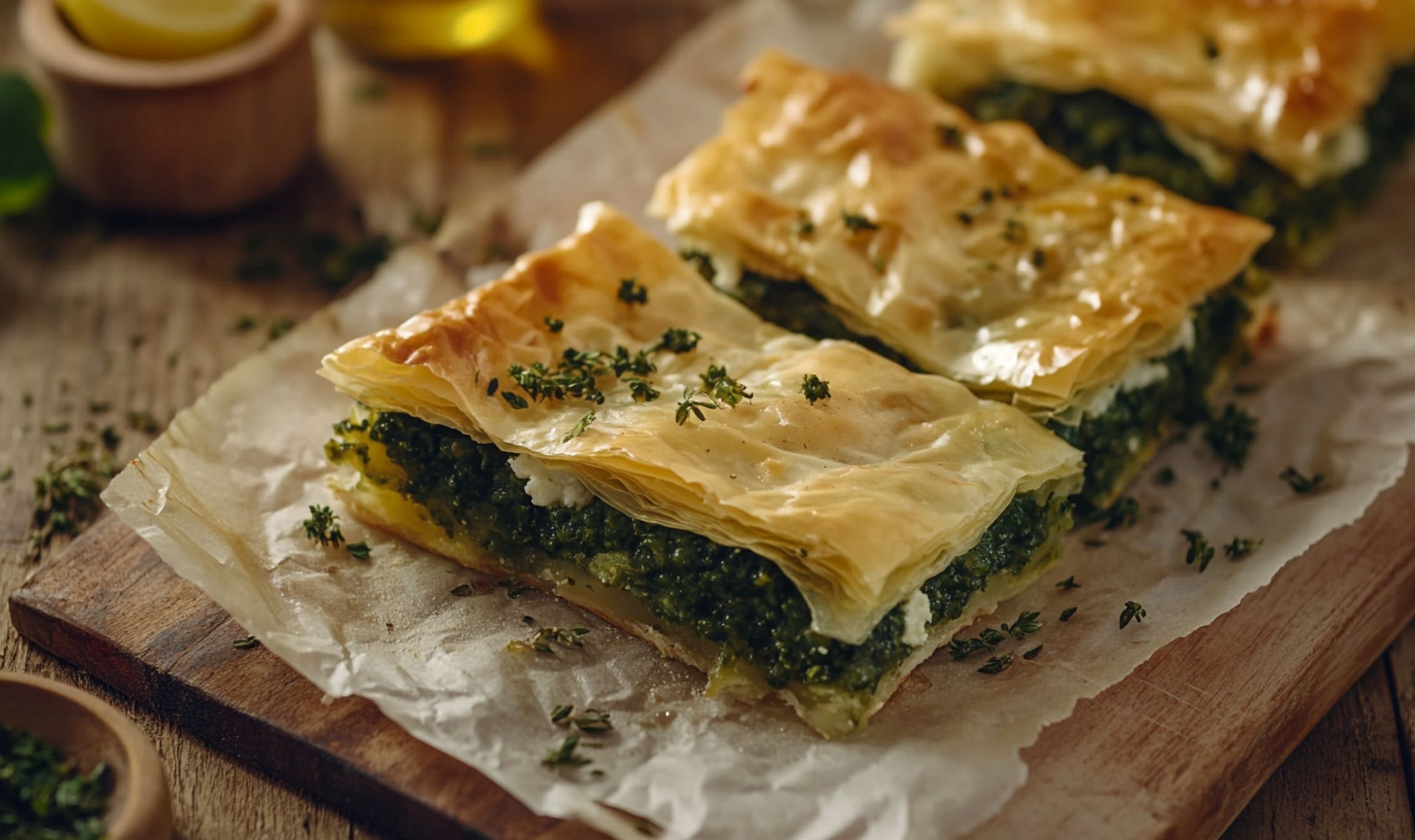
Spanakopita is what happens when spinach refuses to accept its reputation as sensible food. Instead of sitting politely beside boiled potatoes, it joins feta, herbs and onions inside layers of crisp filo pastry. The result is green, golden and gloriously messy. One bite produces a shower of flakes large enough to reveal exactly where you have been eating.
The name is refreshingly direct. In Greek, spanaki means spinach, while pita means pie. Therefore, spanakopita is simply spinach pie. Greek cuisine clearly decided that elaborate branding was unnecessary when the product was already this good.
Its precise origin is harder to establish. Greece has produced pies filled with cultivated and wild greens for centuries. Rural cooks used whatever grew nearby, including chard, sorrel, leeks, dandelion leaves and aromatic herbs. Spinach itself travelled west from ancient Persia and gradually became established around the Mediterranean.
Meanwhile, thin sheets of pastry developed across the eastern Mediterranean and the wider Ottoman world. Greek filo takes its name from the word for “leaf”, which suits pastry so delicate that it occasionally tears when merely looked at. The modern spanakopita probably emerged from several overlapping culinary traditions rather than one dramatic moment of invention.
Greek regional cooking then gave the pie its many personalities. Epirus, in north-western Greece, is particularly famous for savoury pies. Mountain villages there developed an impressive repertoire based on seasonal greens, cheese and handmade pastry. These were practical dishes, made from affordable ingredients and designed to feed families rather than impress restaurant critics.
In Epirus, the pastry may be thicker and more rustic than commercial filo. Wild greens can also appear beside, or instead of, spinach. Consequently, the flavour is deeper and slightly more bitter. It tastes less like a tidy bakery snack and more like something prepared by a grandmother who considers written recipes a sign of moral weakness.
Elsewhere, cooks may use chard, leeks or sorrel. Cretan versions sometimes contain mizithra, a soft regional cheese, rather than feta. Some families add eggs to bind the filling, while others avoid them. Dill is popular, although parsley, mint, fennel fronds and oregano may also make an appearance.
There is also a fasting version known as nistisimi spanakopita. It contains no cheese or eggs and is traditionally eaten during Orthodox fasting periods. Olive oil, onions, greens and herbs provide the flavour instead. Far from being a gloomy exercise in religious discipline, it can taste remarkably fresh and satisfying.
Outside Greece, spanakopita often appears as small triangles. These are convenient for parties, buffets and people who pretend they will eat only one. In Greek homes, however, the pie is frequently baked in a large round or rectangular tray. It is then cut into generous pieces and served warm or at room temperature.
What makes spanakopita special is its contrast. Filo pastry is dry, light and brittle, while the filling is soft and moist. Feta brings salt and acidity. Spinach supplies an earthy character, and the herbs keep everything lively. Olive oil connects the layers and creates the golden crust.
Balance matters because a poor spanakopita can become damp and heavy. Spinach contains a surprising amount of water, most of which must be removed. Otherwise, the filling steams the pastry from below. Nobody dreams of travelling to Greece for a pie with the structural integrity of a wet envelope.
Fresh spinach gives a bright flavour, but frozen spinach works perfectly well. However, it must be thawed and squeezed thoroughly. Some cooks salt fresh spinach before squeezing it by hand. Others wilt it briefly in a pan. Both approaches work, provided the final filling is relatively dry.
Filo demands a little patience, though not the nervous ceremony sometimes suggested by cookery programmes. Keep unused sheets beneath a slightly damp tea towel. Brush each layer lightly with olive oil or melted butter. Small tears do not matter because additional sheets will cover them. Spanakopita is forgiving, even when the pastry behaves like expensive tissue paper.
The pie works beautifully as lunch with a tomato, cucumber and olive salad. Tzatziki adds coolness, while roasted peppers bring sweetness. For a larger Greek-style meal, serve it beside grilled aubergines, courgettes, gigantes beans or lemon-roasted potatoes.
It also belongs naturally on a mezze table. Dolmades, hummus, olives, taramasalata and warm bread all complement it. Nevertheless, avoid adding too many rich cheese dishes. Spanakopita already contains feta and does not need a supporting cast composed entirely of dairy products.
For drinks, a crisp Greek white wine is the obvious choice. Assyrtiko has enough acidity to balance the feta and olive oil. Moschofilero, with its floral character, suits herb-heavy versions. Sauvignon Blanc also works, particularly when the filling contains plenty of dill and lemon.
A dry rosé is another easy partner. Meanwhile, beer drinkers might choose a light lager or a wheat beer. Sparkling water with lemon offers a refreshing alcohol-free option. Greek mountain tea can be served with a slice at breakfast, which is a respectable way to begin the day and considerably better than arguing with a bowl of cereal.
Spanakopita contains spinach, which provides folate, vitamin K, vitamin A precursors and several minerals. Olive oil contributes mostly unsaturated fat, while feta supplies protein and calcium. Herbs add flavour without requiring much extra salt or fat.
Still, the word “spinach” does not magically turn pastry into a wellness retreat. Filo, oil and cheese increase the energy content. Feta can also be high in salt, so portion size matters for people watching their sodium intake. Moreover, packaged filo usually contains gluten, and traditional feta is unsuitable for anyone avoiding dairy.
A lighter version can use more greens, less cheese and a restrained amount of oil. However, restraint should not become punishment. Spanakopita is a pie, not a medical appointment. Serve it with vegetables and enjoy a sensible slice rather than removing everything that makes it worth eating.
In Greece, you can find spanakopita in bakeries, cafés, markets and family kitchens. It is often sold for breakfast or as a convenient daytime snack. Regional tavernas may offer more rustic versions made with local greens and handmade pastry.
In Britain, Greek bakeries, Mediterranean delis and Greek restaurants are the best places to look. Supermarkets also sell spinach-and-feta pastries, although these can vary considerably. Check whether feta, olive oil and herbs feature prominently. A filling dominated by bland cheese sauce is wearing Greek costume rather than genuinely participating.
Fortunately, homemade spanakopita is achievable. Commercial filo removes the most technically demanding part, leaving you to concentrate on the filling. It also fills the kitchen with the smell of butter, herbs and toasted pastry, which is useful when you want everyone to appear at the table without being called twice.
Traditional Spanakopita Recipe
This recipe makes one large pie, enough for six generous servings or eight smaller portions.
Ingredients
- 500g fresh spinach, washed
- 200g feta, crumbled
- 6 spring onions, finely sliced
- 1 small leek, finely sliced
- 2 tablespoons chopped fresh dill
- 2 tablespoons chopped parsley
- 1 tablespoon chopped mint
- 2 medium eggs, lightly beaten
- Finely grated zest of half a lemon
- A small pinch of grated nutmeg
- Freshly ground black pepper
- 250g filo pastry
- 80ml olive oil, plus extra for the tin
- Sesame seeds, optional
Heat the oven to 190°C, or 170°C fan. Lightly oil a roughly 23cm by 30cm baking tin.
Place the spinach in a large pan with only the water clinging to its leaves. Cover and cook for two or three minutes, stirring once, until wilted. Transfer it to a colander and leave it to cool.
Meanwhile, warm a tablespoon of olive oil in a frying pan. Add the spring onions and leek, then cook gently for six minutes. They should soften without browning. Remove the pan from the heat and allow the mixture to cool.
Squeeze the spinach firmly to remove as much liquid as possible. This step is not glamorous, but neither is rescuing soggy pastry. Chop the drained spinach and place it in a large bowl.
Add the cooked onions, feta, dill, parsley, mint, eggs, lemon zest and nutmeg. Season generously with black pepper. Taste before adding salt, since feta may already provide enough.
Unroll the filo and cover it with a slightly damp tea towel. Lay one sheet in the tin, allowing the edges to hang over the sides. Brush lightly with olive oil, then add another sheet at a different angle. Continue until you have used roughly half the pastry.
Spread the spinach filling evenly over the base. Fold any overhanging pastry towards the centre. Layer the remaining filo on top, brushing each sheet with oil. Tuck the edges neatly around the filling.
Brush the surface with a final little oil and scatter over sesame seeds, when using. Score the top into portions without cutting completely through the filling. This makes the finished pie easier to slice.
Bake for 35 to 45 minutes. The pastry should look crisp, deeply golden and slightly theatrical. Leave the spanakopita to rest for at least 15 minutes before cutting.
Serve it warm, rather than fiercely hot, with a Greek salad and lemon wedges. Leftovers keep in the fridge for up to three days. Reheat them in the oven, where the filo can become crisp again. The microwave, by contrast, will turn that proud golden crust into a damp cardigan.