Torta de Mil Hojas: Crunchy, Sticky, Glorious Layer Cake
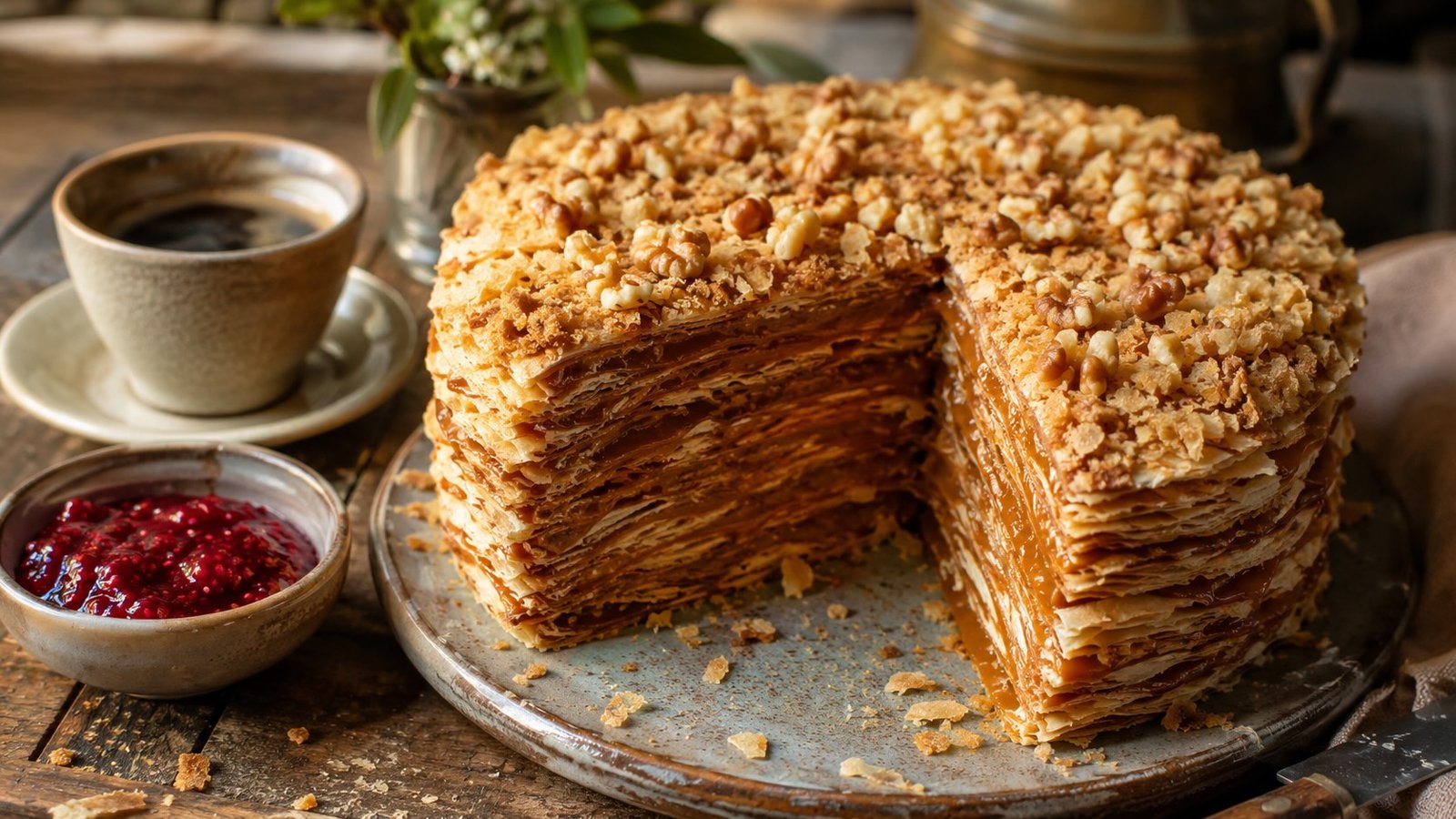
Some cakes whisper politely from the dessert table. Torta de mil hojas does not. It arrives like a festive relative with excellent hair, strong opinions, and a dangerously generous hand with caramel. This Chilean classic is made from very thin pastry sheets, stacked with manjar, the Chilean name for dulce de leche. Often, it also brings walnuts, jam, cream, or meringue to the party, because apparently being crisp, sticky and magnificent was not enough.
The name means “thousand sheets”, which sounds dramatic. Naturally, it does not usually contain a thousand layers. That would be less a cake and more a construction project. However, the spirit is there. Each pastry sheet is rolled thin, baked until crisp, then layered with manjar until the whole cake becomes a golden tower of sweetness and crunch. Chilean recipes commonly describe it as a traditional cake made from thin, crunchy dough with dulce de leche and jam. Other versions add walnuts, which give the cake a lovely bitter, earthy note against all that caramel charm.
Its ancestry feels European at first glance. You can see the family resemblance to French mille-feuille, with its delicate pastry and layered structure. Yet torta de mil hojas took a different road in Chile. Instead of pastry cream and fondant, it leans into manjar. That single decision changes everything. The cake becomes deeper, stickier, warmer and more domestic. It feels less like a patisserie window and more like a family celebration where somebody has already hidden the best slice.
Manjar is the soul of the cake. It is milk and sugar cooked down into a thick caramel spread. In Chile, it is not just an ingredient. It is a national mood. It appears in alfajores, pancakes, cakes, biscuits, spoons, sandwiches, and probably childhood memories that were technically meant to stay private. Chilean food writers often point out how central manjar is to local baking, especially in layered cakes and pastries.
There is also a useful language warning here. In Chile, torta usually means a cake, often a layered celebration cake. In Mexico, however, a torta is commonly a sandwich. So, if someone offers you torta de mil hojas in Santiago, expect dessert. If someone offers you a torta in Mexico City, do not expect caramel. Expect bread, meat, avocado, heat, joy, and a completely different lunch situation. Food vocabulary across Spanish-speaking countries loves doing this sort of thing. Very inconsiderate, but delicious.
The cake likely grew from European pastry traditions carried and adapted across Latin America. However, Chile made it its own through local taste and ritual. The pastry is less airy than puff pastry. It can be made with flour, butter, egg yolks, milk, and sometimes a splash of pisco. That last detail is very Chilean. Even when the alcohol bakes off, pisco adds a wink of flavour and a sense that the cake has dressed up properly.
Regional and family variations are half the fun. Some versions use only manjar between the sheets. Others add raspberry jam, which cuts through the sweetness with a sharp red streak. Walnuts are common too, giving crunch upon crunch. Some cakes are finished with crumbs made from broken pastry. Others get a smooth coat of manjar, a cloud of meringue, or a scattering of nuts. In Costa Rica, a related cake called torta chilena is believed to have developed from Chilean mil hojas traditions brought by immigrants, showing how far this style travelled and changed along the way.
What makes torta de mil hojas special is the contrast. The pastry is crisp at first. Then it softens slightly where it meets the manjar. So each forkful has crackle, chew, creaminess and caramel. Frankly, that is part of the appeal. A perfect slice is almost suspicious. A slightly collapsed slice says someone made it by hand, and that someone understood joy.
It is a celebration cake above all. Birthdays, family lunches, holidays and grand gatherings suit it beautifully. Still, it also works as a quiet afternoon treat with coffee, though “quiet” may be ambitious once crumbs start flying. Because it is rich, small slices make sense. Of course, that sensible thought often arrives five minutes after the second slice.
For drinks, coffee is the obvious partner. A strong black coffee balances the sweetness and keeps the caramel from taking over the room. Tea also works, especially a brisk black tea such as Assam or English Breakfast. For something colder, try sparkling water with lemon, which resets the palate nicely. If you want wine, a late-harvest dessert wine can work, but go carefully. The cake is already sweet enough to negotiate its own trade agreement.
Other foods should be simple. Fresh berries are excellent, especially raspberries or strawberries. Their acidity brings order to the caramel chaos. A spoonful of plain yoghurt or crème fraîche can also help. Toasted nuts make sense beside it, though the cake may already contain walnuts. After a savoury meal, keep the main course lighter. Grilled fish, chicken, salads, empanadas, or a vegetable-heavy spread will leave enough room for the cake to do its glorious damage.
Health benefits require a calm tone and an honest face. This is not a wellness bar wearing a pastry costume. It is a rich dessert made with butter, flour, sugar and manjar. However, food is not only nutrition. It is memory, culture, pleasure and gathering. Walnuts add some useful fats and minerals. Milk-based manjar brings calcium and protein in modest amounts. Still, the cake is high in sugar and saturated fat. So the best approach is simple. Eat it slowly. Share it widely. Do not pretend the crumbs do not count.
Where can you find it? In Chile, look for bakeries, family bakeries, cake shops and markets, especially around celebrations. Outside Chile, Latin American bakeries are your best bet. Chilean community cafés or home bakers may also make it to order. Some online bakeries offer versions for birthdays and parties. However, if you want the full drama, make it yourself at least once. You will understand the cake better after rolling the sixth pastry sheet and questioning every life choice that led you there.
Torta de Mil Hojas Recipe
This version makes a tall, generous torta de mil hojas with manjar, walnuts and a little raspberry jam. It serves about twelve people, or eight people with dangerous confidence.
You will need 500g plain flour, plus extra for rolling. Add 250g cold unsalted butter, cubed, four egg yolks, 180ml milk, one tablespoon pisco or brandy, one teaspoon vanilla extract, and a pinch of salt. For the filling, use about 900g manjar or dulce de leche, 120g finely chopped toasted walnuts, and 150g raspberry jam. For finishing, keep extra walnuts and pastry crumbs.
Put the flour and salt in a large bowl. Rub in the butter until the mixture looks like coarse crumbs. Add the egg yolks, milk, pisco and vanilla. Mix until a dough forms. It should be firm but not dry. If needed, add a splash more milk. Wrap it and chill for at least one hour.
Heat the oven to 190°C. Divide the dough into ten equal pieces. Roll each piece very thinly on a floured surface. Aim for circles of about 22cm. They do not need to be perfect. This cake forgives rustic edges, mostly because it is too busy being delicious. Prick each circle all over with a fork. Bake the layers one or two at a time for eight to ten minutes, until lightly golden and crisp. Let them cool completely.
Choose the neatest pastry sheet for the top. Crush any broken edges into crumbs for decoration. Warm the manjar slightly so it spreads easily. Place one pastry sheet on a serving plate. Spread with a thin layer of manjar. Add a light sprinkle of walnuts. Place another sheet on top and press gently. Continue layering. Add raspberry jam to two or three layers, not every layer, or the cake may become too soft.
Once stacked, cover the top and sides with more manjar. Press pastry crumbs and chopped walnuts around the sides and over the top. Let the cake rest for at least six hours. Overnight is better. This gives the layers time to settle, soften slightly, and become one grand sticky argument.
Slice with a sharp serrated knife. Serve with strong coffee, fresh berries, and a calm acceptance that the plate will never look tidy again.