Welsh Cakes: Somewhere Between a Scone and a Biscuit
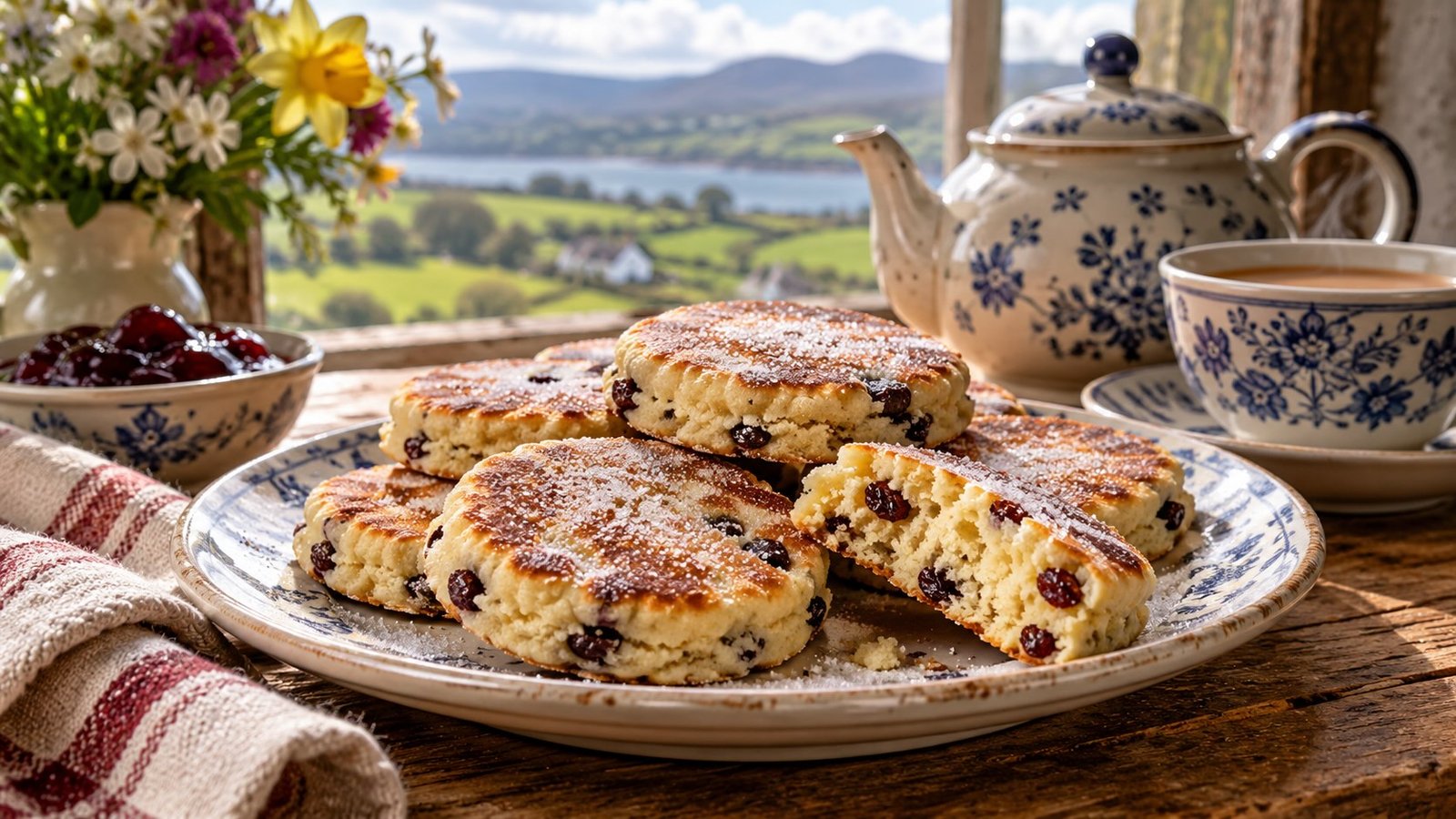
There are foods that make a grand entrance. Welsh cakes do nothing of the sort. They sit quietly beside a cup of tea, dusted with sugar and looking suspiciously like rather modest biscuits. Then you bite into one. Soft, buttery and lightly spiced, with currants tucked through the crumb, it becomes clear that Wales has been keeping something rather good to itself.
Welsh cakes are known in Welsh as picau ar y maen, meaning roughly “cakes on the stone”. That name tells you almost everything about their origins. Traditionally, they were cooked on a flat bakestone rather than baked inside an oven. The heavy stone or iron plate sat over the fire and provided an efficient cooking surface. Consequently, Welsh cakes belonged naturally to homes where an elaborate oven was neither necessary nor available.
Their precise beginnings are difficult to date. However, Welsh cakes became particularly associated with the industrial communities of South Wales during the nineteenth century. Coal mining and heavy industry created a demand for food that was cheap, portable and filling. A Welsh cake fitted the job beautifully. It travelled well, needed no plate and could survive a journey in a pocket or lunch tin.
There is a pleasing practicality behind the recipe too. Flour, fat, sugar and dried fruit were relatively accessible ingredients. Eggs and milk turned the mixture into a soft dough, while spice provided a little luxury. Unlike a sponge cake, nothing needed to rise dramatically. Nobody had to hover nervously beside an oven hoping for miracles.
The bakestone itself is part of the story. In Welsh it is called a maen, and older versions were genuinely made from stone. Later, cast-iron plates became common. Modern cooks generally use a heavy frying pan or griddle, which produces much the same result without requiring archaeological kitchen equipment.
Regional and family variations inevitably developed. Some recipes use butter, while others traditionally relied on lard or a mixture of fats. Currants remain the classic dried fruit, although raisins or sultanas sometimes appear. Mixed spice, nutmeg and cinnamon all have supporters. As usual with traditional food, every grandmother appears to have possessed the authentic recipe, including grandmothers whose recipes contradicted one another completely.
There are also intriguing relatives. In parts of Wales, jam split Welsh cakes are sliced and filled with jam. Other versions contain apple or different dried fruits. Some contemporary bakers add chocolate chips, citrus zest or even savoury ingredients. Purists may raise an eyebrow, but traditional recipes themselves evolved according to whatever happened to be available.
What makes Welsh cakes special is their position somewhere between several familiar foods. They resemble biscuits, but they are softer. They resemble scones, yet they are thinner and cooked on a griddle. Meanwhile, their buttery crumb can almost suggest shortcake. Essentially, the Welsh cake has declined to join anybody else’s culinary category.
Texture matters enormously. A good Welsh cake should develop a gently browned exterior while remaining tender inside. Overcook it and you get something closer to a biscuit. Undercook it and the centre becomes doughy. Fortunately, the ideal middle ground takes only a few minutes on each side.
They are traditionally eaten warm or cold, usually with caster sugar scattered over the surface. Butter is optional and arguably unnecessary when the cake itself already contains plenty. Jam works beautifully, though. Moreover, Welsh cakes make excellent companions for berries, stewed apples or a spoonful of thick cream.
Tea is the obvious drink pairing, particularly a strong black tea with enough character to balance the buttery sweetness. Earl Grey adds a pleasant citrus note. Meanwhile, coffee works surprisingly well with versions containing cinnamon or nutmeg. For something more celebratory, a lightly sweet sparkling wine can complement the fruit without overwhelming the cake.
Welsh cakes also fit naturally onto an afternoon tea table. Serve them alongside Bara Brith, fresh berries and perhaps some mild Welsh cheese. The contrast between sweet cake and slightly salty cheese works particularly well. Alternatively, serve warm Welsh cakes at breakfast with yoghurt and fruit, although this may cause traditionalists to write stern letters.
Nutritionally, Welsh cakes occupy the sensible territory called “cake”. They provide carbohydrates for energy, while currants contribute small amounts of fibre, iron and potassium. Eggs add protein and several micronutrients. Nevertheless, butter, sugar and refined flour remain major ingredients, so nobody should mistake them for a disguised salad.
Portion size is their saving grace. Welsh cakes are usually small and satisfying, which makes moderation relatively painless. Homemade versions also allow you to reduce the sugar slightly or incorporate some wholemeal flour. However, reducing the butter too aggressively rather defeats the exercise. Sometimes culinary virtue simply has to know when it has lost.
In Wales, finding Welsh cakes is rarely difficult. Bakeries, markets, cafés, farm shops and supermarkets commonly sell them. Cardiff and Swansea offer plenty of versions, while smaller towns often provide more traditional examples. They also appear at food festivals and heritage attractions, where watching them cook on a hot griddle adds considerably to their charm.
Outside Wales, British supermarkets sometimes stock packaged versions. Specialist Welsh food shops are another possibility. Yet Welsh cakes are so easy to make that buying them from hundreds of miles away seems unnecessarily complicated. Flour, butter, currants and a frying pan can transport your kitchen to Wales remarkably efficiently.
Perhaps that simplicity explains their longevity. Welsh cakes were never designed to impress fashionable restaurants. Instead, they were everyday food made from ordinary ingredients and cooked with minimal equipment. Nevertheless, they developed a distinctive identity strong enough to survive industrialisation, supermarkets and several generations of people attempting to improve everything by adding chocolate.
Traditional Welsh Cakes Recipe
This recipe makes approximately 16 Welsh cakes. They are best eaten slightly warm, preferably with tea and absolutely no urgent appointments.
Ingredients
225g self-raising flour
110g cold unsalted butter, cubed
75g caster sugar, plus extra for dusting
75g currants
½ teaspoon mixed spice
A small pinch of salt
1 large egg, beaten
1–2 tablespoons milk, if required
A little butter for greasing the pan
Method
Put the flour, mixed spice and salt into a large bowl. Add the cold butter and rub it into the flour with your fingertips. Continue until the mixture resembles fine breadcrumbs.
Stir in the caster sugar and currants. Then add the beaten egg and mix everything together. The mixture should begin forming a soft dough.
If it seems too dry, add milk gradually. Start with a teaspoon rather than enthusiastically pouring in the whole tablespoon. Welsh cake dough should be soft enough to roll but not sticky.
Lightly flour the work surface. Roll the dough to approximately 7–8mm thick. Cut rounds using a 6–7cm pastry cutter, then gather the scraps and roll them again.
Heat a heavy frying pan, cast-iron skillet or griddle over medium-low heat. Grease it very lightly with butter. The surface should be hot but not smoking.
Cook the Welsh cakes in batches for around three minutes on each side. They should become golden brown with darker toasted patches. Keep the heat moderate because the outside can brown long before the centre cooks.
Transfer the cooked cakes to a wire rack. While they are still warm, sprinkle both sides lightly with caster sugar. Allow them to cool for a few minutes before serving.
Eat them warm from the griddle, or let them cool completely and store them in an airtight container. They are excellent the following day after a few seconds of reheating. However, persuading sixteen freshly cooked Welsh cakes to survive until tomorrow may prove the most technically demanding part of the recipe.
Post Comment