Welsh leek and potato pie: Simple Ingredients, Serious Comfort
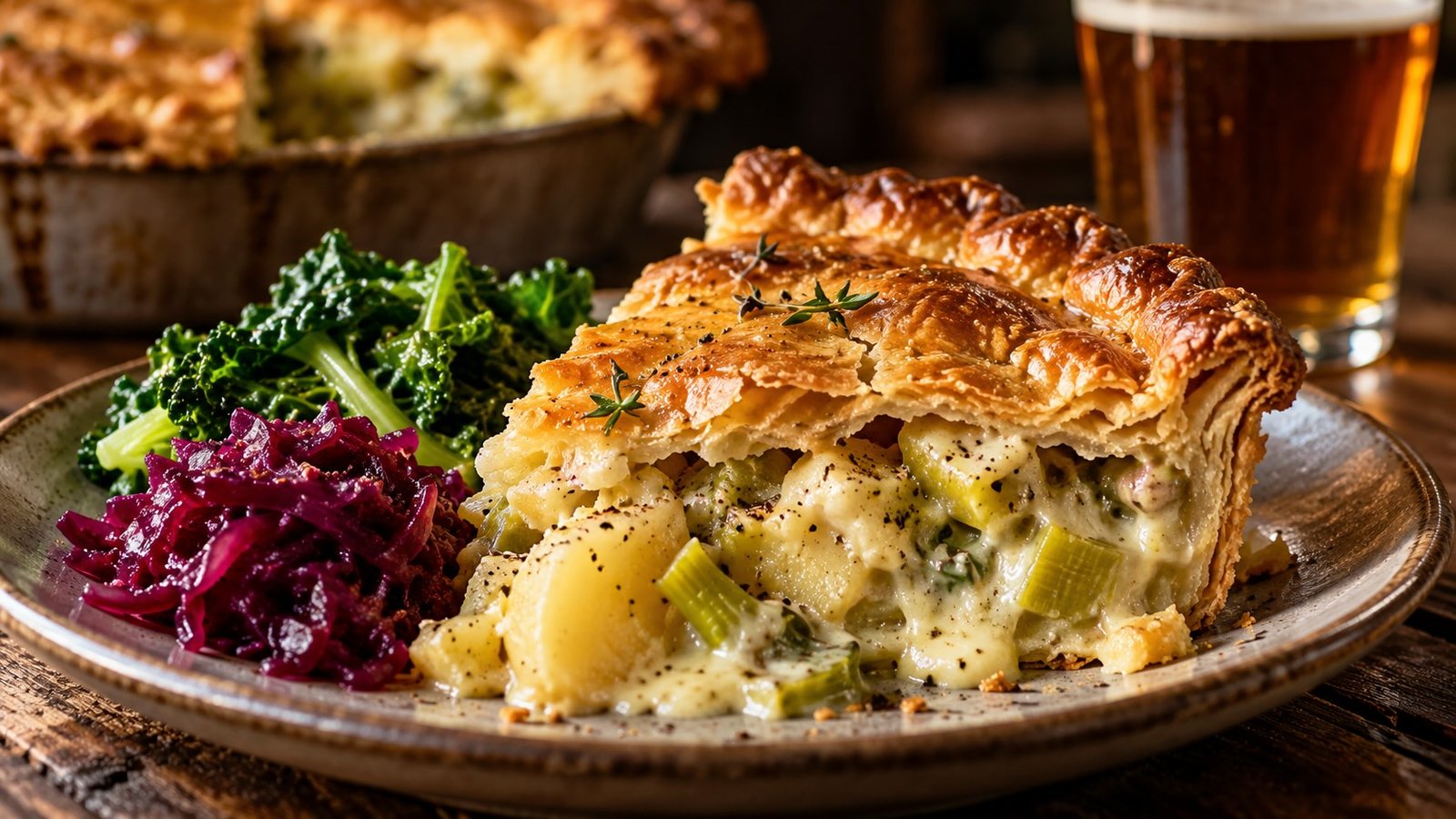
Some pies announce themselves with beef, gravy and considerable confidence. Welsh leek and potato pie takes a quieter approach. It is creamy, earthy, buttery and deeply comforting. Moreover, it manages to make two remarkably inexpensive vegetables feel like a proper dinner.
The leek gives the dish its unmistakably Welsh personality. Potatoes provide substance, while pastry turns the whole arrangement into something worth sitting down for. Add Welsh cheese and a little mustard, and suddenly humble vegetables have developed ambitions.
There is, however, an important historical qualification. Welsh leek and potato pie is better understood as a dish rooted in Welsh ingredients and cooking traditions than as one ancient recipe handed down unchanged for centuries. Traditional Welsh cooking was practical, seasonal and heavily influenced by what a household could grow, raise or obtain locally.
Leeks certainly have the stronger historical credentials. They have been associated with Wales for centuries and remain one of the country’s national symbols. Legends connect them with St David and Welsh soldiers, although history becomes rather misty once saints, battles and vegetables occupy the same story.
By the sixteenth century, the association was already firmly established. Shakespeare even referred to the Welsh custom of wearing leeks in Henry V. Consequently, few vegetables carry quite so much national responsibility.
Potatoes came later. Once established in Britain, though, they became ideal food for working households. They were inexpensive, filling and adaptable. In Wales, potatoes naturally found their way into soups, stews, breads, cakes and countless everyday meals.
Traditional cawl illustrates the broader culinary background beautifully. The Welsh broth varied from household to household and could contain potatoes and leeks alongside meat and other vegetables. In poorer circumstances, vegetable-only versions were also prepared. Nothing useful was wasted, and nobody required an Instagram account before serving dinner.
Pie-making has equally genuine Welsh roots. Historic Welsh recipes include substantial meat pies associated with communities, farms and celebrations. On the Gower Peninsula, for example, bidding pies were prepared for traditional wedding feasts.
Against that background, enclosing leeks and potatoes beneath pastry seems entirely natural. It combines the economy of vegetable cooking with Britain’s enduring belief that almost anything improves after being covered with pastry.
There is no single legally binding Welsh leek and potato pie, which is fortunate because kitchens dislike legislation. Some versions are completely vegetarian. Others contain bacon, ham, chicken, lamb or beef.
Cheese is another popular addition. Mature Cheddar works well, but Caerphilly gives the pie a particularly Welsh character. Its fresh acidity balances the sweetness of slowly cooked leeks and the richness of cream.
Some cooks use shortcrust pastry above and below the filling. Others prefer a puff pastry lid. Meanwhile, another branch of the family abandons pastry completely and covers creamy leeks with mashed or sliced potatoes.
Cockles provide a more coastal variation. Welsh cooking has a long relationship with shellfish, particularly around South Wales. Combining cockles with leeks, potatoes, cream and pastry creates a pie that feels unmistakably connected to the Welsh coast.
The magic comes from texture rather than culinary fireworks. Leeks become silky and slightly sweet when cooked slowly in butter. Potatoes remain soft but substantial, while the pastry provides the crisp contrast.
Then there is the sauce. Milk or cream, butter, flour, mustard and cheese transform the vegetables into a filling rather than a collection of worthy intentions. Black pepper and thyme provide enough seasoning without overwhelming the leek.
Most importantly, it tastes comforting without becoming monotonous. Leeks have more personality than onions but remain gentle. Potatoes absorb surrounding flavours with almost suspicious enthusiasm.
A good pie should therefore be creamy rather than wet. The potatoes should retain their shape, and the leeks should remain identifiable. Otherwise, you have accidentally made leek and potato soup wearing a pastry hat.
A Welsh ale is probably the most natural partner. A malty bitter works particularly well because its slight bitterness cuts through butter, cheese and pastry. Alternatively, try a dry cider for a brighter contrast.
Wine drinkers have several options. A crisp Chardonnay works with the creamy filling, especially if it is not heavily oaked. Sauvignon Blanc offers more acidity, while a dry Riesling brings freshness without bullying the leeks.
For a non-alcoholic pairing, cloudy apple juice is excellent. Sparkling water with lemon also works surprisingly well. Tea is perfectly acceptable too, particularly when leftovers appear at lunchtime the following day.
Keep the accompaniments simple because the pie already supplies plenty of starch and richness. Buttered peas, steamed greens or cabbage work beautifully. A sharp green salad with mustard vinaigrette provides useful acidity.
Pickled red cabbage is another excellent companion. Its sweet-sour character cuts directly through the creamy filling. Furthermore, its colour makes the plate look considerably more exciting.
If you want something more substantial, serve the pie with roasted carrots or parsnips. Avoid chips unless you are pursuing potatoes with unusual determination. There is such a thing as too much commitment.
Leeks provide fibre and useful micronutrients, while potatoes contribute potassium, vitamin C and carbohydrates. Keeping some darker green leek sections also adds colour, flavour and nutrients. Therefore, the basic filling can be quite wholesome.
The complications arrive carrying butter, cream, cheese and pastry. These ingredients increase saturated fat and calories considerably. That does not make the pie forbidden territory; it simply makes portion size relevant.
A lighter version can use semi-skimmed milk instead of cream. You can also reduce the cheese or use pastry only on top. Adding peas, spinach or kale increases the vegetable content without destroying the character of the dish.
Leek and potato combinations appear widely in Welsh cafés, pubs and restaurants, although the exact pie varies considerably. You are more likely to encounter leek paired with cheese, chicken, ham or beef than find one universally recognised formula.
Look particularly at traditional pubs, farm shops and bakeries specialising in Welsh produce. Food festivals and St David’s Day menus are also promising territory. Nevertheless, this is one of those dishes that arguably makes most sense at home.
The ingredients are inexpensive and forgiving. More importantly, a homemade pie emerges from the oven bubbling around the edges and smelling of butter, leeks and pastry. Restaurants have many advantages, but they cannot give you that particular moment in your own kitchen.
Classic Welsh Leek and Potato Pie Recipe
Serves 6
For the pastry:
350g plain flour
175g cold unsalted butter, cubed
½ teaspoon salt
5–7 tablespoons cold water
1 egg, beaten, for glazing
For the filling:
600g potatoes, preferably Maris Piper
3 large leeks
50g butter
2 tablespoons plain flour
300ml whole milk
100ml double cream
1 teaspoon Dijon or English mustard
1 teaspoon fresh thyme leaves
120g Caerphilly cheese, crumbled
Salt and freshly ground black pepper
A small pinch of nutmeg
First, make the pastry. Rub the cold butter into the flour and salt until the mixture resembles coarse breadcrumbs. Gradually add enough cold water to bring everything together into a dough.
Handle it as little as possible. Wrap the dough and refrigerate it for about 30 minutes while preparing the filling.
Peel the potatoes and cut them into roughly 2cm cubes. Simmer them in salted water for about eight minutes. They should be beginning to soften but must remain firm enough to hold their shape.
Drain thoroughly and leave them to steam dry. Meanwhile, slice the leeks and wash them carefully. Leeks possess an extraordinary ability to conceal half a Welsh hillside between their layers.
Melt the butter in a large frying pan. Add the leeks and cook gently for about ten minutes. They should soften without browning.
Sprinkle over the flour and stir for another minute. Gradually pour in the milk, stirring continuously. Add the cream, mustard, thyme and nutmeg.
Simmer gently until the sauce thickens. Remove the pan from the heat, then fold in the Caerphilly. Season generously with black pepper and cautiously with salt.
Add the potatoes and mix gently. Allow the filling to cool completely. This matters because hot filling can soften the pastry before the oven has a chance to make it crisp.
Heat the oven to 200°C, or 180°C fan. Divide the pastry into two portions, making one slightly larger than the other.
Roll out the larger piece and use it to line a 23cm pie dish. Spoon in the cooled leek and potato mixture, spreading it evenly.
Roll out the remaining pastry and place it over the filling. Press the edges together, trim away the excess and crimp the rim. Cut two small steam holes in the centre.
Brush generously with beaten egg. If there is spare pastry, make a few decorative leaves for the top. A leek-shaped decoration is technically possible, although perhaps taking national symbolism further than necessary.
Bake for 35–40 minutes until the pastry is deeply golden and crisp. Leave the pie to stand for about ten minutes before cutting.
Serve warm with buttered greens, peas or a sharp dressed salad. Add a pint of Welsh ale or a glass of dry cider, and you have a meal built from modest ingredients that somehow feels generous.
That is really the charm of Welsh leek and potato pie. Nothing about it needs to shout. The leek supplies sweetness, the potato provides comfort, Caerphilly adds character and pastry performs its ancient duty of making everything underneath it seem more important.