Pecan Pie: A Slice of Southern Nostalgia
Pecan pie does not believe in restraint. It is sweet, buttery, sticky, nutty and unapologetically rich. One slice looks perfectly reasonable. A second suggests poor judgement, although usually the pleasant sort. Yet pecan pie is more than sugar wearing a respectable coat of nuts. It carries a distinctly American story of native trees, Southern kitchens, commercial ingenuity and family traditions. Today, it sits comfortably beside turkey at Thanksgiving and appears across the South during Christmas. Somehow, a dessert capable of gluing a fork to a plate became an expression of home.
Pecans themselves have a much longer history than pecan pie. The pecan tree is native to North America, particularly the Mississippi Valley, Texas and parts of Mexico. Indigenous peoples valued the nuts long before European settlement. They were nutritious, portable and conveniently supplied by trees rather than supermarkets.
The name “pecan” is generally traced to an Algonquian word associated with nuts requiring a stone to crack. Early European settlers quickly developed an enthusiasm for them too. By the eighteenth century, pecan trees were being planted beyond their natural range.
The pie came considerably later. One printed pecan pie recipe appeared in 1886, although it was quite different from the glossy version we recognise today. Pecans were boiled in milk and combined with a rich custard. In other words, the ancestors of modern pecan pie were rather more restrained.
By 1898, a recipe for “Texas Pecan Pie” was circulating in print. Mrs Matt Bradley of Tioga, Texas, even claimed to have created it. Her version contained sugar, milk, eggs, flour and chopped pecans, with meringue spread over the top.
Then corn syrup entered the story. During the 1920s, syrup-based versions appeared, and Karo helped popularise them through recipes and advertising. The company did not invent pecan pie, despite a persistent culinary legend. However, its promotion helped transform a regional speciality into an American institution.
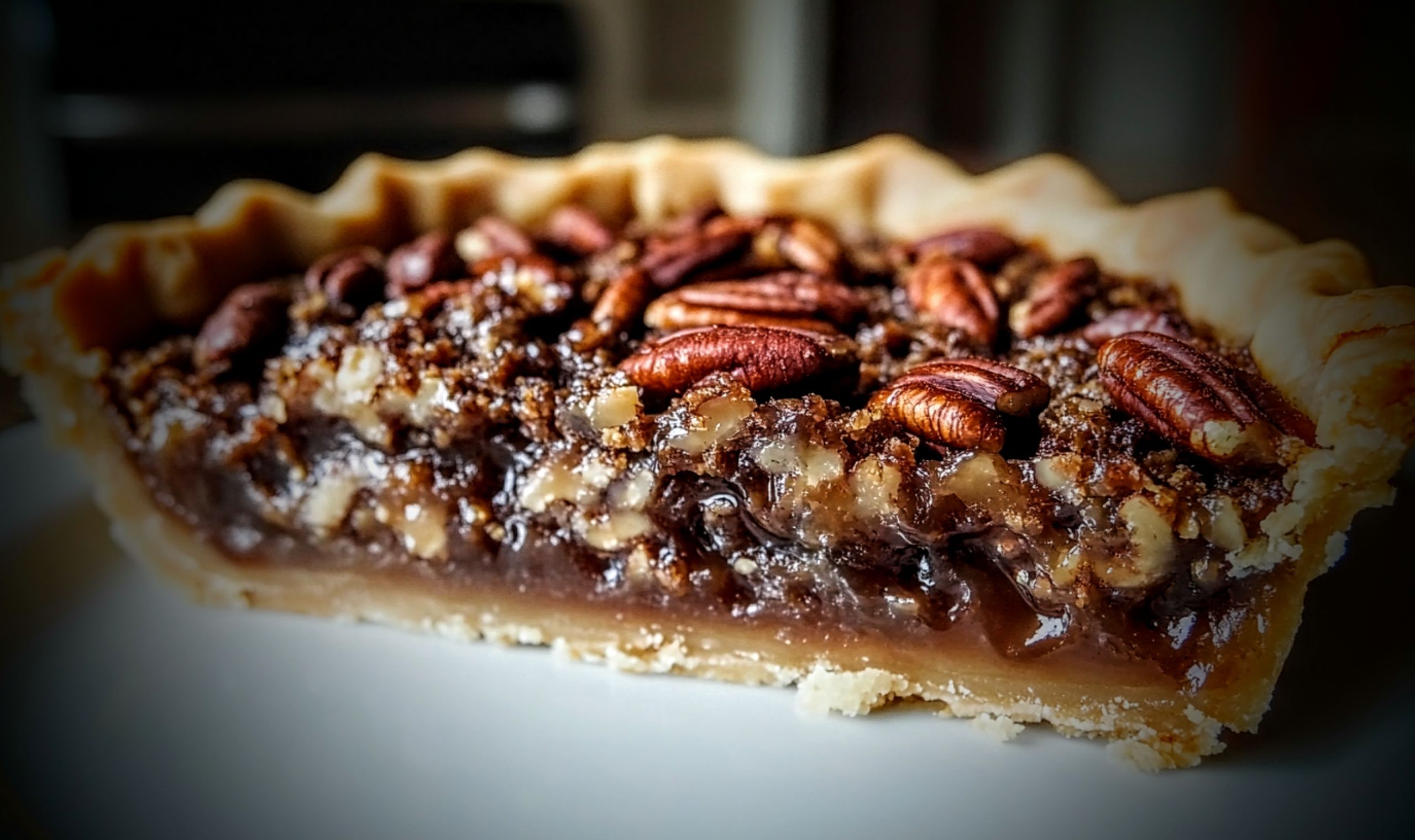
The modern formula is wonderfully simple. Pecans float above a filling of eggs, sugar, syrup and butter inside shortcrust pastry. During baking, the filling becomes something between custard, caramel and edible adhesive. Meanwhile, the pecans toast on top and develop a slight bitterness that prevents complete surrender to sweetness.
Texas naturally considers the pie particularly its own. In 2013, pecan pie became the official state pie of Texas. This was perhaps less a legislative breakthrough than official recognition of something Texans had already decided.
However, there is no single sacred version. Texas-style pies often emphasise pecans and straightforward sweetness. Elsewhere, cooks replace some corn syrup with maple syrup, cane syrup, molasses or brown sugar. Each change alters the character considerably.
Bourbon pecan pie is another Southern favourite. A modest splash adds warmth, vanilla notes and complexity. Chocolate pecan pie takes a less modest approach and adds dark chocolate. It is magnificent, although nobody should pretend it is a light finish to dinner.
Some bakers add toasted pecans throughout the filling rather than simply arranging halves across the top. Others use chopped nuts for a more even texture. There are also miniature pecan pies, pecan tartlets and pecan bars. These are supposedly easier to portion, which assumes remarkable human discipline.
What makes the classic special is contrast. The pastry should be crisp and slightly savoury. The centre should remain soft but set, while the surface becomes deeply caramelised. Then come the pecans: crunchy, buttery and slightly earthy.
Temperature matters too. Straight from the oven, the filling can be almost molten. At room temperature, however, its flavours become clearer and the texture settles beautifully. A little warmth is lovely, but pecan pie should not behave like volcanic lava.
Vanilla ice cream is probably its most famous companion. The cold creaminess softens both sweetness and temperature. Alternatively, barely sweetened whipped cream provides richness without adding another layer of sugar.
For drinks, coffee is difficult to beat. Its bitterness cuts through the filling and resets the palate. Strong black tea performs much the same job, particularly for British pie enthusiasts suspicious of drinking bourbon at lunchtime.
After dinner, bourbon makes obvious sense. A nutty oloroso sherry also works beautifully, as does tawny port. However, avoid very sweet drinks. Pecan pie has already brought enough sugar to the meeting.
Food pairings require similar diplomacy. After roast turkey, ham or barbecue, keep the accompaniments relatively simple. Fresh berries can provide acidity, while poached pears offer fruit without competing aggressively. Crème fraîche is particularly good because its gentle sourness balances the caramel filling.
Pecans themselves have genuine nutritional virtues. They provide mostly unsaturated fats, along with fibre, protein and several minerals. They also contain naturally occurring antioxidant compounds. Unfortunately, the pie surrounds these admirable nuts with butter, sugar and pastry.
Therefore, pecan pie is better regarded as a dessert rather than a wellness strategy. It is calorie-dense and usually high in added sugars. People with nut allergies must obviously avoid it, while portion size deserves some attention. Fortunately, its richness makes a modest slice surprisingly satisfying.
In the United States, pecan pie is easy to find in Southern bakeries, diners and supermarkets. It becomes especially visible around Thanksgiving and Christmas. Texas, Louisiana, Georgia and neighbouring states offer countless local interpretations.
In Britain, it is less ubiquitous but increasingly available from American-style bakeries and specialist pie shops. Fortunately, pecans are easy to buy, and homemade pecan pie is remarkably straightforward. The hardest part is waiting for it to cool before cutting.
That waiting period also explains something about the pie itself. Pecan pie is not fashionable food pretending to be rustic. It genuinely belongs to a tradition of home baking, holiday tables and recipes passed between generations.
Perhaps that is why it remains nostalgic even for people who did not grow up eating it. There is something reassuringly old-fashioned about the combination. Pastry, nuts, butter and caramel need no architectural presentation or microscopic garnish.
Pecan pie simply sits there, brown and glossy, looking slightly excessive. Then someone cuts the first slice. Very shortly afterwards, arguments about calories become strangely theoretical.
Classic Southern Pecan Pie Recipe
This version keeps the traditional gooey centre but uses both golden syrup and brown sugar. Golden syrup is readily available in Britain and gives the filling a rich caramel character. A little bourbon is optional, although the word “optional” is doing considerable work here.
Serves: 8–10
Preparation: 25 minutes, plus chilling
Baking: 45–55 minutes
For the pastry
250g plain flour
125g cold unsalted butter, cubed
25g icing sugar
¼ teaspoon fine salt
1 large egg yolk
2–3 tablespoons cold water
For the filling
250g pecan halves
3 large eggs
150g soft dark brown sugar
200g golden syrup
60g unsalted butter, melted and slightly cooled
1 teaspoon vanilla extract
1 tablespoon bourbon, optional
½ teaspoon fine salt
Rub the butter into the flour, icing sugar and salt until the mixture resembles coarse breadcrumbs. Add the egg yolk. Then add enough cold water to bring everything together into a dough.
Shape the dough into a disc and wrap it. Chill for at least 30 minutes. Meanwhile, lightly toast the pecans in a dry frying pan or oven until fragrant, then leave them to cool.
Heat the oven to 190°C, or 170°C fan. Roll the pastry on a lightly floured surface and line a 23cm tart or pie tin. Leave a slight overhang because pastry, like enthusiasm after lunch, tends to shrink.
Chill the lined tin for another 15 minutes. Line it with baking paper and baking beans, then bake for 15 minutes. Remove the paper and beans and bake for another 5–7 minutes until the base looks dry and lightly golden.
Reduce the oven to 180°C, or 160°C fan. Roughly chop about half the toasted pecans and scatter them across the pastry base. Keep the attractive halves for the top.
Whisk the eggs and brown sugar together until combined. Add the golden syrup, melted butter, vanilla, bourbon and salt. Mix until smooth, but avoid incorporating too much air.
Pour the filling carefully over the chopped pecans. Arrange the remaining pecan halves across the surface. You can create an elegant circular pattern or simply scatter them naturally and claim rustic authenticity.
Bake for 35–45 minutes. The edges should look set, while the centre should still have a gentle wobble. If the pastry or pecans brown too quickly, loosely cover the pie with foil.
Allow the pie to cool completely before slicing. This is important because the filling continues setting as it cools. Cutting it immediately produces delicious pecan syrup with pastry attached, which is enjoyable but technically another dessert.
Serve at room temperature or slightly warm. Add vanilla ice cream, whipped cream or crème fraîche. Pour strong coffee alongside it, or bourbon if the occasion has already abandoned all pretence of productivity.
The result should have crisp pastry, a soft caramel centre and plenty of toasted pecans. It is sweet, certainly, but the nuts, salt and buttery crust keep it balanced. And if someone asks whether there is room for another slice, Southern hospitality traditionally requires that we avoid difficult questions.