Hell a Top, Hell a Bottom: Jamaica’s Sweet Potato Pudding
Jamaican sweet potato pudding is one of those desserts that immediately raises a small identity crisis. Is it a pudding, a cake, a pie, or something altogether more rebellious? Technically, it is pudding. Yet it slices like a dense cake, carries the comforting weight of a baked custard, and has enough spice to announce itself before the plate reaches the table.
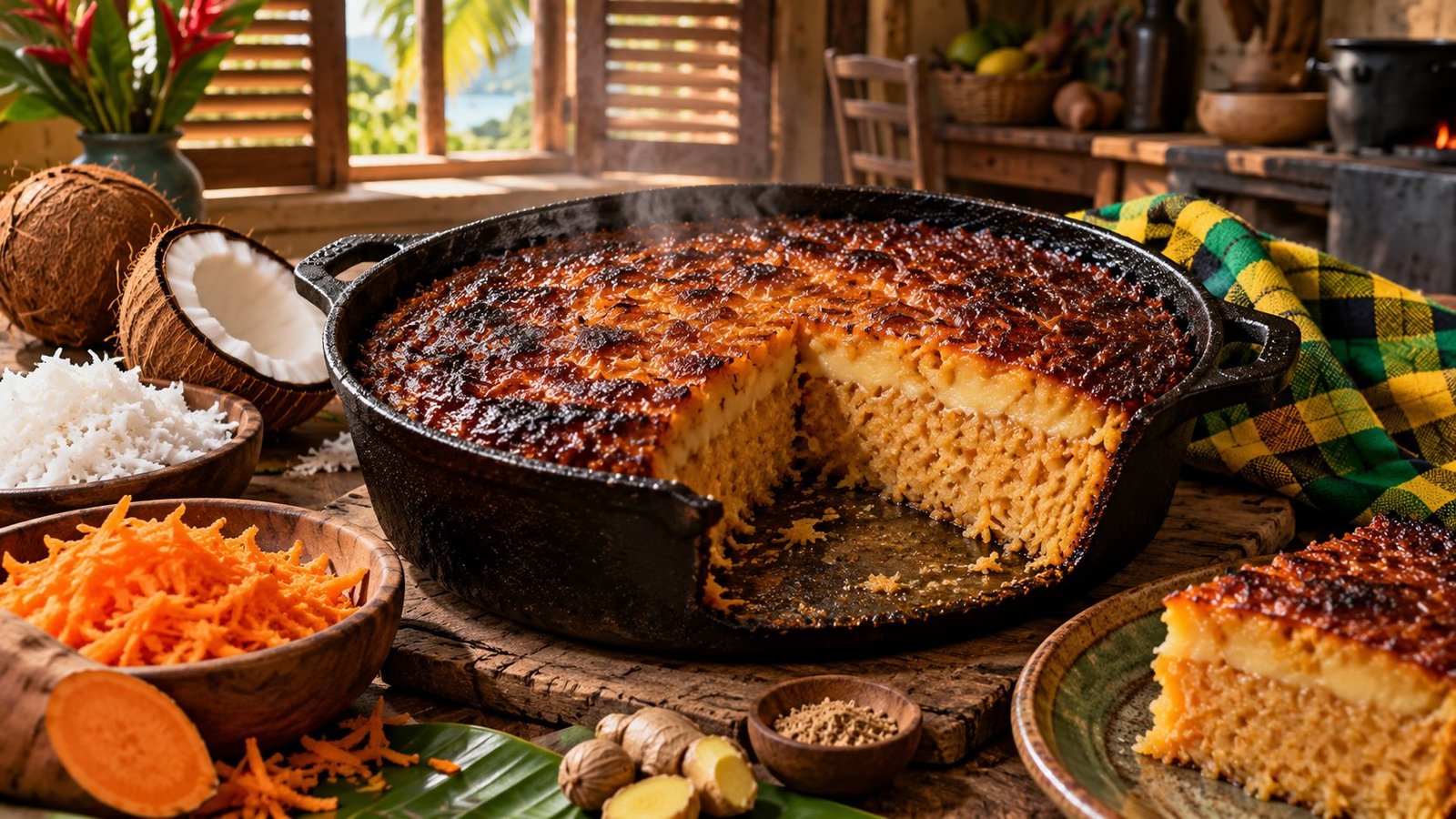
In Jamaica, however, nobody needs a committee to settle the matter. Sweet potato pudding is simply a much-loved traditional dessert, deeply connected with home cooking, Sunday meals and family gatherings. Its dense, moist centre and darker caramelised exterior make it instantly recognisable. Better still, the famous soft top known as the “custard” provides a rich contrast to the substantial pudding underneath.
Its story begins with ingredients that travelled considerable distances before becoming unmistakably Jamaican. Sweet potatoes originated in tropical America and were cultivated across the Caribbean long before European colonisation. Meanwhile, coconut, spices, sugar and different baking traditions arrived through centuries of migration, colonial trade and cultural exchange.
Jamaican cooking transformed these ingredients into something distinctive. Sweet potato pudding belongs to a broader Caribbean tradition of dense puddings made from grated roots, fruit, coconut and spices. However, Jamaica developed its own particularly celebrated version, combining grated sweet potato with coconut milk, brown sugar, ginger, nutmeg and warming spices.
Traditionally, preparation required considerably more determination than switching an oven to 180°C. The sweet potatoes had to be grated by hand, while fresh coconut was grated and squeezed to produce coconut milk. Consequently, pudding day could become an impressive upper-body workout disguised as domestic cookery.
Then came the baking method responsible for one of Jamaican food culture’s best-known expressions: “hell a top, hell a bottom, hallelujah in the middle”. The pudding was traditionally cooked in a Dutch pot or heavy iron vessel with hot coals beneath it and more coals placed on its lid. Thus, fierce heat surrounded the pudding while the precious sweet centre slowly cooked inside.
Modern ovens are admittedly less theatrical. Nevertheless, many cooks still try to reproduce the contrasting textures of the traditional method. A properly made pudding should have a dark, slightly chewy exterior, a dense but moist interior and that luscious softer layer towards the top.
Different households naturally have different ideas about what constitutes perfection. Some versions include raisins, while others add rum-soaked fruit. Vanilla, cinnamon, allspice and nutmeg appear in varying proportions, and fresh ginger can range from polite background warmth to a fairly serious conversation.
The choice of sweet potato matters too. Jamaican sweet potatoes are generally starchier and less watery than the bright orange varieties commonly sold as sweet potatoes in Britain and North America. Their flesh may be white, cream or yellowish rather than vivid orange. As a result, using orange sweet potatoes can produce a softer and somewhat different pudding.
There are related sweet potato puddings elsewhere in the Caribbean, although recipes vary considerably between islands. Furthermore, Jamaican cooks themselves may use flour, cornmeal or neither in differing quantities. Some favour an exceptionally dense pudding, whereas others prefer something softer and almost custardy.
What makes the Jamaican version special is precisely this combination of textures. The grated potato retains enough structure to prevent the pudding becoming ordinary cake. Coconut milk contributes richness without making it taste obviously coconut-heavy, while molasses-rich brown sugar brings both sweetness and depth.
Spices do the rest of the work. Nutmeg and cinnamon provide warmth, ginger contributes brightness, and allspice gives the pudding an unmistakably Caribbean character. Meanwhile, vanilla rounds everything out before the caramelised edges supply the final argument for having another slice.
Drinks should either complement those spices or cut through the pudding’s considerable richness. Strong Jamaican coffee is excellent, particularly if served without too much sugar. Black tea also works beautifully, which may explain why tea and dense fruit or root-based cakes seem capable of maintaining diplomatic relations almost anywhere in the former British Empire.
For something stronger, dark Jamaican rum is the obvious companion. An aged rum with vanilla, caramel and spice notes mirrors the pudding particularly well. Alternatively, a rum punch offers a brighter contrast, although pudding plus rum punch can turn an innocent afternoon into something requiring fewer subsequent appointments.
Fresh fruit provides perhaps the best food accompaniment. Pineapple, mango, papaya or citrus add acidity and freshness against the dense pudding. Moreover, a little unsweetened whipped cream or coconut cream works well if you want extra indulgence without simply adding more sugar.
Nutritionally, sweet potato brings useful fibre, potassium and carotenoids, alongside various vitamins and minerals. Coconut also supplies minerals and fats, while spices such as ginger and cinnamon contain numerous plant compounds. Therefore, the pudding has more nutritional substance than many desserts based predominantly on refined flour and sugar.
That does not, regrettably, transform it into salad. Traditional recipes contain substantial quantities of sugar and coconut milk, making the pudding energy-dense. Portion size therefore matters, although anyone confronting a fragrant, freshly baked Jamaican pudding with a ruler and nutritional calculator deserves sympathy rather than criticism.
Outside Jamaica, authentic versions are easiest to find in Jamaican and wider Caribbean bakeries, cafés and restaurants. Britain is particularly well supplied in areas with established Caribbean communities, especially London, Birmingham and parts of the Midlands. Caribbean food festivals and independent bakeries are also promising hunting grounds.
Yet this is a pudding worth making yourself. Freshly baked, slightly warm and perfumed with ginger, nutmeg and coconut, it has a character commercial versions sometimes lose. Besides, your kitchen will smell magnificent, which is surely one of the more persuasive reasons for baking anything.
Jamaican Sweet Potato Pudding Recipe
This version makes roughly 10–12 portions and aims for the traditional dense texture with a softer, custardy top. For the best result, use white-fleshed Caribbean or Jamaican sweet potatoes if you can find them. Orange sweet potatoes will work, but the finished texture and flavour will be different.
You will need 1.5 kg sweet potatoes, 400 ml full-fat coconut milk, 250 g dark brown sugar, 100 g plain flour, 50 g fine cornmeal, 75 g melted unsalted butter, 100 g raisins, 2 teaspoons vanilla extract, 2 teaspoons ground cinnamon, 1 teaspoon freshly grated nutmeg, 1 teaspoon ground allspice, 1 tablespoon finely grated fresh ginger, ½ teaspoon salt and 2 tablespoons dark rum. For the soft topping, reserve about 150 ml of the coconut milk mixture before combining everything.
Heat the oven to 180°C conventional, or 160°C fan. Grease a deep 23 cm baking tin generously with butter. A heavy tin is particularly useful because it encourages the dark crust that gives the pudding much of its character.
Peel the sweet potatoes and grate them finely. Traditionally this is done manually, although a food processor saves considerable time and preserves relations between the cook and their knuckles. Place the grated potato in a large mixing bowl.
Warm the coconut milk gently with the brown sugar until the sugar dissolves. Do not boil it. Stir in the melted butter, vanilla, rum, ginger, cinnamon, nutmeg, allspice and salt, then reserve approximately 150 ml of this mixture for later.
Pour the remaining liquid over the grated sweet potato. Add the flour, cornmeal and raisins, then mix thoroughly until everything is evenly distributed. The mixture should be thick and considerably heavier than conventional cake batter.
Transfer it to the prepared tin and smooth the surface. Bake for approximately 60 minutes. Then pour the reserved coconut mixture carefully across the top and return the pudding to the oven.
Continue baking for another 45–60 minutes. The outside should become deeply browned, while the centre remains moist and firm enough to slice after cooling. If the surface darkens too rapidly, cover it loosely with foil during the final stages.
Allow the pudding to cool in its tin for at least an hour before cutting. In fact, patience improves it considerably because the texture settles as it cools. Serve slightly warm or at room temperature, perhaps with Jamaican coffee, fresh pineapple or a small glass of dark rum.
The result should be dense, fragrant and unapologetically substantial. You get caramelised edges, spiced sweet potato, coconut richness and a softer top in every slice. “Hell a top, hell a bottom, hallelujah in the middle” suddenly makes perfect culinary sense.