Bara Brith: A Slice of Wales with Plenty of Butter
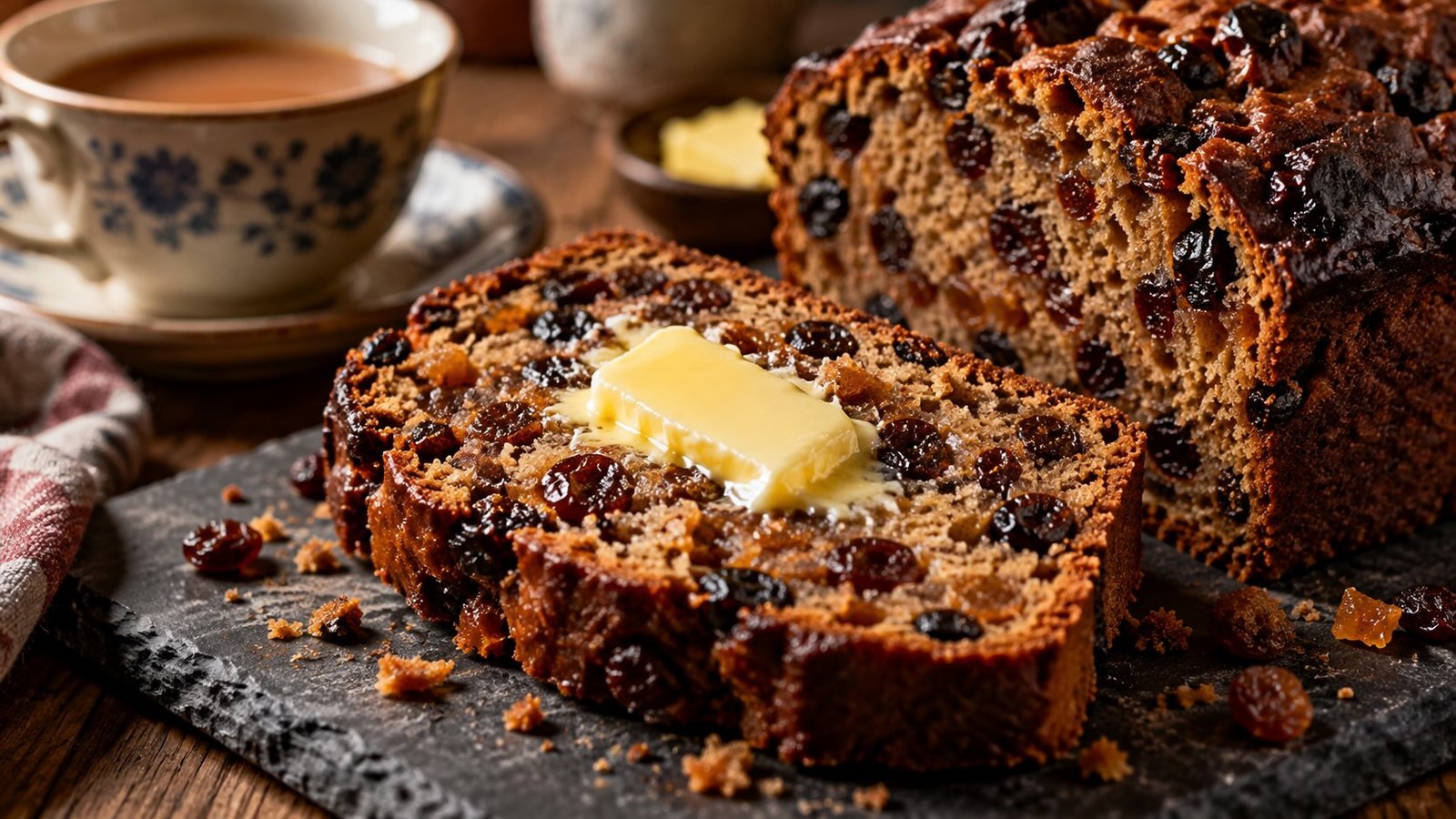
Bara brith is one of those foods that looks modest enough to escape attention. It is dark, dense and usually arrives sliced rather than ceremoniously unveiled. There is no towering pastry and no glossy patisserie finish. Yet cut into it, add a generous smear of salted butter, and its intentions become much clearer.
Its name means “speckled bread” in Welsh, from bara, meaning bread, and brith, meaning speckled or mottled. The speckles are the dried fruit scattered through the loaf. Traditionally, currants and raisins did most of the work. However, modern versions often recruit sultanas, mixed peel and other dried fruits too.
Bara brith belongs to the old Welsh tradition of economical home baking. Historically, it was associated with the weekly bread-making day. Once ordinary loaves had been prepared, leftover dough could be enriched with dried fruit and baked in the residual heat. Nothing extravagant was required. As with many excellent traditional foods, thrift accidentally produced something people actually wanted to eat.
Over time, the recipe evolved. Tea became an important ingredient, particularly in the cake-like version now widely made across Wales. Dried fruit is soaked overnight in strong tea, becoming plump, soft and intensely flavoured. The soaking liquid then becomes part of the batter. It is an admirably efficient arrangement: even the tea gets eaten.
There are essentially two families of bara brith. The older version is yeast-raised and genuinely deserves the word “bread”. It has a firmer, more bread-like crumb and works beautifully with butter. Meanwhile, the modern version uses self-raising flour or baking powder. It is richer, moister and closer to a fruit cake.
Regional and household variations make the distinction even less tidy. Some bakers add mixed spice, while others favour cinnamon or nutmeg. Mixed peel may appear, disappear or provoke an argument. Brown sugar brings caramel notes, while marmalade occasionally enters the mixture for extra citrus bitterness.
Then there is the question of eggs. Some recipes use one, some use none, and family loyalties can become surprisingly serious. Bara brith has survived perfectly well without a regulatory committee deciding the matter. That is probably for the best.
What makes it special is the tea. Soaking dried fruit changes both flavour and texture. Instead of dry little raisins interrupting the crumb, you get soft pockets of concentrated sweetness. Meanwhile, strong black tea provides tannin and a gentle bitterness that stops the loaf becoming cloying.
The result improves with patience. Fresh from the oven, bara brith is perfectly pleasant. A day later, however, the flavours have settled and the moisture has spread evenly through the loaf. Two days later, properly wrapped, it can be better still. This is baking for people prepared to postpone gratification for roughly 24 hours.
Butter is almost compulsory, although technically nobody will arrest you for eating it plain. Salted Welsh butter is particularly good because the salt cuts through the fruit. Moreover, a mature Cheddar can work surprisingly well alongside it. Sweet fruit and sharp cheese have been cooperating successfully for centuries.
For something more substantial, serve bara brith as part of an afternoon spread. Welsh cakes make an obvious companion, although this creates a formidable concentration of Welsh carbohydrates. Mild cheeses, fresh apples and pears provide some contrast. Alternatively, serve thin slices after a simple lunch instead of a heavier pudding.
Tea is naturally the first drink pairing. A robust breakfast tea works particularly well, as does Assam. Earl Grey introduces citrus notes that complement the dried fruit. However, avoid very delicate teas, which may disappear beneath the spices and sweetness.
Coffee works too, especially a medium roast without excessive bitterness. For something stronger, try a small glass of tawny port or Madeira. A mellow whisky can also be excellent, particularly with a spiced loaf. Meanwhile, a dark ale or stout makes an unexpectedly convincing partner.
Nutritionally, bara brith occupies an interesting middle ground. Dried fruit provides fibre, potassium and small amounts of several micronutrients. It also contains naturally occurring sugars, of course. Therefore, calling the loaf a health food would require the sort of optimism normally reserved for chocolate-coated raisins.
Compared with heavily iced cakes, though, traditional bara brith can be relatively restrained. Many recipes contain little or no added fat in the loaf itself. The fruit supplies much of the sweetness and moisture. However, dried fruit is energy-dense, while brown sugar adds more free sugar.
Portion size matters more than pretending cake has medicinal properties. A modest slice with tea makes a satisfying snack. Add butter generously and the calorie count naturally climbs. On the other hand, that is also when bara brith becomes particularly delicious, which is inconvenient but hardly surprising.
Where should you find the real thing? Wales is naturally the place to start. Traditional bakeries, farm shops, tearooms and food markets often sell locally made versions. You will encounter everything from compact yeast loaves to dark, sticky tea breads.
Elsewhere in Britain, Welsh food specialists and independent bakeries occasionally offer it. Fortunately, bara brith travels well and keeps well. Better still, it is remarkably easy to make at home. The most demanding stage involves remembering to soak the fruit the evening before, which hardly qualifies as heavy labour.
Traditional Tea-Soaked Bara Brith Recipe
This version follows the modern tea-loaf tradition rather than the older yeast-raised style. It produces one rich, moist loaf with plenty of fruit and warm spice. Ideally, make it a day before you intend to serve it.
You will need 300g mixed dried fruit, ideally raisins, sultanas and currants. Add 250ml freshly brewed strong black tea and 100g soft dark brown sugar. You will also need 250g self-raising flour, one large egg, one teaspoon mixed spice and half a teaspoon cinnamon. Add a small pinch of salt and 50g mixed peel if you enjoy it.
Put the dried fruit and mixed peel into a bowl. Pour over the hot tea, then stir in the brown sugar. Cover and leave overnight. The fruit will absorb much of the liquid and become wonderfully swollen.
The next day, heat the oven to 170°C, or 150°C fan. Grease a 900g loaf tin and line it with baking parchment. Give the soaked fruit a good stir before adding the beaten egg.
Mix the flour, spices and salt separately. Then fold the dry ingredients into the fruit mixture. Do not beat it enthusiastically; bara brith is a loaf, not an audition for a soufflé.
Spoon the thick mixture into the prepared tin and level the surface. Bake for about 60–70 minutes. A skewer inserted into the centre should emerge clean. If the top browns too quickly, cover it loosely with foil.
Leave the loaf in its tin for about ten minutes. Afterwards, transfer it to a wire rack and allow it to cool completely. Resist slicing immediately if possible.
Once cold, wrap the loaf tightly in baking parchment and foil. Leave it until the following day. The fruit, tea and spices will have had time to become properly acquainted.
Serve in moderately thin slices with good salted butter. Make a pot of strong tea alongside it. Suddenly, a dark little loaf that appeared rather unassuming has occupied the entire afternoon.