Traditional American Pumpkin Pie: Autumn by the Slice
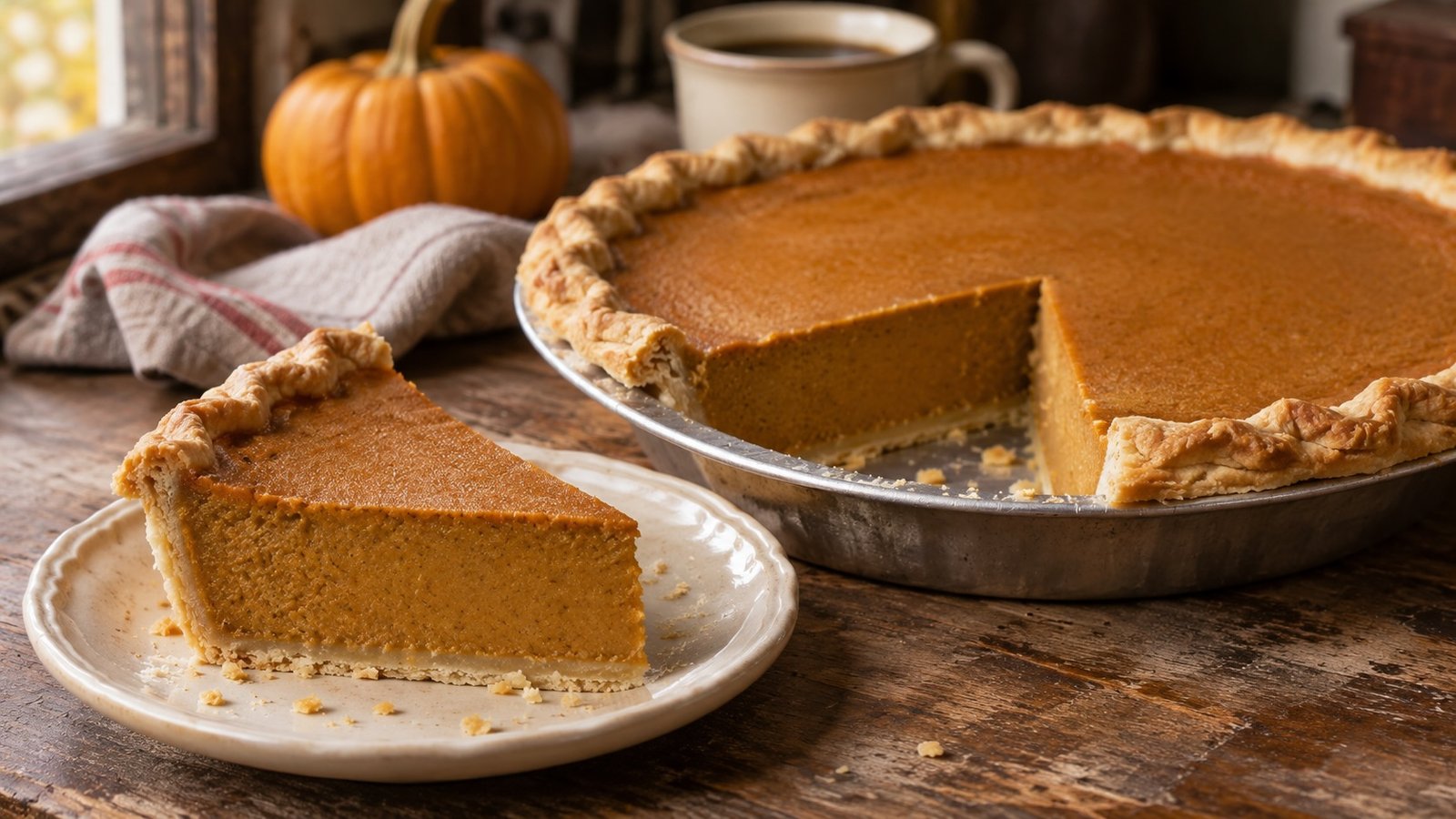
American Pumpkin pie is what happens when a vegetable gets invited to pudding and decides to stay. Beneath that modest orange surface sits a silky custard, fragrant with cinnamon and ginger, inside buttery pastry. Americans associate it with Thanksgiving, but it suits any chilly afternoon. Besides, a pie this comforting deserves more than one annual outing.
Its story begins with the squashes Indigenous peoples cultivated in the Americas long before European settlement. European cooks subsequently brought their own pastry and pudding traditions to these ingredients. Early pumpkin pies varied considerably; some contained sliced pumpkin rather than smooth custard. By 1796, Amelia Simmons’s American Cookery included pumpkin puddings baked in pastry, recognisable ancestors of today’s pie. Thanksgiving helped turn this practical harvest dessert into a national ritual.
Although pumpkin pie belongs particularly strongly to New England’s culinary story, American kitchens have never agreed on one definitive version. Some bakers favour molasses or brown sugar, producing a darker filling with a deeper flavour. Others use maple syrup, while modern variations add bourbon or a crunchy pecan topping. Meanwhile, Southern sweet potato pie offers a close cousin with its own traditions. The two share spices and pastry, although sweet potatoes bring a different sweetness and texture.
What makes pumpkin pie special is its restraint. There is no towering lid, dramatic fruit avalanche or elaborate construction requiring structural calculations. Instead, success depends on the balance between crisp pastry, smooth filling and warming spice. Pumpkin itself tastes relatively gentle, so excessive cloves can hijack the proceedings. Equally, overbaking turns the custard grainy. A slight wobble in the centre signals promise, rather than failure.
For drinks, strong coffee provides a welcome bitter edge against the sweet filling. Alternatively, Assam tea or a milky chai makes an excellent autumn companion. A small glass of tawny port also works beautifully for a richer occasion. Alongside the pie, try unsweetened whipped cream, toasted walnuts or tart stewed apples. However, keep portions of these accompaniments modest. The pie already has plenty to say without an entire dessert trolley interrupting.
Pumpkin contributes fibre and beta-carotene, which the body can convert into vitamin A. Nevertheless, pastry, sugar and cream keep this firmly in pudding territory. Enjoy a sensible slice rather than recruiting it into a wellness programme. For home baking, choose plain pumpkin purée, not ready-sweetened pie filling. Roasted culinary pumpkin also works, provided you drain any excess moisture. Large carving pumpkins often produce a watery, disappointing filling.
American Pumpkin pie recipe
This version serves eight, using a 23cm pie tin approximately 3cm deep. Allow about 30 minutes for preparation, plus chilling, baking and cooling.
For the pastry
- 200g plain flour
- 100g cold unsalted butter, cubed
- 20g caster sugar
- A pinch of salt
- 3–4 tablespoons ice-cold water
For the filling
- 425g plain pumpkin purée
- 140g soft light brown sugar
- 2 large eggs
- 200ml double cream
- 1½ teaspoons ground cinnamon
- ½ teaspoon ground ginger
- ¼ teaspoon ground nutmeg
- A small pinch of ground cloves
- ¼ teaspoon salt
Rub the butter into the flour until the mixture resembles coarse breadcrumbs. Stir in the sugar and salt, then add enough water to bring everything together. Avoid kneading; pastry dislikes enthusiastic handling. Shape into a disc, wrap and chill for 30 minutes.
Heat the oven to 200°C, or 180°C fan. Roll out the pastry and line the tin, leaving a little overhang. Next, chill for 20 minutes. Line with baking parchment, fill with baking beans and bake for 15 minutes. Remove the beans and parchment, then bake for another 7–10 minutes, until the base looks dry.
Meanwhile, whisk the pumpkin, sugar, eggs, cream, spices and salt until smooth. Avoid beating in lots of air. Reduce the oven to 170°C, or 150°C fan, and pour the filling into the pastry shell.
Bake for 45–55 minutes, until the edges have set but the centre still trembles gently. Shield the pastry rim with foil if it browns too quickly. Finally, cool completely before slicing, allowing the custard to firm. Refrigerate within two hours and eat within three days. Serve with softly whipped cream and very little ceremony.
Post Comment