Goosnargh Cake: The Lancashire Shortbread with a Twist
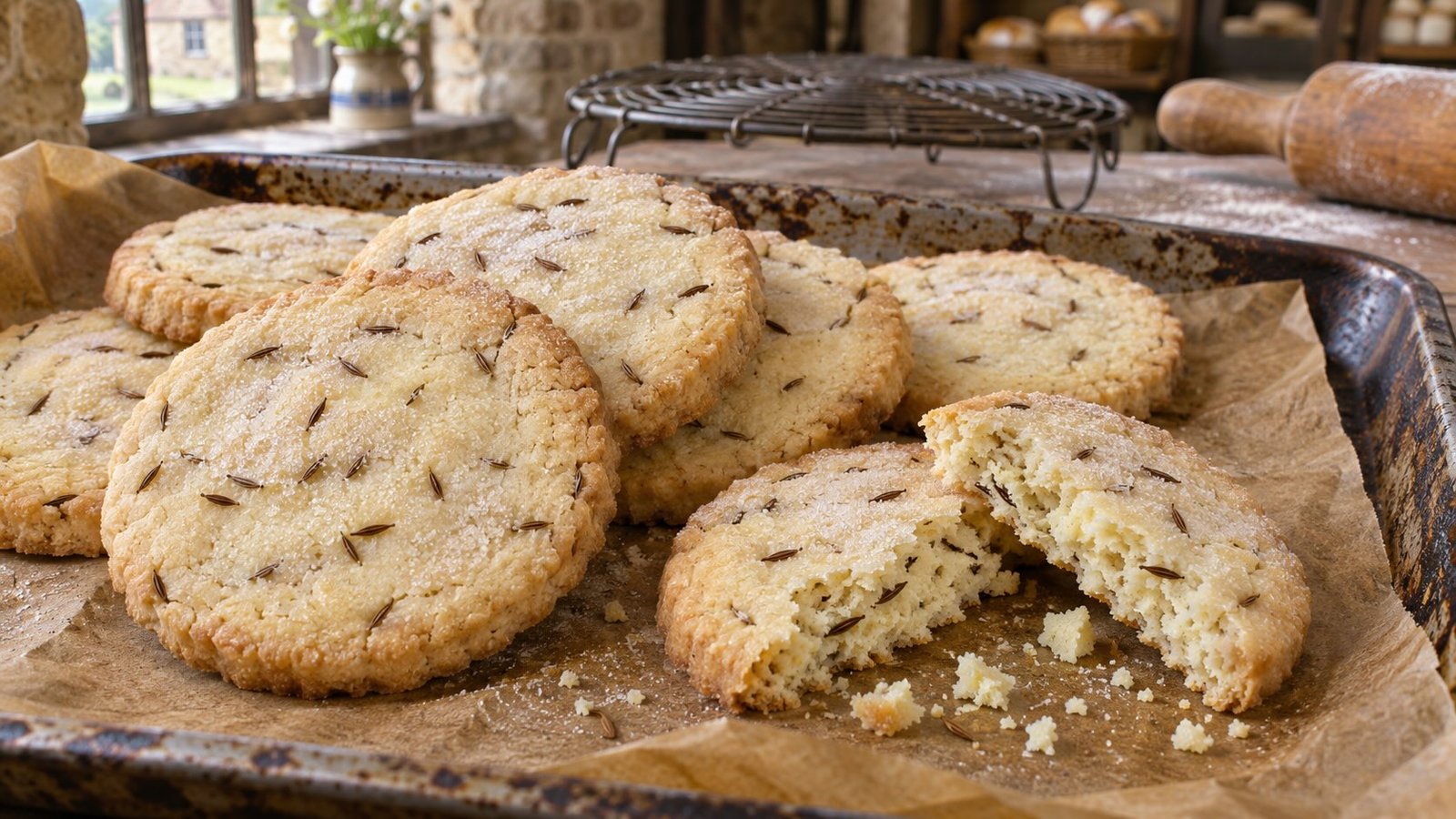
Goosnargh cake is one of those delightful Lancashire creations that challenges the definition of a cake. There is no sponge, frosting or elaborate decoration. Instead, this modest little round resembles shortbread, with a buttery texture and the unexpected fragrance of caraway seeds.
Named after the village of Goosnargh, near Preston, the cake belongs to a centuries-old tradition of British regional baking. Its precise origins remain uncertain, although it is generally associated with Easter and Whitsuntide celebrations. In some households, these biscuits marked the end of Lent, when richer ingredients returned to the table.
Caraway was once a familiar ingredient in British kitchens. Medieval cooks used it in breads, cakes and sweetmeats, while Victorian bakers championed the traditional seed cake. However, its popularity gradually declined as vanilla and other flavourings became more accessible.
Lancashire, fortunately, refused to abandon the relationship. Goosnargh cake survived through local bakeries, family recipes and village traditions. Even today, its distinctive flavour offers a small reminder of how British baking tasted before chocolate conquered almost everything.
Traditional recipes combine flour, butter, sugar and whole caraway seeds. Some also include ground coriander, which contributes a gentle citrus fragrance. Unlike conventional shortbread, Goosnargh cakes often receive a generous dusting of caster sugar before or after baking.
Regional variations tend to be subtle. Some bakers produce thick, pale rounds with a wonderfully tender centre, while others favour thinner, crispier biscuits. Meanwhile, modern interpretations occasionally incorporate lemon zest, orange zest or a pinch of cinnamon.
Goosnargh cake shares something of its character with Scottish shortbread and traditional English seed cake. Nevertheless, the combination of crumbly pastry and aromatic whole seeds gives it an identity of its own. It is sweet without being particularly indulgent, sophisticated without making a fuss about it.
The obvious companion is a cup of strong Lancashire tea. Earl Grey also works beautifully, as its fragrant bergamot complements the caraway. Alternatively, try a lightly roasted coffee or a glass of chilled Madeira for a rather more luxurious afternoon.
Goosnargh cakes pair surprisingly well with poached pears, stewed apples and fresh strawberries. A little lemon curd provides a pleasant contrast, while clotted cream turns the humble biscuit into something approaching a dessert. For a cheese board, try serving them alongside a mild, creamy Lancashire cheese.
Caraway seeds contain dietary fibre, aromatic oils and small amounts of several minerals. However, their modest quantity in each biscuit means their nutritional contribution is limited. Butter and sugar remain the principal considerations, so these cakes are best enjoyed in moderation.
Wholemeal flour can replace a small proportion of the white flour for additional fibre. Similarly, reducing the sugar dusting makes the biscuits slightly less sweet without significantly changing their texture. Fortunately, their rich flavour means that even a small serving feels satisfying.
The secret to making excellent Goosnargh cakes lies in resisting the temptation to overwork the dough. Gentle handling preserves their crumbly texture, while a moderate oven temperature prevents excessive browning. They should look delicately golden rather than suntanned.
Traditional Goosnargh Cake Recipe
Makes: approximately 16 cakes
Preparation time: 20 minutes, plus 30 minutes chilling
Baking time: 15–20 minutes
Ingredients
- 225g plain flour
- 150g unsalted butter, softened
- 75g caster sugar
- 2 teaspoons whole caraway seeds
- ½ teaspoon ground coriander
- A pinch of fine sea salt
- Extra caster sugar for dusting
Method
Cream the softened butter and caster sugar until smooth and evenly combined. Avoid beating the mixture excessively, as this can introduce too much air.
Separately, mix the flour, caraway seeds, ground coriander and salt. Gradually incorporate the dry ingredients into the butter mixture until a soft, crumbly dough forms.
Bring the dough together gently with your hands, then flatten it into a disc. Cover and refrigerate for 30 minutes to firm up the butter.
Preheat the oven to 170°C (150°C fan) and line a baking tray with baking parchment. Roll the dough on a lightly floured surface to approximately 8mm thick.
Use a 6–7cm round cutter to shape the cakes. Arrange them on the prepared tray, leaving a little space between each, and lightly prick their surfaces with a fork.
Bake for 15–20 minutes until the edges become pale golden. The centres should remain relatively light, so resist the temptation to give them another five minutes.
Finally, sprinkle with caster sugar while still warm. Allow the cakes to rest on the tray before transferring them to a wire rack.
Store in an airtight tin for up to one week. Their aromatic flavour often develops further overnight, assuming your household possesses the necessary self-restraint.

Post Comment