Cornish Hevva Cake: From Pilchard Shoals to Tea Tables
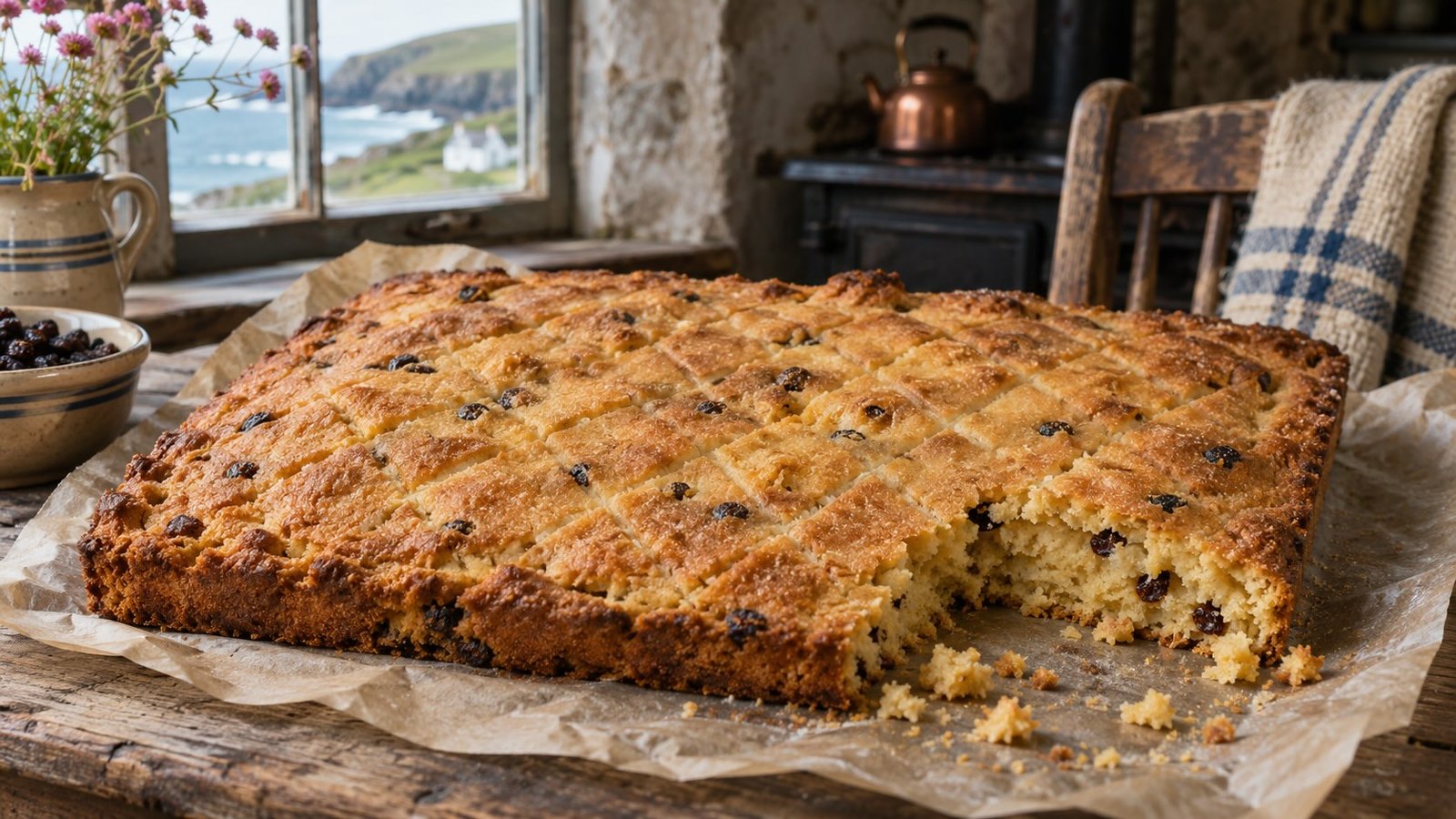
Hevva cake comes from a Cornwall where the arrival of a shoal of pilchards could transform the fortunes of an entire fishing village. Despite its maritime associations, there is absolutely nothing fishy about it. Instead, this traditional bake combines currants, butter, flour and milk into something between a scone and a fruit cake.
Before the development of modern fishing technology, Cornish fishermen relied on lookouts known as huers. These men stationed themselves on cliffs, scanning the sea for the dark patches created by enormous shoals of pilchards. When they spotted one, they reportedly shouted ‘Hevva! Hevva!’ to alert the fishing crews below.
According to local tradition, the huers returned home and prepared a simple cake to celebrate a successful catch. Its distinctive criss-cross pattern represented the fishermen’s nets. Whether every huer was quite so enthusiastic about baking remains a matter of folklore, but the story has become inseparable from the cake.
Hevva cake is also known as Cornish heavy cake. Despite the alternative name, it need not have the density of a building material. However, its texture is considerably firmer and more crumbly than that of a conventional sponge. Traditional recipes contain no eggs or raising agents, making it a particularly economical bake.
Unlike the elaborate cakes that eventually populated Victorian tea tables, hevva cake required little preparation or specialist equipment. Consequently, it fitted comfortably into the routines of fishing communities. A handful of dried fruit brought sweetness to an otherwise remarkably straightforward mixture.
Recipes vary considerably across Cornwall. Some bakers use butter exclusively, while others combine butter and lard for a shorter, more crumbly texture. Currants remain the classic choice, although sultanas occasionally make an appearance. Meanwhile, modern versions sometimes include mixed spice, lemon zest or self-raising flour.
The characteristic diamond pattern is arguably its most important decorative feature. Bakers score the surface before baking, creating a simple representation of fishing nets. There is no icing, elaborate decoration or unnecessary architectural ambition. Hevva cake has retained the rather refreshing habit of looking exactly like what it is.
Although delicious straight from the oven, the cake develops a pleasantly firm texture as it cools. Its buttery crumb and concentrated bursts of fruit make it particularly satisfying with a strong cup of English breakfast tea. Naturally, a dollop of Cornish clotted cream makes proceedings considerably more indulgent.
For something different, try pairing it with dry West Country cider, a light tawny port or a cup of smoky Lapsang Souchong. Alongside the cake, fresh apples, blackberries or sharp berry compote provide a welcome contrast to its richness.
From a nutritional perspective, currants provide dietary fibre, potassium and naturally occurring antioxidants. Butter contributes richness but also saturated fat, while the added sugar increases the cake’s energy content. However, its relatively simple ingredients make portion sizes easy to manage.
Those avoiding dairy can substitute plant-based baking fat and unsweetened oat milk. Nevertheless, the traditional buttery flavour is difficult to reproduce completely. Hevva cake is best appreciated as an occasional treat, preferably after a long walk along the Cornish coast rather than an imaginary afternoon spent hauling fishing nets.
Traditional Cornish Hevva Cake Recipe
Makes: 12 portions
Preparation: 15 minutes
Baking: 30–35 minutes
Ingredients
- 450g plain flour
- 225g cold unsalted butter
- 100g caster sugar
- 225g currants
- 120–150ml whole milk
- ½ teaspoon fine sea salt
- A little extra milk for brushing
- 1 tablespoon granulated sugar for sprinkling
Preheat the oven to 190°C (170°C fan). Line a flat baking tray with baking parchment.
Place the flour and salt in a large mixing bowl. Cut the cold butter into small cubes and rub it into the flour until the mixture resembles coarse breadcrumbs.
Stir in the caster sugar and currants, distributing the fruit evenly. Gradually add the milk, mixing gently until a firm but slightly sticky dough forms. You may not need all the milk.
Transfer the dough directly onto the prepared baking tray. Using your hands, gently flatten it into a rustic rectangle approximately 2–3cm thick. Avoid excessive kneading, as this can make the finished cake unnecessarily tough.
Score diagonal lines across the surface with a sharp knife. Repeat in the opposite direction to create the traditional diamond-shaped fishing-net pattern. Brush lightly with milk and sprinkle with granulated sugar.
Bake for 30–35 minutes until golden brown, checking that the centre has cooked through. Allow the cake to rest on the tray for ten minutes before cutting it into generous squares.
Serve warm or at room temperature with tea and, should Cornish tradition demand further indulgence, a generous helping of clotted cream. Store in an airtight container for up to three days.

Post Comment