Capuchinos Cubanos, the Little Cakes That Drink Their Syrup
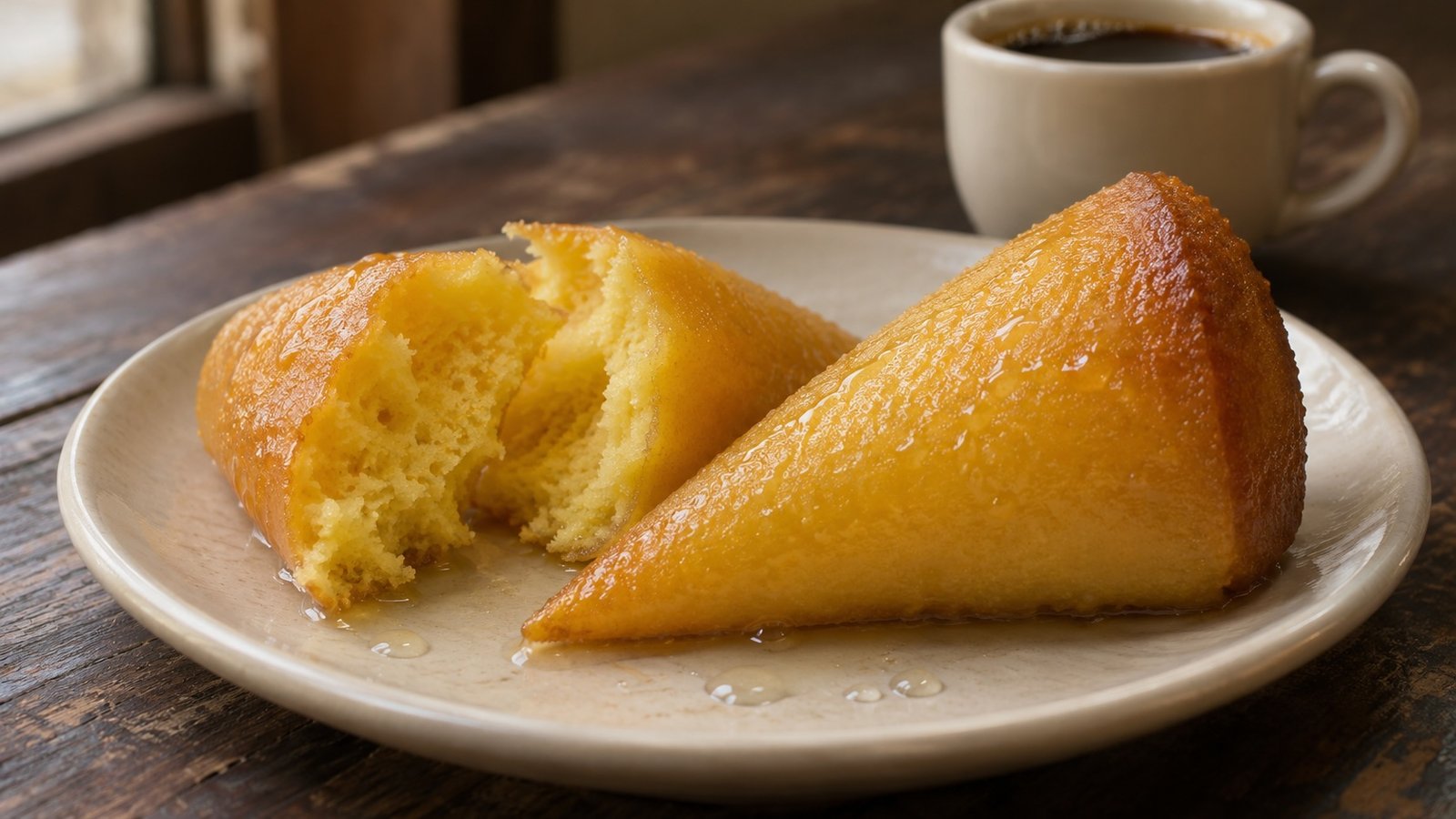
A tray of capuchinos cubanos looks like someone has persuaded a sponge cake to stand on its head. Each little cake tapers to a point, with a rounded top and a bright yellow crumb. Pick one up and it feels surprisingly heavy for its size. That’s the syrup, which has already worked its way into places a drizzle would never reach.
By 1956, capuchinos had a place in Cocina al minuto, the Havana cookbook by Nitza Villapol and Martha Martínez. Their recipe calls for paper cones, a special tray and a remarkable ten yolks to one white. It even suggests putting a shallow pan of water on the lower oven shelf to protect the pointed tips. The book gives us a clear record of how Cubans made them by the mid-twentieth century. The identity of the first baker to pipe that batter into a cone remains uncertain.
Most sponge cakes get some of their structure from wheat flour. Here, though, a few teaspoons of cornflour are enough to support the well-whipped eggs. The yolks give the cakes their colour and richness, while the syrup brings lemon peel, cinnamon and vanilla into every bite. Consequently, the crumb stays soft and moist even at the narrow tip. The broad end usually keeps a faintly golden cap, a small reminder that the cake once spent time in an oven.
The closest Cuban relative is the cabezote, a rounded little cake made with much the same yolk-rich sponge and syrup. In practice, the shape is the main distinction. A mini-muffin tin will give you something closer to cabezotes and save you an afternoon of paper engineering. As for the syrup, lemon is a traditional choice, but orange peel gives it a softer citrus note. Meanwhile, a little extra cinnamon will take the flavour in a warmer direction.
A small cup of strong coffee is the obvious partner, especially if you usually take it without sugar. Unsweetened black tea works well too, while a glass of cold sparkling water is especially welcome on a hot afternoon. If you’re putting together a dessert plate, add sliced pineapple or orange for a little acidity. After a substantial lunch, however, one chilled cone and a coffee will do nicely. The bakery counter can keep the rest until tomorrow.
The eggs contribute some protein, but the syrup makes these a decidedly sugary treat. Fortunately, the traditional size makes it easy to serve them in small portions. The recipe contains eggs and uses cornflour in place of wheat flour. If you’re baking for someone with coeliac disease, check that the cornflour is labelled gluten-free and use clean equipment.
Recipe
This batch makes about 12 small cones, depending on the size of your moulds. Use a capuchino tray or small ovenproof metal cone moulds held securely upright in a rack.
For the sponge use 10 large egg yolks, 1 large egg white, 2 teaspoons caster sugar and 4 level teaspoons cornflour. For the syrup use 250 g granulated sugar, 250 ml water, 3 strips of unwaxed lemon peel, 1 cinnamon stick, 1 teaspoon lemon juice and 1 teaspoon vanilla extract.
Heat the oven to 190°C conventional or 170°C fan. Line the cone moulds with baking parchment rolled into snug cones. Put a shallow roasting tin with a little hot water on the lower shelf.
Beat the yolks, white and caster sugar with an electric mixer until thick and pale, about 10–15 minutes. The mixture should leave a visible ribbon when you lift the beaters. Next, sift the cornflour over the mixture and fold it in gently. Pipe into the cones, filling each two-thirds full. Bake above the water tray for 12–15 minutes, until the tops are lightly golden and spring back when touched.
Meanwhile, bring the sugar, water, lemon peel, cinnamon and lemon juice to the boil, stirring until the sugar dissolves. Simmer for three minutes. Then take the pan off the heat, remove the peel and cinnamon, and stir in the vanilla.
Let the cakes cool briefly before peeling away the parchment. Lay them in a shallow dish and spoon the warm syrup over them, turning each cone once so it soaks evenly. Finally, cover and refrigerate for at least two hours. Lift the cakes out of the syrup just before serving.


Post Comment