Tarte de Amêndoa: Portugal’s Sweet Love Letter to Almonds
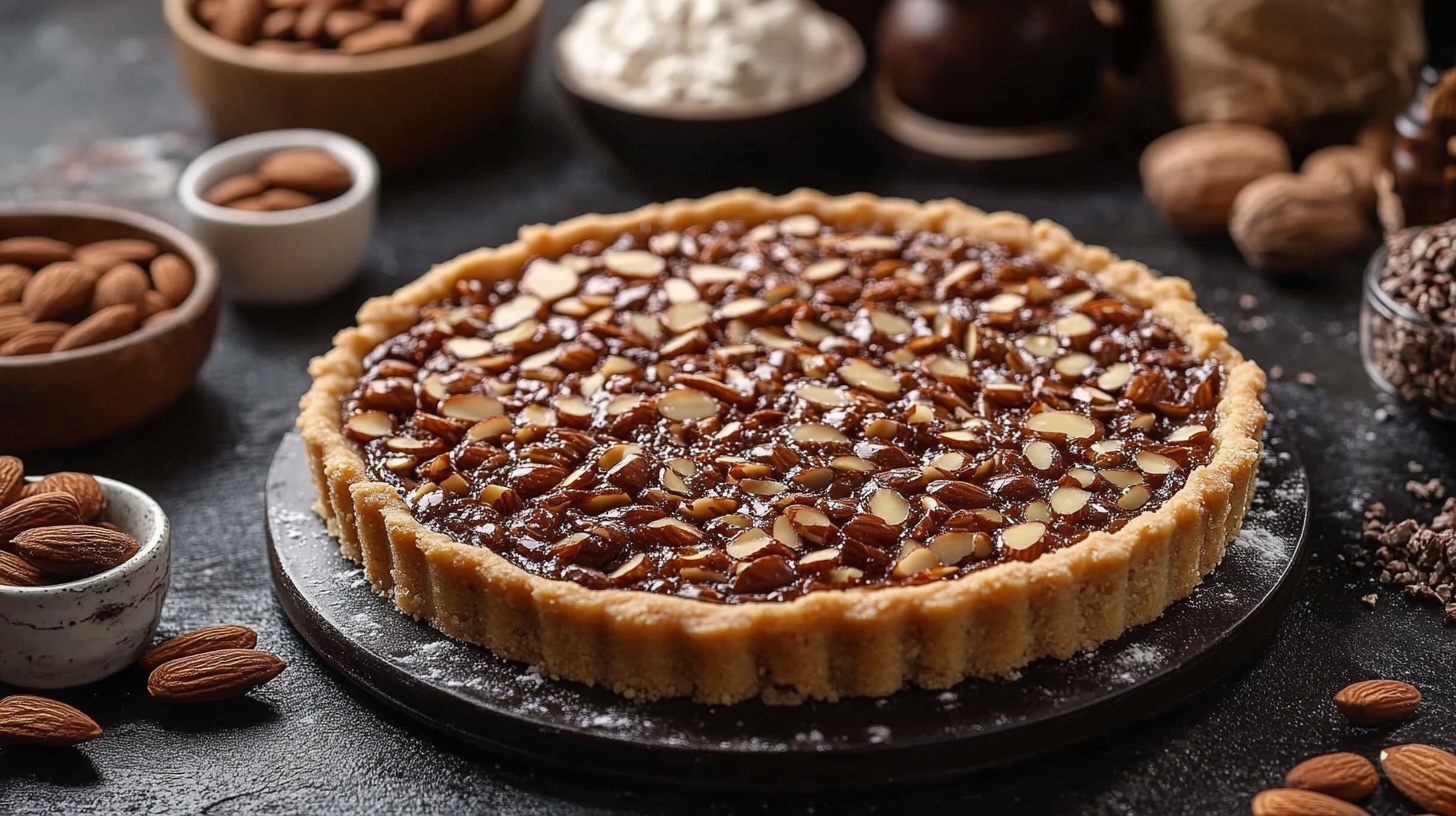
Tarte de Amêndoa is one of Portugal’s finest small deceptions. It looks neat, golden and perfectly polite on the bakery counter. Then the fork arrives, and the almond topping cracks into buttery, caramelised mischief. The base is soft, the top is glossy, and the almonds bring a warm toasted crunch. Suddenly, the phrase “only a thin slice” becomes comic fiction.
This Portuguese almond tart does not have the global fame of pastel de nata. Yet it has the quieter confidence of a dessert that knows it belongs everywhere. You find it in cafés, family kitchens, bakeries and restaurants where dessert is not treated as an afterthought. It is rich without being grand, simple without being plain, and sweet without apologising for its life choices.
History and origin
Portugal has loved almonds for centuries. The trees grow especially well in warm southern regions, including the Algarve and parts of Alentejo. In spring, almond blossom turns the landscape pale and romantic. Naturally, people saw this beauty and decided it would be even better with sugar.
Almonds entered Portuguese food through farming, trade and cultural exchange. The Moorish presence in southern Portugal left deep traces in local cooking. Ingredients such as almonds, figs, citrus, honey and spices became part of the regional pantry. Over time, Portuguese cooks turned these flavours into cakes, sweets and festival treats.
There is a famous Algarve legend about almond blossom. A northern princess supposedly missed the snow, so her husband planted almond trees for her. When the trees bloomed, the white flowers covered the land like a soft winter scene. Is it strict history? Probably not. Still, it is a lovely story, and desserts are allowed a little theatre.
Portuguese convent baking shaped the country’s sweet tradition as well. Nuns used eggs, sugar, nuts and patience to create many famous pastries. Tarte de Amêndoa is not always classed as a convent sweet. However, it belongs to that wider world of generous Portuguese baking. Simple ingredients become elegant and slightly dangerous once the oven gets involved.
Regional and other varieties
Tarte de Amêndoa does not seem to have one fixed birthplace. Instead, it appears across Portugal in many home and bakery versions. That makes perfect sense. The best everyday desserts often survive because families quietly argue over them.
The familiar version has a soft, cake-like base. Bakers usually bake this base first. Afterwards, they cover it with a warm mixture of butter, sugar, milk or cream, and flaked almonds. The tart then returns to the oven until the surface turns golden and glossy.
Some versions use a firmer pastry base. Others lean closer to a sponge cake. In some kitchens, flaked almonds create a tidy, elegant topping. Elsewhere, chopped almonds give a rougher crunch and a more rustic character. Lemon zest may brighten the base, while vanilla sometimes slips in for extra softness.
In the Algarve, the almond connection feels especially natural. The region has long celebrated almond sweets, alongside fig, carob and egg-based desserts. Further north, the tart may feel more like a café classic than a regional emblem. Nevertheless, it keeps the same essential charm wherever it appears.
What makes it special
The magic of Tarte de Amêndoa is texture. It is not just cake, and it is not exactly pastry. It sits happily between the two. The base gives you softness, while the topping delivers crunch, chew and caramelised shine.
The topping is where the drama happens. Butter, sugar and milk bubble together, then almonds join the party. As the tart bakes, the surface turns golden and fragrant. The edges crisp slightly, yet the middle stays tender and sticky.
This tart also has the good manners to look impressive without demanding professional skill. You do not need laminated pastry. You do not need chocolate tempering. Mostly, you need a bowl, a saucepan and enough discipline not to eat the topping early.
That is part of its charm. Tarte de Amêndoa feels homely and elegant at the same time. It can finish Sunday lunch, brighten an afternoon coffee, or travel to a gathering without collapsing into tragedy.
Drinks to pair with it
Coffee is the obvious companion. A strong Portuguese bica cuts through the sweetness and balances the butter. Meanwhile, the bitter edge of coffee makes the almonds taste warmer and deeper. It is a civilised arrangement, even when crumbs are everywhere.
Black tea works beautifully too. English breakfast, Assam or Ceylon has enough strength for the caramelised topping. Earl Grey is especially good if the tart contains lemon zest. As a result, the citrus notes make the whole slice feel lighter.
For something more Portuguese, try amêndoa amarga. This bitter almond liqueur is often served chilled, sometimes with ice and lemon. It echoes the almond flavour while adding a sharper adult wink. Keep the pour modest, because the tart is already fairly persuasive.
Tawny port is another lovely pairing. Its nutty, dried fruit notes suit toasted almonds very well. Moscatel de Setúbal can also work, although it brings extra sweetness. Therefore, smaller slices are wise unless the plan is to become entirely composed of dessert.
Foods to complement it
Tarte de Amêndoa is rich, so it enjoys fresh and sharp company. Raspberries, strawberries and orange slices all work well. Poached apricots are excellent, especially when served slightly warm. Their acidity cuts through the buttery topping and keeps the plate lively.
A spoonful of crème fraîche is a fine partner. Greek yoghurt brings a similar tang. Lightly whipped cream is delicious too, though restraint has clearly left by then. There are worse departures.
For a Portuguese-style meal, serve the tart after grilled fish, roast chicken or pork. It also follows vegetable rice or a bright salad lunch very nicely. The tart closes the meal with confidence, but it does not require a parade.
On a dessert table, place it with fresh fruit, queijo fresco, honey or fig jam. Smaller pastries can sit nearby if they are feeling brave. Once people meet the almond topping, the competition becomes rather tense.
Health benefits and considerations
Almonds bring real nutritional value. They contain fibre, plant protein, vitamin E, magnesium and unsaturated fats. Additionally, they are satisfying and flavourful, which helps a small slice feel complete. This is useful information when the second slice starts whispering.
Tarte de Amêndoa remains a dessert. It contains sugar, butter and often whole milk or cream. So, it should be treated as a pleasure rather than a health plan. A modest portion can fit into a balanced diet, provided the word modest survives contact with the cake knife.
People with nut allergies should avoid it completely. Anyone watching sugar intake should also be careful. The caramelised topping is sweet and concentrated. Even so, the tart is rich enough for a small slice to do the job.
Where to find it
In Portugal, you can find Tarte de Amêndoa in pastelarias, cafés, bakeries and traditional restaurants. It feels especially at home in the Algarve. Still, versions appear across the country, because good cakes are natural travellers.
Outside Portugal, look for Portuguese bakeries and cafés. Cities with Portuguese communities often sell almond tarts alongside custard tarts and coconut cakes. Some Portuguese restaurants serve it too, particularly those with traditional dessert menus.
Of course, the most reliable place to find it is your own kitchen. The tart is not difficult to make. It keeps well, travels nicely and smells magnificent while baking. Besides, homemade almond caramel has a way of making everyone suddenly helpful.
Recipe: Portuguese Tarte de Amêndoa
Ingredients for the base
150g plain flour
120g caster sugar
100g unsalted butter, softened
2 medium eggs
1 teaspoon baking powder
A pinch of salt
Zest of half a lemon, optional
Butter, for greasing the tin
Ingredients for the almond topping
150g flaked almonds
100g unsalted butter
100g caster sugar
120ml whole milk
1 tablespoon honey, optional
A pinch of salt
Method
Heat the oven to 180°C fan, or 200°C conventional. Grease a 23cm loose-bottomed tart tin with butter. Line the base with baking paper, because wrestling dessert from metal is undignified.
Beat the butter and sugar until pale and creamy. Add the eggs one at a time, mixing well after each addition. Stir in the lemon zest, if using.
Mix the flour, baking powder and salt in another bowl. Fold the dry ingredients into the butter mixture. Spread the thick batter evenly into the prepared tin. Smooth the surface with a spatula.
Bake the base for about 15 minutes. It should look lightly golden and just set. Do not bake it fully, as it will return with the topping.
Meanwhile, make the almond topping. Put the butter, sugar, milk, honey and salt into a saucepan. Warm gently until the butter melts. Then bring the mixture to a steady simmer.
Add the flaked almonds and stir carefully. Cook for 3 to 5 minutes, until glossy and slightly thickened. Watch it closely, because caramel enjoys betrayal.
Remove the tart base from the oven. Spoon the almond mixture evenly over the surface. Spread it gently towards the edges. Return the tart to the oven.
Bake for another 12 to 15 minutes, until the almonds are golden and bubbling. Let the tart cool in the tin for at least 20 minutes. The topping will firm as it rests. Serve warm or at room temperature with coffee, tea, berries, crème fraîche or a small glass of something Portuguese.