Ricotta e Cioccolato Pie: A Creamy Temptation
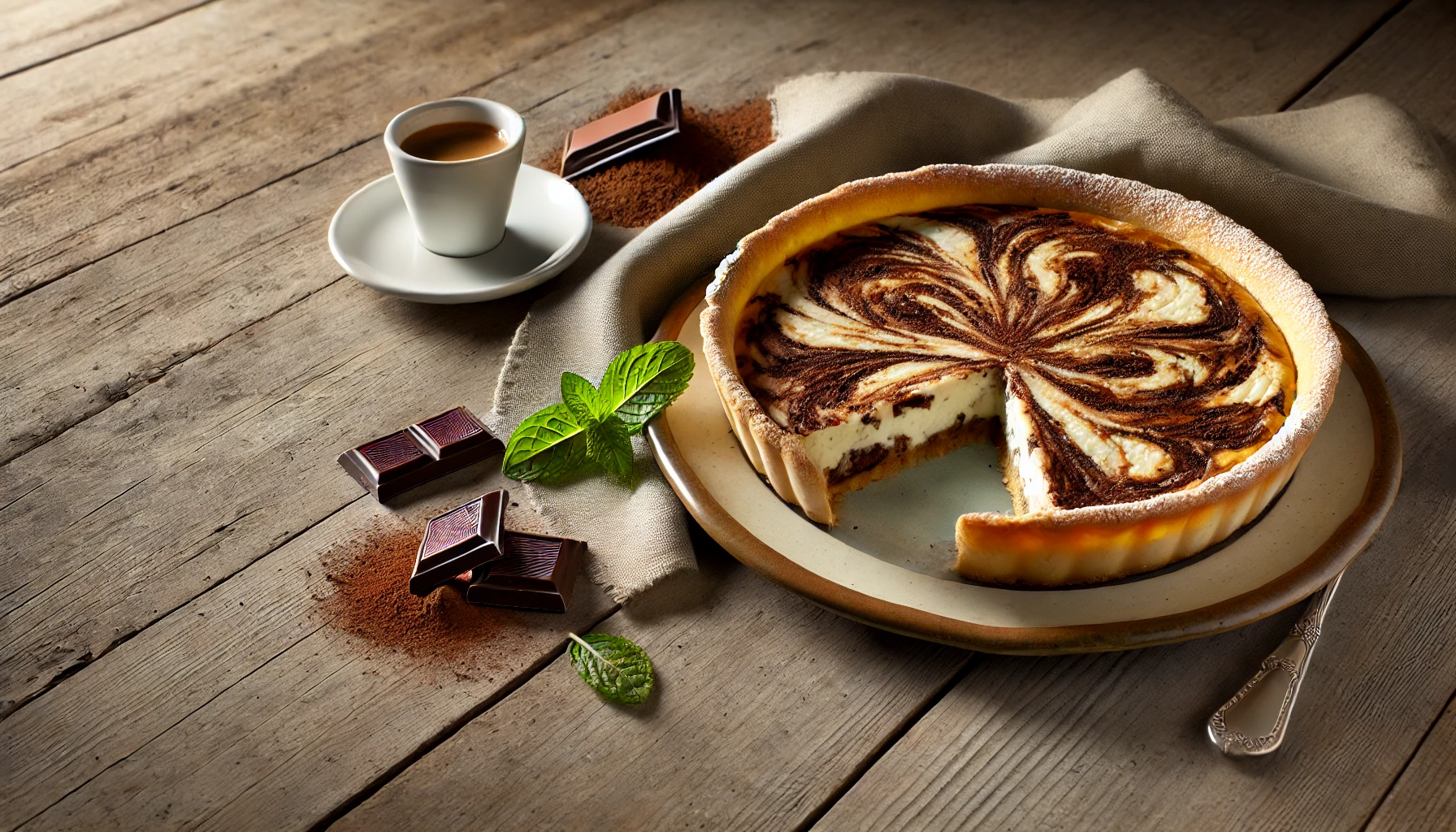
Some desserts demand attention with towers of cream, spun sugar and decorations requiring an engineering certificate. Ricotta e cioccolato pie takes a quieter approach. It sits on the table looking modest, golden and perfectly respectable. Then you cut through the pastry and expose a thick layer of sweet ricotta scattered with dark chocolate. Suddenly, respectability is no longer the main issue.
Known in Italy as crostata di ricotta e cioccolato, this pie combines crumbly pasta frolla with a soft, lightly sweetened filling. The contrast matters. Crisp pastry gives way to creamy ricotta, while pieces of chocolate add bitterness and texture.
The dish is strongly associated with Rome and the wider Lazio region. Traditional Lazio versions often include sheep’s-milk ricotta, dark chocolate, candied peel and citrus zest. However, similar pies appear throughout central and southern Italy. Each household seems convinced that its recipe is the original, naturally.
Ricotta itself has much older roots than the pie. Its name comes from ri-cotta, meaning “cooked again”. Cheesemakers produce it by reheating whey left after making another cheese. Therefore, what began as an economical way to avoid waste became one of Italy’s most useful ingredients.
Roman writers described preparations resembling ricotta many centuries ago. Fresh whey cheese was valued because it could be eaten immediately, sweetened or used in savoury dishes. Even today, Italian cooks often advise draining ricotta thoroughly before adding sugar. Ancient culinary wisdom occasionally turns out to be more useful than another kitchen gadget.
The crostata also has a long pedigree. Forms of the word appeared in Italian culinary writing during the late Middle Ages. Early crostate could be sweet or savoury, open or covered, and considerably less tidy than modern bakery versions. By the seventeenth century, the term was established in Italian dictionaries as a kind of tart.
However, nobody can point to one afternoon when someone officially invented ricotta and chocolate pie. The dish evolved from Italy’s established tradition of filling pastry with sweetened fresh cheese. Chocolate was incorporated later, once it became more accessible in European kitchens.
Rome made the combination its own. Local ricotta romana, traditionally produced from sheep’s whey, has a rich flavour and gentle natural sweetness. Roman pastry cooks paired it with sugar, citrus, spices and eventually chocolate. The result was luxurious without becoming heavy or aggressively sweet.
A related Roman speciality is crostata di ricotta e visciole. It layers ricotta with sharp sour-cherry preserve and is closely connected with the historic Jewish quarter. Its story is linked to eighteenth-century papal restrictions that prevented Jewish residents from selling dairy products openly. According to Roman tradition, bakers concealed ricotta inside pastry with fruit preserve.
Chocolate versions became another branch of the same family. Some contain chopped dark chocolate, while others use chocolate chips. A few mix cocoa into the ricotta, creating a uniformly brown filling. Meanwhile, particularly enthusiastic cooks add both cocoa and chocolate because moderation has clearly failed them.
In Lazio, the filling may include candied orange or citron. Lemon zest is also common, and cinnamon sometimes appears in older family recipes. The flavours remain restrained. Ricotta should still taste like ricotta rather than a delivery system for sugar.
Sicilian versions often feel related to cassata and cannoli. Sheep’s ricotta is sweetened, scented with orange and mixed with dark chocolate. Some pies are completely enclosed with pastry and are described as cassata al forno. Others retain the familiar crostata lattice.
In Campania, the pie inevitably lives in the shadow of pastiera. That celebrated Easter tart combines ricotta with cooked wheat, orange-flower water and candied fruit. Nevertheless, simpler ricotta and chocolate crostate are prepared when nobody has the time, patience or emotional stability required for a full pastiera.
Abruzzo has household versions sometimes called pizza di ricotta. They may be wide, shallow and baked in round trays. Elsewhere, cooks add raisins, nuts, coffee, rum or liqueur. None of these changes destroys the basic idea, provided the filling remains creamy and the pastry stays crisp.
What makes the pie special is balance. Ricotta is lighter and grainier than cream cheese, so the filling feels soft rather than dense. Dark chocolate supplies enough bitterness to control the sweetness. Citrus zest then lifts everything and prevents the dairy flavour from becoming flat.
Texture plays an equally important role. Properly drained ricotta produces a smooth filling that holds its shape after cooling. However, wet ricotta can soak the pastry and create a soggy base. The pie will still taste pleasant, but it may require a spoon and a forgiving audience.
Use full-fat ricotta for the best result. Sheep’s ricotta offers the most traditional flavour, although good cow’s-milk ricotta works well. Whatever you buy, drain it for several hours or overnight. That modest bit of planning separates an elegant slice from sweetened dairy landslide.
Coffee is the most natural drink pairing. A short espresso cuts through the richness and mirrors the bitterness of the chocolate. Cappuccino also works, although Italians may raise an eyebrow if you order one after dinner. Fortunately, your kitchen probably has weaker enforcement procedures.
For wine, try a sweet Marsala, Recioto della Valpolicella or Vin Santo. Marsala complements the ricotta and citrus particularly well. Recioto offers dark fruit notes that suit the chocolate, while Vin Santo brings honeyed warmth.
A lightly chilled amaro can create a more bitter finish. Alternatively, serve the pie with an orange liqueur or a small glass of nocino. Tea drinkers should consider Earl Grey, whose bergamot echoes the citrus zest.
Fresh berries make an excellent accompaniment. Raspberries and sour cherries provide acidity, while strawberries add freshness without competing with the filling. Poached pears are another good choice, especially when the pie contains cinnamon.
A spoonful of sour-cherry preserve works beautifully too. However, avoid drowning the slice in cream or ice cream. The filling is already creamy, and dairy does not always need to form a committee.
Nutritionally, ricotta provides protein and calcium. It may also contain less fat than many cream cheeses, depending on the milk and production method. Dark chocolate contributes small amounts of minerals and cocoa compounds.
Still, this remains a dessert made with butter, sugar, pastry and chocolate. The presence of calcium does not transform it into a medical intervention. Portion size matters, particularly because the pie is mild enough to encourage a second slice before the first has been properly registered.
People with lactose intolerance may find ricotta easier to tolerate than some fresh dairy products, but sensitivity varies. Those with milk, egg or wheat allergies should avoid the standard recipe. Gluten-free pastry can be substituted, although it may need careful handling.
In Italy, look for the pie in Roman pasticcerie, neighbourhood bakeries and traditional trattorie. It appears especially around Easter, family celebrations and Sunday lunches. Beyond Italy, specialist Italian bakeries sometimes sell it as ricotta chocolate tart, crostata di ricotta or Italian ricotta pie.
Yet this is an unusually forgiving dessert to make at home. The pastry can be prepared in advance, and the filling requires little more than mixing. Most importantly, homemade versions capture the dish’s proper character: rustic, generous and just imperfect enough to suggest that someone’s grandmother supervised the proceedings.
Recipe: Ricotta e Cioccolato Pie
This recipe makes one 23cm pie and serves eight to ten people.
For the pastry
- 300g plain flour
- 120g caster sugar
- 150g cold unsalted butter, cubed
- 1 large egg
- 1 large egg yolk
- Finely grated zest of 1 lemon
- 1 teaspoon vanilla extract
- ¼ teaspoon fine salt
- ½ teaspoon baking powder
For the filling
- 600g full-fat ricotta, thoroughly drained
- 130g caster sugar
- 2 large eggs
- 100g dark chocolate, roughly chopped
- Finely grated zest of 1 orange
- 1 teaspoon vanilla extract
- ¼ teaspoon ground cinnamon, optional
- 1 tablespoon Marsala or dark rum, optional
- 1 tablespoon cornflour, if the ricotta remains slightly wet
To finish
- 1 egg yolk mixed with 1 teaspoon milk
- Icing sugar, for dusting
Place the flour, sugar, salt and baking powder in a large bowl. Add the cold butter and rub it into the flour with your fingertips. Continue until the mixture resembles coarse breadcrumbs.
Add the egg, egg yolk, lemon zest and vanilla. Mix gently until the dough begins to come together. Avoid kneading it heavily, since this can make the pastry tough.
Shape the dough into a flat disc. Wrap it and refrigerate for at least one hour. Meanwhile, butter a 23cm loose-bottomed tart tin or shallow pie tin.
Press the drained ricotta through a fine sieve for an especially smooth filling. Alternatively, beat it briefly with a wooden spoon. Add the sugar and mix until creamy.
Beat in the eggs one at a time. Then add the orange zest, vanilla, cinnamon and Marsala. Fold in the chopped chocolate. If the mixture seems loose, stir in the cornflour.
Heat the oven to 180°C, or 160°C fan. Take roughly two-thirds of the pastry and roll it on a lightly floured surface. Aim for a circle about 4mm thick.
Line the tin with the pastry, pressing it gently into the edges. Leave a small overhang, then prick the base lightly with a fork. Spoon in the ricotta filling and smooth the surface.
Roll out the remaining pastry. Cut it into strips and arrange them across the filling in a lattice. Trim the edges and press them together neatly. A little unevenness is traditional, or at least convenient.
Brush the lattice with the egg-yolk mixture. Bake for 45–55 minutes, until the pastry is golden and the filling appears set around the edges. The centre may still wobble slightly.
Leave the pie in its tin until completely cool. Then chill it for at least two hours, preferably overnight. This resting time allows the filling to firm and the flavours to settle.
Remove it from the tin and dust lightly with icing sugar. Serve cool rather than fridge-cold, with espresso, berries or a small glass of Marsala.
The pie keeps in the refrigerator for up to three days. Curiously, it often tastes even better on the second day. Testing this claim may require several slices, but serious culinary research has never been entirely risk-free.