Pflaumenkuchen: The German Plum Pie That Tastes Like Late Summer
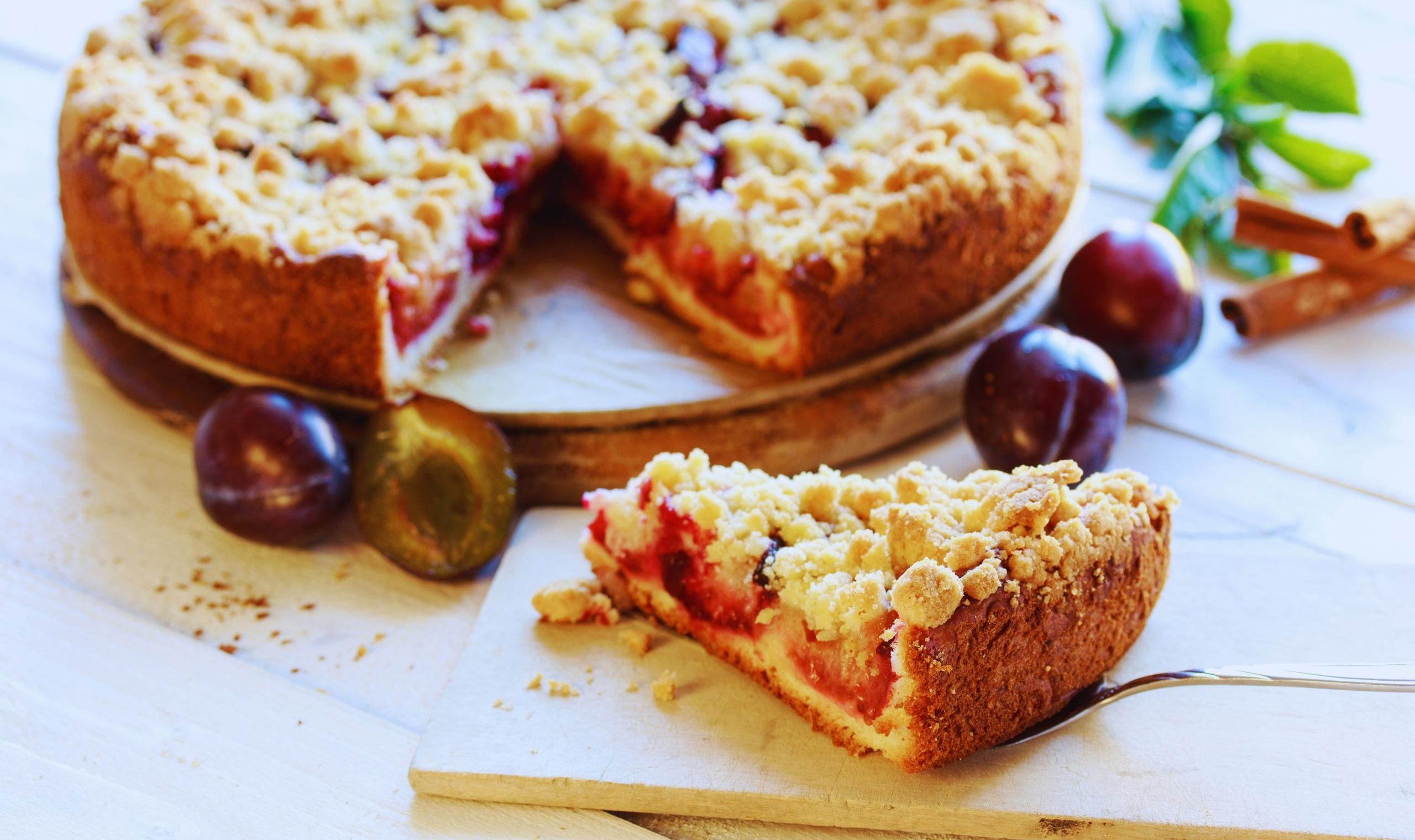
Pflaumenkuchen looks polite at first. A neat German plum pie, lined with dark purple fruit, smelling of butter, cinnamon and late summer. Then you take a bite, and it quietly starts an argument. Is it cake? Is it tart? Is it a traybake? Is it something your grandmother made better than every bakery on the street? In Germany, the answer is usually yes, somehow, to all of it.
This is one of those bakes that arrives with the plum season and behaves as if it owns the calendar. It turns up in bakeries, family kitchens, village cafés and the kind of afternoon coffee table where nobody says they want a second slice until the second slice has already vanished. Pflaumenkuchen is not showy. However, it has the dangerous confidence of a dessert that knows exactly when the fruit is ripe.
The name is refreshingly literal. Pflaumen means plums, Kuchen means cake, though “German plum pie” is often used in English because the fruit sits open-faced on a base like a tart. In many German regions, especially in the south, you will also meet Zwetschgenkuchen. That version usually uses Zwetschgen, the smaller, oval, blue-purple prune plums that hold their shape when baked. They are less watery than round dessert plums, and frankly, they understand the assignment.
The cake’s roots sit deep in Central European home baking, where seasonal fruit was not a garnish but a deadline. When the plums were ready, people baked. There was no need for a lifestyle supplement to announce it. The fruit itself did the marketing. Augsburg, in Bavaria, is especially associated with Zwetschgendatschi, a local form of plum cake whose name is often linked to the act of pressing or “datsching” the plums into the dough. This is exactly the sort of practical culinary poetry Germans do well: press fruit into dough, give it a name, guard it fiercely for generations.
Yet Pflaumenkuchen is not one fixed thing. In Swabia and Bavaria, it often appears on a thin yeast dough, with rows of plums sitting like little roof tiles after a very organised storm. In Franconia, you may hear Zwetschgenplootz. In the Rhineland and Palatinate, Quetschekuche appears, and it can be served with potato soup or bean soup. Yes, plum cake with soup. Before anyone panics, remember that sweet-and-savoury pairings are not modern inventions. They just used to wear sensible shoes.
Elsewhere, bakers prefer a shortcrust base, which gives the pie a firmer, buttery bite. Some versions use a sponge-like batter, softer and quicker, ideal for people who enjoy tradition but not enough to negotiate with yeast. Many families add Streusel, the crumbly topping of flour, butter and sugar that makes almost anything seem more respectable. Meanwhile, purists sometimes skip the Streusel entirely, letting the fruit and dough do the talking. Naturally, both sides think they are correct.
What makes Pflaumenkuchen special is its balance. It is sweet, but not sugary. It is fruity, but not jammy. The base should support the plums without turning soggy, while the fruit should collapse just enough to release its tart juices. Ideally, each bite gives you soft plum, tender dough, a faint buttery edge and a little cinnamon warmth. If there is Streusel, it should crumble rather than clump. Nobody invited a gravel driveway.
The plum choice matters. Zwetschgen, also known as Italian prune plums in many English-speaking markets, are the classic option. They are firm, oval and slightly tart, with flesh that bakes beautifully. However, ordinary plums can work if they are ripe but not bursting with juice. If they are very watery, sprinkle the base with breadcrumbs, ground almonds or a thin dusting of flour before adding the fruit. This old trick keeps the crust from surrendering, which is generally what we want from pastry and people.
Pflaumenkuchen belongs naturally with coffee. In Germany, it is a strong candidate for Kaffee und Kuchen, that civilised afternoon ritual proving a nation can be extremely efficient and still make time for cake. A smooth filter coffee works beautifully, as does a cappuccino. For tea drinkers, try Earl Grey or a plain black tea with enough backbone to handle the fruit. If you want something more festive, a lightly sweet Riesling, Gewürztraminer or sparkling sekt can be excellent. However, avoid anything too heavy or syrupy. The pie already has plums. It does not need a dessert wine arriving like a velvet curtain.
Other foods can sit happily around it. Lightly whipped cream is the obvious companion, especially if you keep it barely sweetened. Vanilla ice cream is less traditional but difficult to criticise with a straight face. Crème fraîche gives a lovely tang, while Greek yoghurt makes the whole thing feel almost responsible. Before the cake, keep the meal simple: roast chicken, pork, vegetable soup, lentils or a leafy salad. After a heavy meal, Pflaumenkuchen still works because its sharp fruit cuts through richness with admirable German punctuality.
There are modest health benefits here, although we should not start pretending cake has joined a wellness retreat. Plums provide fibre, vitamin C, potassium and antioxidant compounds. Their tartness also means the cake needs less sugar than many fruit desserts. Additionally, a yeast-dough version can be lighter than a deep butter pastry. Still, Pflaumenkuchen contains flour, butter and sugar, and Streusel is not a medical intervention. Enjoy it as seasonal pleasure, not as a prescription from Dr Plum.
Where can you find it? In Germany, look for it in late summer and early autumn, especially from August into September. Bakeries, farmers’ markets and traditional cafés are your best hunting grounds. In southern Germany, ask for Zwetschgenkuchen or Zwetschgendatschi. Around the Rhineland or Palatinate, Quetschekuche may be the magic word. Outside Germany, German bakeries, Austrian cafés and Alsatian patisseries may offer close cousins. Otherwise, make it at home. Conveniently, your kitchen does not require Bavarian citizenship.
Pflaumenkuchen Recipe
For a classic homemade version, make a yeasted tray-style Pflaumenkuchen with Streusel. You will need 500g plain flour, 7g dried yeast, 60g sugar, 250ml lukewarm milk, 75g softened butter, one egg, a pinch of salt, about 1.2kg firm plums, one teaspoon cinnamon and a little extra sugar for the fruit. For the Streusel, use 180g plain flour, 100g cold butter, 90g sugar and another pinch of cinnamon.
Put the flour in a large bowl, then stir in the yeast, sugar and salt. Add the milk, butter and egg, and knead until the dough becomes smooth and elastic. It should feel soft, not sticky enough to frighten you. Cover the bowl and leave it somewhere warm until doubled in size, usually about an hour. Meanwhile, halve and stone the plums, then cut each half again if the fruit is large. Toss them with cinnamon and a spoonful of sugar.
For the Streusel, rub the cold butter into the flour, sugar and cinnamon until you have rough crumbs. Now line a large baking tray with parchment. Roll or press the risen dough into the tray, keeping it fairly thin. Arrange the plums tightly over the surface, cut side up, overlapping slightly. Scatter the Streusel across the top. Then leave the tray to rest for about 15 minutes while the oven heats to 190°C, or 170°C fan.
Bake for 30 to 35 minutes, until the edges are golden, the plums are glossy and the crumbs are lightly browned. Let it cool for at least 20 minutes before slicing, because molten plum juice has no respect for enthusiasm. Serve warm or at room temperature, preferably with coffee and whipped cream. It keeps for two days, though claiming that requires faith in human restraint. In most houses, Pflaumenkuchen disappears faster than anyone admits.