Pizza Rustica: Italy’s Gloriously Overfilled Easter Pie
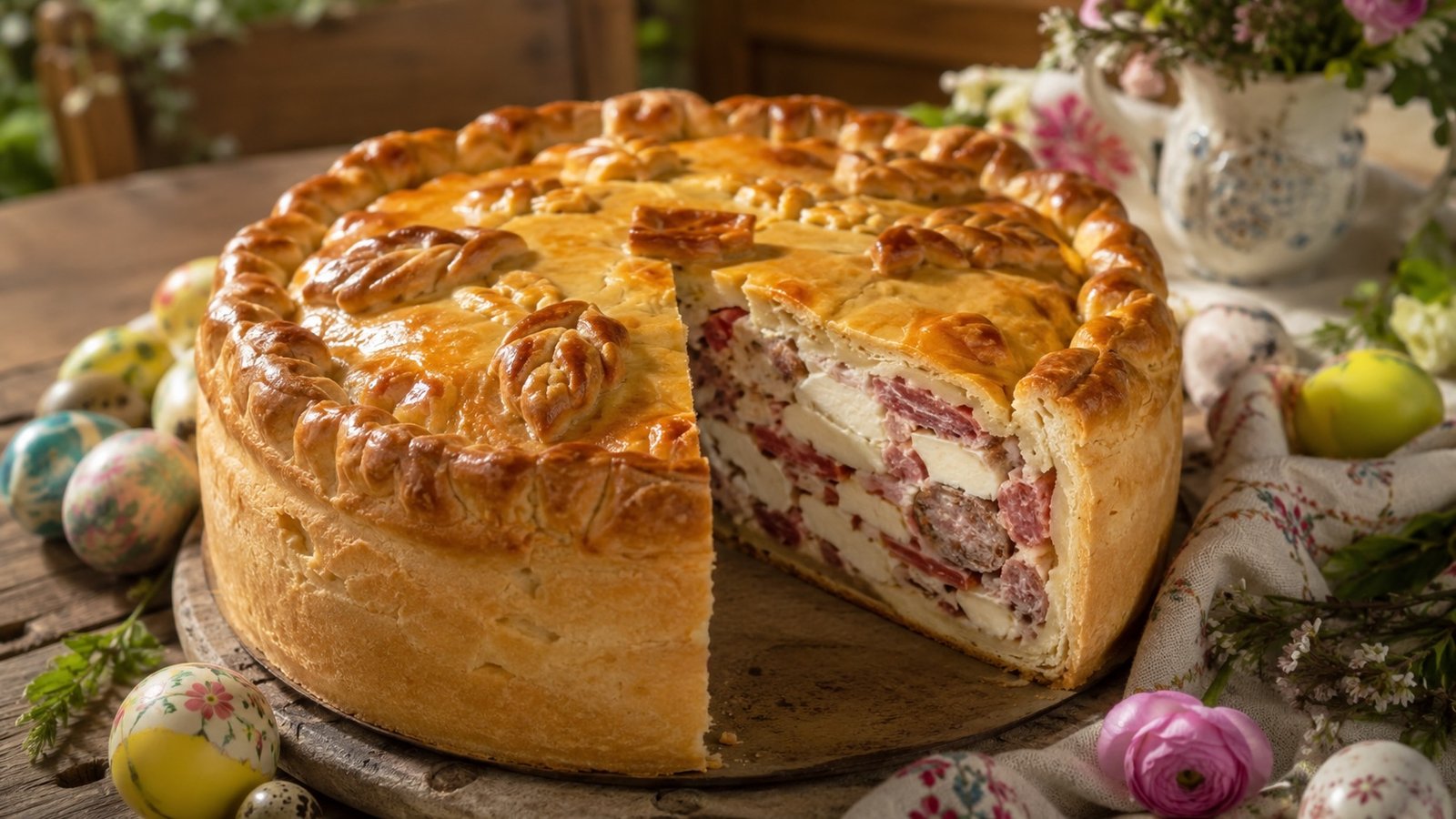
Pizza rustica is what happens when an Italian family looks at pastry, cheese, eggs and cured meat and decides restraint is overrated. It is tall, rich and impressively heavy. Once sliced, the filling reveals a colourful mosaic of ricotta, salami, ham, sausage and cheese. Calling it “pizza” may confuse anyone expecting tomato sauce and a blistered crust. However, in southern Italian cooking, the word can also refer more broadly to a pie or baked preparation made with dough.
The dish is closely associated with Easter, particularly in Campania and the areas around Naples. It is also found in Basilicata, Lazio, Abruzzo and other parts of southern and central Italy. Names change from place to place, and sometimes from one kitchen to the next. You may encounter pizza rustica, pizza ripiena, pizza piena, pizza chiena or canascione. Italian-American families often call it pizzagaina, a name shaped by the pronunciation of pizza chiena or pizza piena.
Pizza chiena literally means “full pizza”, which is wonderfully accurate. This is not a pie with a polite layer of filling hiding beneath an unnecessarily dramatic lid. It is properly full. In fact, the pastry seems less like the main attraction and more like structural engineering designed to stop the cheese escaping.
Its Easter connection comes from the traditional Catholic calendar. Lent was once observed through serious dietary restraint, with meat, eggs and rich dairy products avoided or limited. When Easter arrived, families marked the end of that fasting period with a dish containing almost everything they had temporarily surrendered. Eggs, ricotta, aged cheese, sausage and cured pork all entered the pie, apparently without queuing.
Historical versions have been recorded for at least two centuries. An 1837 Neapolitan recipe appeared in Ippolito Cavalcanti’s influential cookbook Cucina Teorico-pratica. References from nineteenth-century Naples also distinguish pizza rustica and other stuffed pizzas from the flat varieties now familiar worldwide.
Traditionally, the pie could be prepared on Good Friday and left until Easter Sunday. That pause was practical as well as ceremonial. Once cooled, the filling firms, the flavours settle and the pie becomes easier to slice. Some families serve it at Easter breakfast. Others place it among the antipasti before the main meal, because clearly a wedge of meat-and-cheese pie is merely an appetiser.
It also travels exceptionally well. Consequently, pizza rustica is suited to Pasquetta, the Italian Easter Monday holiday traditionally associated with outings and picnics. Served at room temperature, it needs no last-minute preparation and suffers no indignity from spending an hour wrapped in paper.
The classic Neapolitan filling usually begins with ricotta and eggs. Diced salumi and cheese are then folded through it. Salami, prosciutto, capocollo, mortadella and cooked sausage may all appear. Provolone, mozzarella, pecorino and Parmesan bring saltiness, softness and depth. Every family seems to have a preferred combination, usually described as definitive despite the existence of several thousand other definitive combinations.
The pastry varies too. Some cooks use a bread-like, yeast-raised dough related to ordinary pizza dough. Others favour a tender shortcrust, sometimes enriched with eggs, lard or sugar. That faint sweetness may sound odd beside salami and pecorino. Yet it works beautifully, softening the salt and making the pie feel festive rather than simply enormous.
In Abruzzo, versions may be built with regional cheeses and local cured meats. Campanian pies often emphasise ricotta, eggs, provolone and salumi. Meanwhile, Italian-American pizza rustica frequently becomes taller, denser and even more generous with meat. Immigration preserved the dish while allowing families to adapt it to locally available ingredients. Thus, pizzagaina became not only an Easter recipe but also a piece of edible family history.
There are related Italian Easter pies, although they should not all be treated as identical. Liguria’s torta Pasqualina uses thin pastry, leafy greens, cheese and whole eggs baked inside the filling. Umbria and the Marche have pizza di Pasqua, a tall savoury cheese bread rather than a covered meat pie. Naples also offers pastiera, the fragrant sweet Easter tart made with ricotta and cooked wheat.
What makes pizza rustica special is the contrast. The pastry is crisp and golden, while the centre remains creamy and substantial. Salty salumi meet mild ricotta. Firm cubes of cheese interrupt the soft filling, creating different textures in every bite. Moreover, the cross-section is genuinely spectacular. It looks like a stained-glass window designed by someone with strong opinions about pork.
A dry Italian white wine works particularly well. Falanghina, Fiano or Greco di Tufo can cut through the richness without disappearing beneath it. For red wine, choose something lively rather than heavily oaked. Barbera, young Chianti or a fresh Montepulciano d’Abruzzo would all be sensible companions.
Beer is equally welcome. A crisp pilsner refreshes the palate, while an amber lager complements the browned pastry and cured meats. Sparkling water with lemon is the safest alcohol-free choice. Alternatively, try a sharp, lightly bitter aperitivo-style soda.
Because the pie is so rich, the best accompanying foods are fresh and acidic. Serve it with a salad of rocket, fennel and orange. Roasted peppers dressed with vinegar also work well. Pickled vegetables, artichokes and olives create a relaxed antipasti plate, although adding more cheese may finally be considered unnecessary.
Nutritionally, pizza rustica provides plenty of protein, calcium and energy. Eggs and cheese contribute vitamin B12, while ricotta supplies calcium and phosphorus. However, the dish can also contain considerable saturated fat, sodium and calories. Cured meats are best enjoyed in moderation, and portion size matters more here than wishful thinking.
A narrow slice with salad makes a satisfying meal. You can also reduce the quantity of processed meat, choose lean cooked ham and add vegetables such as spinach or roasted peppers. Nevertheless, pizza rustica is celebration food. Turning it into a low-fat wellness bowl would rather miss the point.
In Italy, look for it in bakeries, delicatessens and pastry shops around Easter, especially in Campania. Availability varies because many businesses prepare it only seasonally. Italian bakeries in Britain, the United States, Canada and Australia may sell Easter pies under names such as pizza rustica, pizza gain or pizzagaina. Otherwise, the most reliable source remains a home kitchen and a springform tin sturdy enough for the assignment.
Pizza Rustica Recipe
This recipe makes one deep 23 cm pie, serving about ten people as part of a larger meal.
For the pastry, you will need 500 g plain flour, 1 teaspoon fine salt, 225 g cold unsalted butter, 2 large eggs and 3–5 tablespoons cold water. For the filling, prepare 500 g well-drained ricotta, 4 large eggs, 100 g finely grated Parmesan, 150 g provolone, 125 g mozzarella, 100 g salami, 100 g prosciutto or cooked ham, 150 g Italian sausage meat, 2 tablespoons chopped parsley, black pepper and a little grated nutmeg. You will also need one beaten egg for glazing.
Rub the butter into the flour and salt until the mixture resembles coarse breadcrumbs. Add the eggs, then enough cold water to bring everything together. Knead very briefly, divide the pastry into two portions and flatten them into discs. Make one portion slightly larger for the base. Wrap both discs and chill for at least 45 minutes.
Meanwhile, cook the sausage meat in a frying pan until browned. Break it into small pieces, then leave it to cool completely. Dice the provolone, mozzarella, salami and ham into small cubes.
Place the ricotta in a large bowl. Beat in the eggs, Parmesan, parsley, black pepper and nutmeg. Fold through the cooled sausage, diced meats and cheeses. Taste cautiously before adding salt, since the cured meat and cheese may provide more than enough.
Heat the oven to 190°C, or 170°C fan. Grease a deep 23 cm springform tin. Roll out the larger pastry disc and use it to line the base and sides of the tin. Leave a slight overhang. Spoon in the filling and level the surface without pressing it down too firmly.
Roll out the remaining pastry and place it over the filling. Trim the edges, then crimp the top and bottom pastry together. Cut several small vents in the lid. Brush generously with beaten egg.
Bake for 60–75 minutes, until the pastry is deeply golden and the centre feels set. Cover the top loosely with foil if it browns too quickly.
Leave the pizza rustica in its tin for at least one hour. Then remove it carefully and cool completely before slicing. For the cleanest wedges, refrigerate it overnight and bring it back towards room temperature before serving. It will keep in the fridge for up to four days, although its chances of surviving that long are limited.