Kürtőskalács: The Hungarian Chimney Cake That Conquered Europe’s Christmas Markets
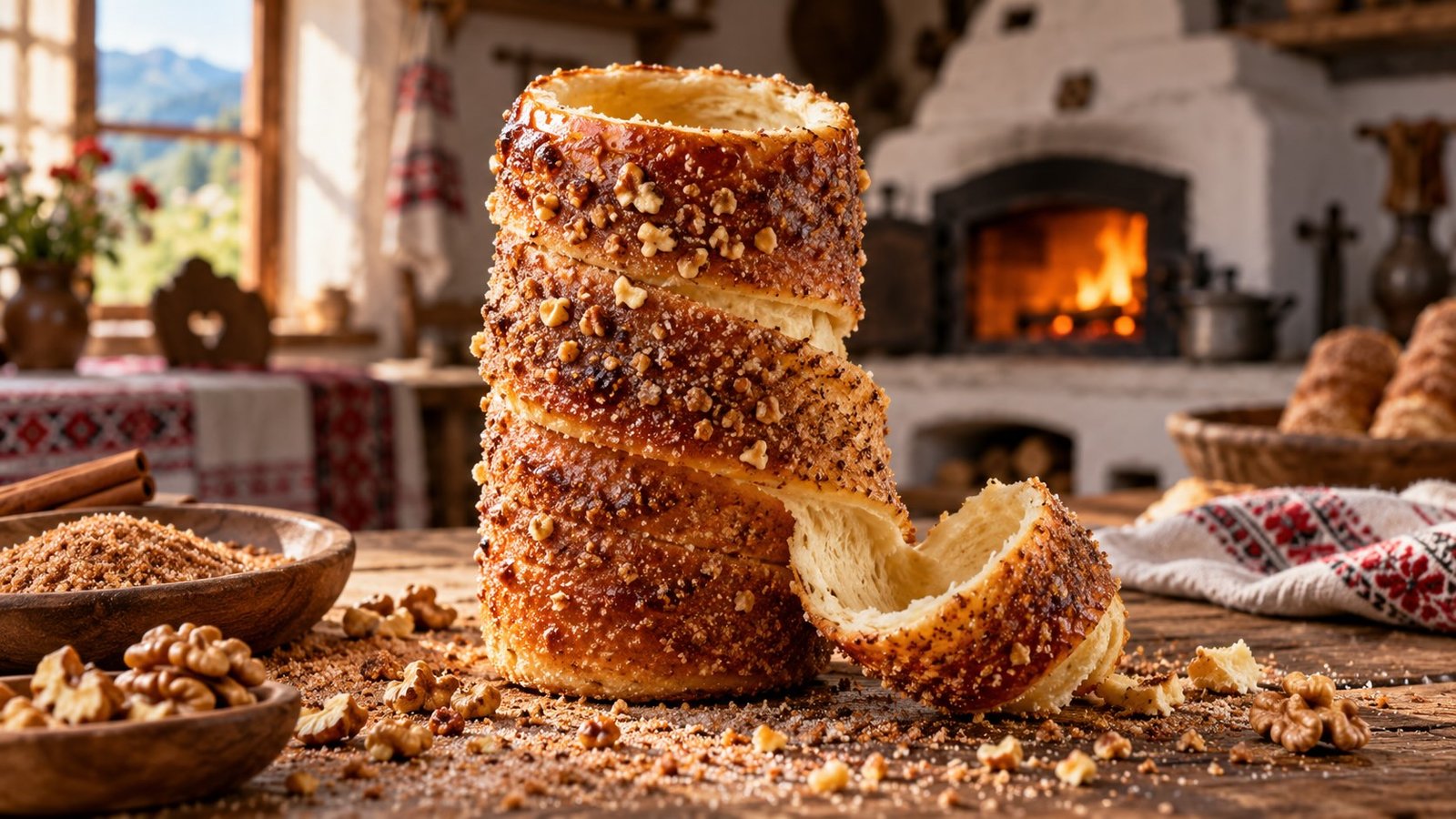
Imagine walking through a Christmas market on a freezing December evening. Somewhere between the mulled wine and the questionable Christmas decorations, an irresistible smell catches your attention. It is warm, buttery, sweet and unmistakably cinnamon. Then you spot the culprit: a golden cylinder of dough rotating slowly over glowing heat, its sugar coating turning into a delicate caramel crust. This is kürtőskalács, Hungary’s famous chimney cake, and resisting it requires considerably more willpower than most people possess.
Despite its name, chimney cake is not really a cake in the conventional sense. There are no layers of sponge, no cream filling and certainly no need for a fork. Instead, bakers wrap strips of sweet yeast dough around a cylindrical spit, roll them in sugar and roast them until golden. The result is a hollow, spiral-shaped pastry with a crisp exterior and a soft, fluffy interior. Moreover, the steam escaping from its centre explains the chimney comparison rather nicely.
The story begins in Transylvania, a historical region now part of Romania but closely connected with Hungarian and Székely culture. The Székely people, a Hungarian-speaking community, have particularly strong associations with this extraordinary pastry. Although similar spit-roasted breads existed elsewhere in Europe, kürtőskalács developed its own distinctive identity. It became a favourite at weddings, religious celebrations and family gatherings, long before tourists started photographing it for Instagram.
One of the earliest known written recipes appeared in a Transylvanian cookbook compiled by Countess Mária Mikes of Zabola in 1784. Interestingly, that early version did not include the familiar caramelised sugar coating. The pastry gradually evolved, and nineteenth-century recipes began incorporating sugar and other improvements. By the twentieth century, kürtőskalács had become a recognised regional speciality. Its transformation from festive homemade treat to international street-food celebrity came much later.
Traditionally, families prepared chimney cakes for important occasions rather than ordinary weekday breakfasts. Making them required time, patience and specialised equipment. The dough needed careful preparation, while the rotating wooden cylinder demanded constant attention over the fire. Consequently, the person responsible for roasting enjoyed considerable authority. After all, nobody wanted to explain to an entire wedding party why the celebratory pastry had become charcoal.
What makes kürtőskalács special is its unusual cooking method. Unlike bread baked in an oven, the dough rotates continuously around a spit, traditionally above hot embers. As the sugar melts, it forms a glossy caramelised shell. Meanwhile, the dough beneath remains tender and slightly chewy. When the finished pastry slides off its mould, it retains its distinctive hollow shape. The contrast between crunchy caramel and pillowy bread makes each bite particularly satisfying.
The traditional version often receives a coating of ground walnuts, cinnamon or additional sugar. However, modern vendors have expanded the possibilities considerably. You can now encounter chimney cakes covered in coconut, cocoa, crushed almonds or colourful confectionery. Some establishments even fill them with ice cream, whipped cream or chocolate spread. Purists might consider these inventions culinary vandalism, although the queues outside the shops suggest that customers disagree.
There are also interesting relatives across Central Europe. Slovakia has trdelník, another spit-roasted cylindrical pastry, particularly associated with Skalica. Similar preparations appear in parts of the Czech Republic and Austria. Nevertheless, the relationship between these regional traditions is complicated. Their shared cooking techniques reflect centuries of cultural exchange rather than a simple story of one country inventing everything. Naturally, that has never stopped neighbouring nations from arguing about ownership.
In Hungary, kürtőskalács appears at fairs, festivals and seasonal markets, especially around Budapest. Across Romania, visitors can find particularly traditional examples in Székely communities in Transylvania. The pastry has also travelled far beyond its homeland. Today, chimney cake shops operate in cities across Europe and beyond, often adapting their offerings to local tastes. However, a freshly roasted version prepared over charcoal remains difficult to beat.
Choosing the right drink is almost as important as choosing the topping. Strong black coffee provides an excellent contrast to the sweetness, while cappuccino complements the buttery dough. During winter, hot chocolate offers maximum indulgence, although combining the two might test your enthusiasm for sugar. Alternatively, mulled wine works beautifully with cinnamon-coated chimney cake. For something lighter, unsweetened black tea or a fragrant fruit infusion balances the caramelised crust.
Although kürtőskalács is perfectly capable of becoming dessert all by itself, it also welcomes company. Fresh strawberries, raspberries and slightly tart cherries provide refreshing contrast. A spoonful of thick Greek yoghurt or crème fraîche adds creaminess without excessive sweetness. Vanilla ice cream makes an excellent partner when the pastry is still warm. Furthermore, toasted nuts bring additional texture, while a little dark chocolate introduces pleasant bitterness.
Nutritionally, chimney cake is a treat rather than a health food disguised as one. Its principal ingredients include flour, sugar, milk, butter and eggs, providing carbohydrates, some protein and fat. Nuts contribute fibre, unsaturated fats and minerals, depending on the topping. However, the caramelised sugar coating significantly increases its sweetness and energy content. Portion sizes also vary enormously, particularly among modern versions loaded with ice cream and sauces.
Fortunately, enjoying traditional food does not require pretending that every ingredient offers miraculous health benefits. A freshly made chimney cake can fit into a balanced diet as an occasional indulgence. Sharing one is sensible, especially when the portions resemble small architectural structures. People with gluten intolerance or wheat allergies should avoid conventional versions, while those with milk or egg allergies need to check the recipe. Vegan alternatives exist, but they require suitable substitutions.
Finding authentic kürtőskalács is easier than it once was. Budapest’s markets and specialist bakeries offer plenty of opportunities, while Transylvania provides a particularly meaningful connection to its heritage. Christmas markets across Central Europe frequently feature rotating spits and the familiar aroma of caramelising sugar. In Britain, seasonal markets and specialist street-food traders sometimes sell chimney cakes too. Look for vendors who cook them fresh rather than displaying finished pastries for hours.
Ultimately, the charm of kürtőskalács lies in its simplicity. A handful of familiar ingredients becomes something memorable through an ingenious cooking technique. It is simultaneously rustic, theatrical and wonderfully impractical to eat neatly. The pastry invites you to pull away its spiralling layers with your fingers, leaving a trail of sugar behind. And perhaps that is exactly how a proper festive treat should behave.
Recipe: Traditional Hungarian Kürtőskalács
Makes 4 medium chimney cakes | Preparation: 30 minutes | Rising: 1–1½ hours | Cooking: 15–20 minutes per batch
Making chimney cake at home is entirely possible, even without a traditional charcoal-fired rotating spit. The main challenge involves finding suitable cylindrical moulds and ensuring that the dough cooks evenly. Metal chimney cake moulds work best, although oven-safe cylindrical baking forms can provide an alternative. Whatever you choose, make sure the equipment is genuinely suitable for high-temperature cooking.
Ingredients
For the dough:
- 500g strong white bread flour
- 7g instant dried yeast
- 250ml lukewarm whole milk
- 60g caster sugar
- 60g unsalted butter, melted and cooled
- 2 medium eggs
- ½ teaspoon salt
- 1 teaspoon vanilla extract
For the coating:
- 100g caster sugar
- 40g melted butter
- 2 teaspoons ground cinnamon
- 60g finely chopped walnuts, optional
Preparing the dough
Combine the flour, yeast, sugar and salt in a large mixing bowl. In a separate jug, whisk the milk, eggs, melted butter and vanilla together. Gradually add the liquid to the dry ingredients, mixing until a soft dough forms. Knead for approximately 8–10 minutes until smooth and elastic.
Next, transfer the dough to a lightly greased bowl and cover it with a clean tea towel. Leave it somewhere warm for 60–90 minutes, or until roughly doubled in size. Meanwhile, prepare your baking moulds and lightly grease their surfaces.
Shaping the chimney cakes
Divide the risen dough into four equal portions. Roll each portion into a long rope approximately 1.5cm thick. Carefully wind the rope around a prepared cylindrical mould, keeping the coils close together. Press the ends gently into place so they remain secure during cooking.
Roll the wrapped mould lightly across a clean work surface to flatten the coils and close any gaps. Brush the dough with melted butter, then roll it in caster sugar until evenly coated. For a cinnamon version, mix the sugar with ground cinnamon before coating.
Baking and caramelising
Preheat the oven to 190°C fan, or 210°C conventional. Arrange the moulds horizontally on suitable supports, ensuring the dough does not touch the baking tray beneath. Use only supports and moulds designed for oven cooking.
Bake for approximately 15–20 minutes, rotating the moulds regularly to encourage even browning. Watch carefully towards the end, as the sugar can darken quickly. The finished pastries should have a rich golden colour and a crisp, caramelised exterior.
For a more traditional result, use a purpose-built rotating chimney cake grill over charcoal, following its operating instructions. This produces the characteristic roasted flavour and more even caramelisation.
Finishing and serving
Allow the pastries to cool briefly before carefully sliding them off their moulds. While still warm, roll them in chopped walnuts, cinnamon sugar or another preferred topping. Serve immediately, ideally with strong coffee or hot tea.
The best way to eat kürtőskalács is to tear away the spiral in sections. Forget elegant pastry forks and elaborate table manners. This is a dessert designed for sticky fingers, happy faces and the occasional shower of cinnamon sugar.
Post Comment