Västerbotten Cheese Pie: Sweden’s Golden, Cheesy National Treasure
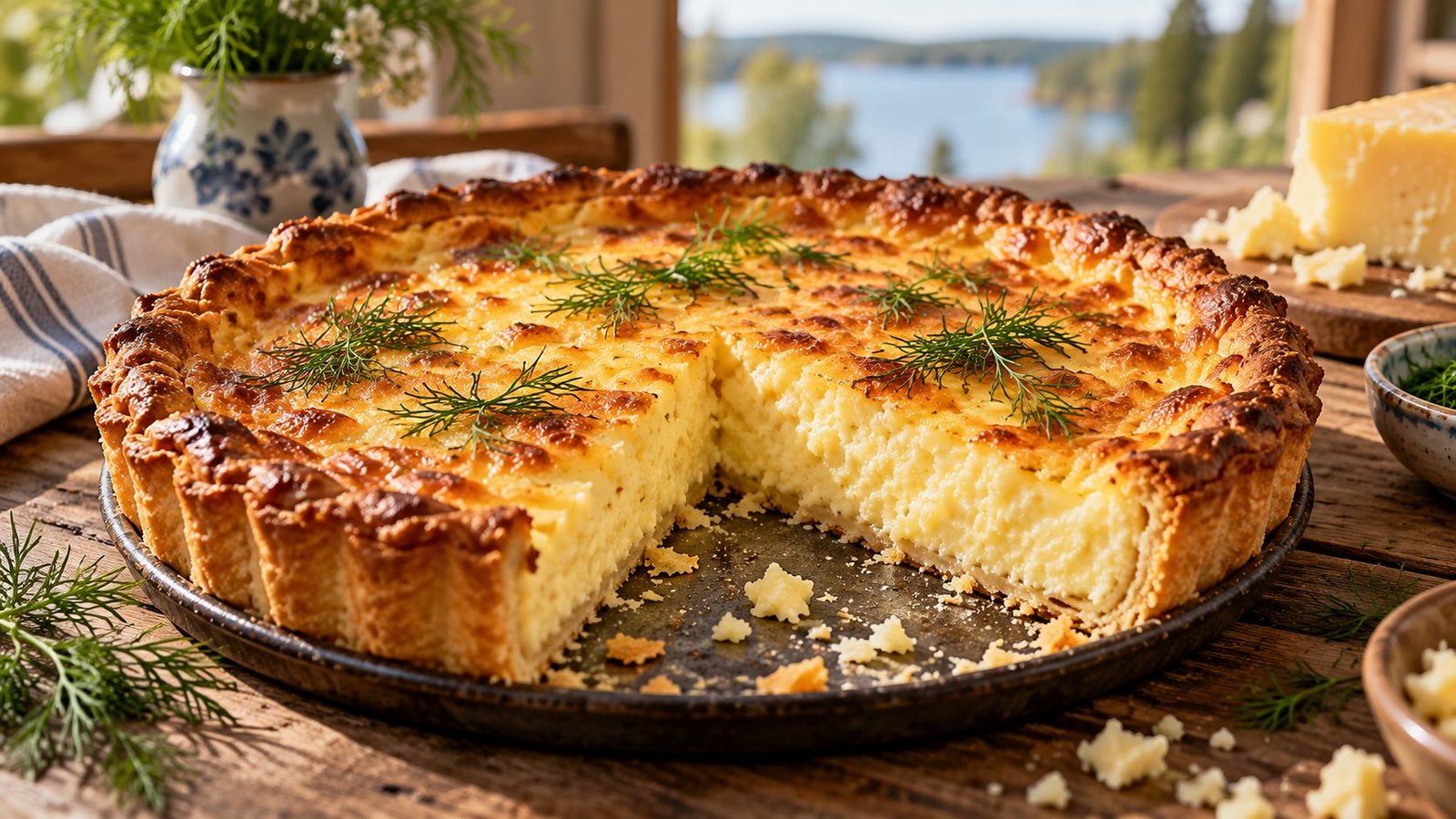
Sweden has given the world ABBA, flat-pack furniture and a rather impressive ability to make long, dark winters look cosy. However, one of its finest achievements is considerably less famous abroad. Västerbotten cheese pie, or Västerbottensostpaj, combines a buttery pastry crust with a rich, golden filling made from Sweden’s most celebrated cheese. It looks modest, tastes magnificent and has a remarkable ability to disappear from the table.
This is no ordinary cheese tart. Its star ingredient, Västerbottensost, has a sharp, nutty character that gives the pie its distinctive personality. Moreover, the dish occupies a special place in Swedish celebrations, from midsummer gatherings to traditional crayfish parties. Apparently, the Swedes have decided that almost every important occasion deserves a generous helping of melted cheese. It is difficult to disagree.
The story begins in Burträsk, a small village in Västerbotten, northern Sweden. According to the cheese’s traditional origin story, dairymaid Ulrika Eleonora Lindström accidentally created Västerbottensost in 1872. She supposedly left the cheesemaking process unattended, resulting in an unusual product with a distinctive flavour. Whether every detail of this charming tale is true remains uncertain. Nevertheless, the cheese itself became one of Sweden’s great culinary treasures.
Today, Västerbottensost still has a strong connection to its northern birthplace. The cheese matures for at least 14 months, developing a firm, slightly crumbly texture and an intensely savoury flavour. Its character combines nutty sweetness, pronounced saltiness and a pleasantly sharp finish. Consequently, it works beautifully in dishes where ordinary cheese might simply disappear into the background.
The pie itself has a less precisely documented history. Swedish cooks have long prepared savoury pies, but Västerbottensostpaj became especially popular during the twentieth century. As the cheese gained national recognition, it found its way into festive dishes and home kitchens. Eventually, the combination of crisp pastry, eggs, cream and grated cheese became a modern Swedish classic.
Its association with kräftskiva, the traditional Swedish crayfish party, is particularly strong. These late-summer celebrations involve boiled crayfish, dill, paper decorations, colourful hats and enthusiastic singing. Naturally, alcohol also tends to make an appearance. The cheese pie provides something substantial between all the seafood and festivities, especially when the singing becomes more ambitious than tuneful.
What makes Västerbotten cheese pie special is its balance of simplicity and intensity. The pastry should be thin, buttery and crisp, while the filling remains soft and creamy. Meanwhile, the cheese contributes enough flavour to make additional ingredients almost unnecessary. Unlike a heavily loaded quiche, this pie allows its principal ingredient to do the talking. Fortunately, Västerbottensost has plenty to say.
The texture matters just as much as the flavour. A properly baked pie has a lightly browned surface and a filling that holds together without becoming rubbery. Each slice offers a delicate contrast between flaky pastry and rich cheese custard. Furthermore, the flavour deepens slightly as the pie cools, making it excellent at room temperature. This is convenient for anyone hosting a Swedish-style party without wishing to spend the entire evening guarding the oven.
Although the classic recipe remains remarkably straightforward, regional and household variations abound. Some cooks add finely chopped onions or leeks, bringing sweetness to the filling. Others include mushrooms, spinach or fresh herbs. In northern Sweden, combinations with chanterelles are particularly appealing during the mushroom season. However, traditionalists often insist that good Västerbottensost needs little assistance.
Modern versions sometimes feature smoked salmon, prawns or even small portions served as elegant appetisers. Miniature pies have become popular at buffets and celebrations. Additionally, some cooks experiment with rye flour in the pastry, giving it a more rustic Scandinavian character. Purists may raise an eyebrow, but experimentation is hardly a crime when cheese is involved.
The most traditional accompaniment is crayfish, particularly during August celebrations. The pie’s creamy richness complements the delicate sweetness of the shellfish, while fresh dill adds a welcome herbal note. Smoked salmon also works beautifully, especially with a squeeze of lemon. Alternatively, serve the pie with a simple green salad dressed in sharp mustard vinaigrette. The acidity cuts through the richness and makes a second slice seem entirely reasonable.
For something more substantial, try roasted beetroot, pickled cucumber or lightly dressed new potatoes. These ingredients reflect the flavours of Scandinavian cooking without overwhelming the cheese. Furthermore, a spoonful of crème fraîche and a little salmon roe can transform a modest slice into a sophisticated starter. It is the culinary equivalent of putting on a dinner jacket without changing your comfortable shoes.
Drinks deserve some consideration, too. A crisp Sauvignon Blanc or dry Riesling provides enough acidity to balance the creamy filling. Chardonnay can also work, particularly when it has restrained oak and a fresh finish. Meanwhile, a dry sparkling wine makes an excellent celebratory pairing. Bubbles and rich cheese have always enjoyed a remarkably successful relationship.
Beer lovers should consider a clean pilsner or a lightly bitter pale ale. Both refresh the palate without competing with the cheese. At traditional crayfish parties, Swedish schnapps or aquavit often accompanies the meal. Its herbal and caraway notes can complement the pie, although enthusiastic drinking is best left to personal judgement. For a non-alcoholic option, sparkling apple juice or chilled elderflower cordial works surprisingly well.
Nutritionally, Västerbotten cheese pie offers both advantages and considerations. The cheese provides protein, calcium and phosphorus, nutrients important for maintaining bones and muscles. Eggs contribute additional protein, vitamin B12 and other essential nutrients. However, the combination of cheese, cream and buttery pastry also makes the dish rich in saturated fat and relatively energy-dense.
Västerbottensost contains substantial amounts of salt, so generous portions may not suit everyone. People managing sodium intake should be particularly mindful. Furthermore, the pie contains dairy, eggs and gluten when prepared with conventional wheat pastry. Those with relevant allergies or intolerances will need suitable alternatives. Ultimately, this is a dish to enjoy as part of a varied diet, not a miracle health food disguised as pastry.
Finding authentic Västerbotten cheese pie outside Sweden can be challenging. In Sweden, cafés, bakeries and restaurants frequently serve it, particularly during summer celebrations. Supermarkets also sell ready-made versions, although homemade examples generally offer better pastry and a fresher filling. Naturally, the finest version is often the one prepared by somebody’s Swedish grandmother.
In Britain, specialist Scandinavian food shops and some online delicatessens may stock Västerbottensost. Availability varies, and imported cheese can be expensive. If the genuine article proves elusive, a combination of mature Cheddar and Parmesan provides a reasonable substitute. However, the flavour will differ from the original’s distinctive sharpness and nutty depth. Think of it as a respectable British interpretation rather than an authentic Swedish pie.
The beauty of Västerbotten cheese pie lies in its complete lack of unnecessary sophistication. It requires few ingredients, modest effort and no elaborate decoration. Yet the finished result feels perfectly at home at a celebration. Sweden may have invented many clever things, but turning exceptional cheese into a golden pie ranks among its more delicious achievements.
Recipe: Traditional Västerbotten Cheese Pie
1 hour 20 minutes
Serves 6–8
23 cm tart tin
This traditional recipe keeps the filling simple, allowing the distinctive cheese to shine. The pastry provides a crisp foundation, while eggs and cream create a rich, silky texture. Moreover, the pie tastes excellent both warm and at room temperature.
Ingredients for the pastry
- 200 g plain flour
- 100 g cold unsalted butter, cubed
- 2–3 tablespoons cold water
- ¼ teaspoon salt
Ingredients for the filling
- 250 g Västerbottensost, finely grated
- 3 large eggs
- 200 ml double cream
- 100 ml whole milk
- Freshly ground black pepper
- A small pinch of salt, if needed
For serving
- Fresh dill
- Crème fraîche
- Smoked salmon or cooked crayfish, optional
- A simple green salad
Method
Prepare the pastry. Place the flour and salt in a mixing bowl. Add the cold butter and rub it into the flour until the mixture resembles coarse breadcrumbs. Gradually add the cold water, mixing until the dough just comes together. Avoid overworking it, as this can make the pastry tough.
Shape the dough into a disc, wrap it and refrigerate for 30 minutes. Meanwhile, lightly butter a 23 cm loose-bottomed tart tin. Roll the chilled dough to approximately 3 mm thickness, then line the tin. Press it gently into the corners and trim the edges. Refrigerate for another 15 minutes.
Blind-bake the pastry. Preheat the oven to 200°C, or 180°C fan. Line the pastry case with baking parchment and fill with baking beans. Bake for 15 minutes, then remove the beans and parchment. Return the pastry to the oven for another 5–7 minutes, until the base looks dry and lightly golden.
Prepare the filling. Reduce the oven temperature to 190°C, or 170°C fan. In a large bowl, whisk together the eggs, cream and milk until smooth. Add the grated Västerbottensost and a generous grinding of black pepper. Mix gently until the cheese is evenly distributed. Taste the cheese before deciding whether the mixture needs additional salt.
Fill and bake. Place the pastry case on a baking tray. Carefully pour in the cheese mixture, spreading the grated cheese evenly. Bake for approximately 25–35 minutes, until the surface turns golden and the filling has set around the edges. The centre should retain a slight wobble rather than appearing completely firm.
Rest and serve. Remove the pie from the oven and allow it to rest for at least 15 minutes. This helps the filling settle and makes slicing easier. Serve warm or at room temperature with fresh dill, crème fraîche and smoked salmon or crayfish. A crisp salad provides a refreshing contrast.
For the best result, avoid overbaking. Excessive heat can cause the egg custard to tighten and lose its delicate texture. Additionally, grate the cheese shortly before preparing the filling for an even distribution.
Leftover pie keeps in the refrigerator for up to three days when promptly chilled and stored in an airtight container. Reheat gently in the oven until piping hot, or enjoy it cold. Indeed, some enthusiasts argue that Västerbotten cheese pie tastes even better the following day. Testing this theory requires the unlikely achievement of having leftovers.

Post Comment