Masa Real de Guayaba: Cuba’s Irresistible Guava Tart
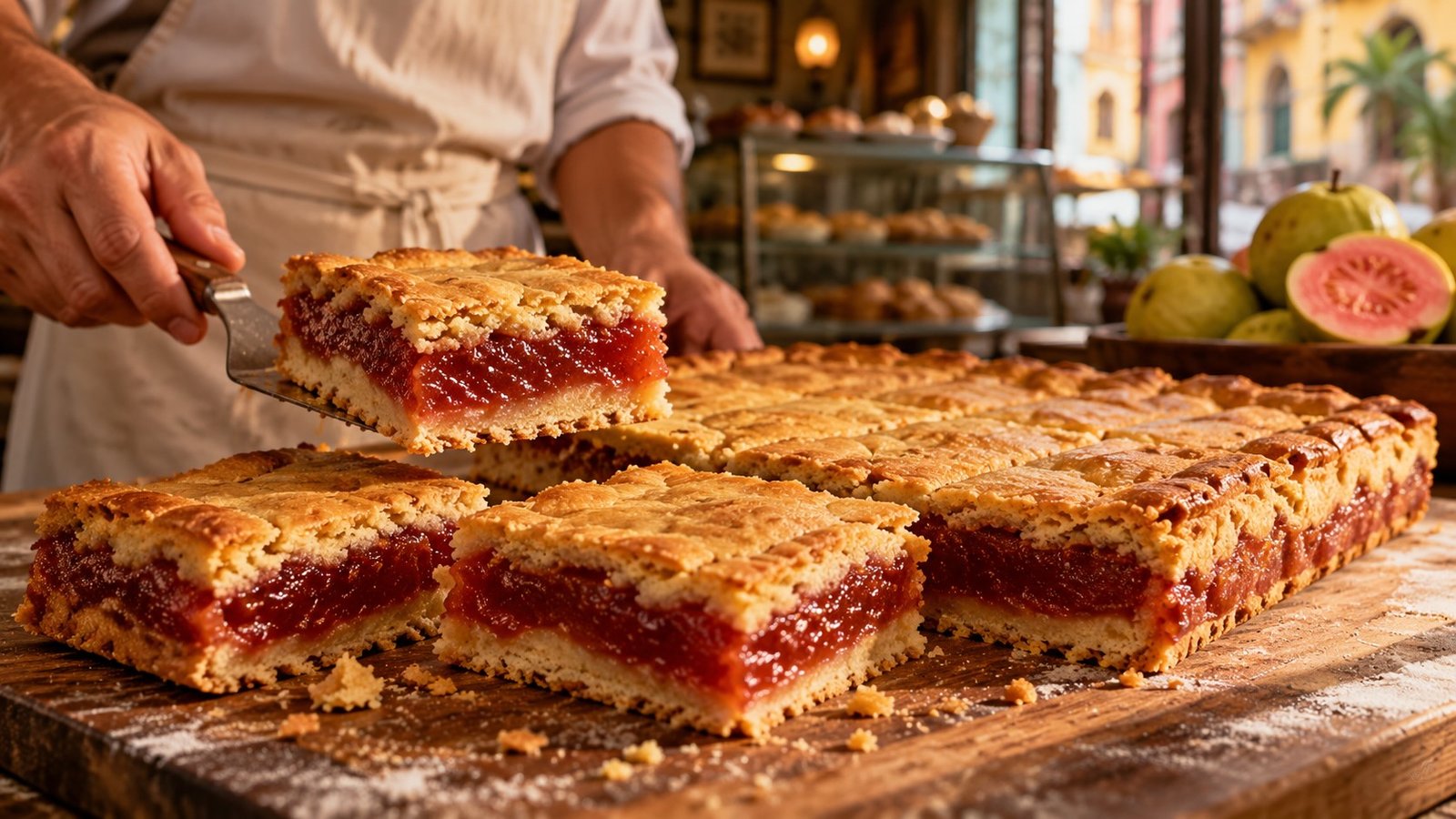
Some desserts impress with elaborate decorations, delicate layers and ingredients nobody can pronounce. Cuba’s Masa Real de Guayaba takes a different approach. It puts sweet guava paste between two layers of buttery pastry and lets the oven do the talking. The result looks rather modest, but one bite reveals why generations of Cubans have remained devoted to it.
Despite its grand name, which translates roughly as “royal dough”, Masa Real is wonderfully unpretentious. It is somewhere between a tart, a shortbread cake and a filled pastry bar. The outside is golden and slightly crumbly, while the centre delivers a concentrated burst of tropical sweetness. Naturally, it goes exceptionally well with coffee.
Masa Real belongs to Cuba’s rich tradition of pastries shaped by Spanish colonial influences and Caribbean ingredients. Spanish baking introduced techniques involving wheat flour, butter and sugar. Meanwhile, guava was already familiar throughout tropical America. Combining European-style pastry with locally abundant fruit created something distinctly Cuban.
The precise origin of Masa Real remains uncertain. However, its development reflects the broader history of Cuban home baking, where practical recipes often travelled through families rather than cookbooks. Guava paste, known as pasta de guayaba, became particularly useful because its dense consistency allowed it to keep well and survive baking without disappearing into the dough.
Over time, Masa Real became a familiar sight in Cuban bakeries, family kitchens and neighbourhood cafés. It also travelled with Cuban communities to Miami and beyond. Today, a square of guava-filled pastry can offer Cuban expatriates something more powerful than dessert: a little edible nostalgia, conveniently available without a plane ticket.
What makes Masa Real special is its balance of textures. Unlike a conventional fruit tart, it generally has no open fruit topping or elaborate lattice. Instead, the guava filling hides between two substantial layers of tender dough. The pastry should be buttery but sturdy enough to hold its shape when cut into squares.
The guava itself provides the personality. Its flavour combines floral sweetness, tropical fruitiness and a gentle acidity. Moreover, its vivid pinkish-red colour creates a striking contrast against the pale golden pastry. A good Masa Real needs little decoration, although a light dusting of icing sugar occasionally makes an appearance.
Regional and family variations offer plenty of room for argument. Some bakers prefer a soft, almost cake-like dough, while others produce a firmer shortbread texture. Certain recipes include vanilla, citrus zest or a little rum. Others add cream cheese alongside the guava, borrowing from another beloved Cuban pastry combination. Strict traditionalists may object, but fortunately, the pastry rarely gets involved.
Masa Real also has relatives throughout Latin America. Puerto Rican and other Caribbean bakeries prepare guava-filled pastries, while Argentina’s pastafrola often features quince paste beneath a pastry lattice. Although these desserts differ in preparation, they share an appreciation for thick fruit preserves and buttery dough.
When it comes to drinks, strong Cuban espresso is the natural companion. Its bitterness cuts through the sweetness beautifully. Alternatively, café con leche makes a gentler afternoon pairing, while black tea provides a surprisingly elegant option. For something celebratory, try a chilled sparkling wine with lively acidity.
As for accompanying foods, fresh pineapple, papaya or citrus segments offer a refreshing contrast. A spoonful of plain Greek yoghurt also works nicely. However, serving Masa Real alongside another rich dessert seems unnecessary unless you are planning to feed an exceptionally enthusiastic crowd.
Nutritionally, guava fruit contains vitamin C, fibre and beneficial plant compounds. Unfortunately, concentrated guava paste usually contains substantial added sugar, and baking does not transform buttery pastry into health food. Masa Real provides energy and considerable enjoyment, but it is best treated as an occasional indulgence. Smaller portions are particularly sensible for anyone monitoring sugar intake.
Still, dessert was never intended to replace a balanced dinner. Sometimes, its job is simply to make an ordinary afternoon more enjoyable. And Masa Real performs that duty with admirable Cuban confidence.
Recipe: Traditional Cuban Masa Real de Guayaba
Preparation: 25 minutes · Baking: 35–40 minutes · Makes: 12 squares
This homemade version produces a tender, buttery pastry with a generous guava centre. It uses a simple dough rather than puff pastry, giving Masa Real its characteristic dense, delicate texture.
Ingredients
For the pastry:
- 350 g plain flour
- 200 g unsalted butter, softened
- 150 g caster sugar
- 2 large eggs
- 1 tsp baking powder
- 1 tsp vanilla extract
- ¼ tsp salt
- Finely grated zest of ½ lemon (optional)
For the filling:
- 350–400 g guava paste (pasta de guayaba)
- 2–3 tbsp water or orange juice
- Icing sugar for dusting (optional)
Method
Heat the oven to 180°C (160°C fan). Grease and line a 23 cm square baking tin with parchment paper, leaving enough overhang to lift the finished tart out.
Cream the softened butter and sugar until pale and fluffy. Next, beat in the eggs one at a time, followed by the vanilla and optional lemon zest. In another bowl, combine the flour, baking powder and salt. Gradually fold the dry ingredients into the butter mixture until a soft, slightly sticky dough forms.
Divide the dough into two portions, making one slightly larger than the other. Press the larger portion evenly across the bottom of the prepared tin. Meanwhile, cut the guava paste into small pieces and warm it gently in a saucepan with the water or orange juice. Stir until softened and spreadable, but not completely liquid.
Spread the warm guava mixture evenly over the pastry base, leaving a narrow border around the edges. Then flatten small pieces of the remaining dough between your hands and arrange them over the filling. Gently join the pieces to create a mostly continuous top layer. Slight gaps are perfectly acceptable.
Bake for 35–40 minutes, until the surface turns golden brown and the edges feel firm. Allow the tart to cool completely in the tin before lifting it out. This matters because the guava filling remains extremely hot and soft immediately after baking.
Finally, cut into twelve squares and dust lightly with icing sugar if desired. Serve at room temperature with strong coffee. The pastry keeps for approximately three days in an airtight container in a cool place, or longer in the refrigerator.
For the best flavour, allow refrigerated pieces to return to room temperature before serving. The butter softens, the guava becomes more fragrant, and the whole thing tastes as though somebody’s Cuban grandmother has been quietly supervising your kitchen.
Post Comment