Mexican Chocoflan: Two Desserts, One Impossible Cake
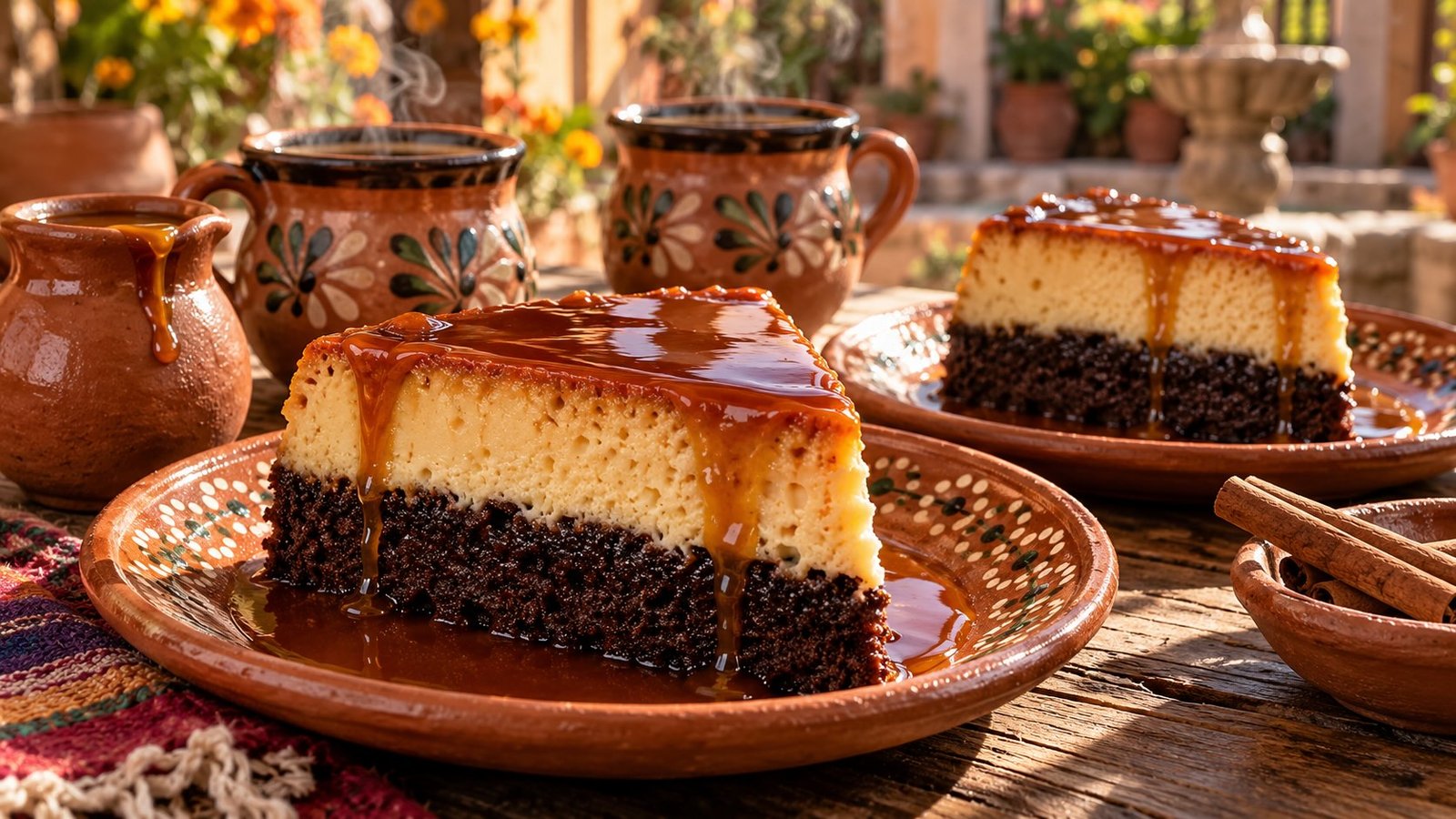
Imagine pouring chocolate cake batter and creamy vanilla flan into the same tin, putting it in the oven, and watching them mysteriously exchange places. It sounds like a baking disaster waiting to happen. Yet in Mexico, this culinary magic trick has a name: chocoflan. Also known as pastel imposible, or impossible cake, it combines two beloved desserts in one spectacular creation.
The result is rather extraordinary. A rich, moist chocolate sponge supports a silky layer of caramel custard, while golden caramel sauce cascades over the top. Every forkful delivers two contrasting textures and three complementary flavours. Moreover, the cake manages to look considerably more complicated than it actually is. A useful quality when entertaining guests who might otherwise suspect you bought dessert from a bakery.
Chocoflan belongs to the Mexican tradition of combining European culinary influences with local creativity. Flan arrived in Mexico through Spanish colonial cooking, carrying a much older European history of baked custards. Chocolate, meanwhile, has deep roots in Mesoamerica, where cacao was prized long before Europeans developed their taste for chocolate cakes. Eventually, these two traditions met in a dessert that seems almost inevitable in hindsight.
However, the precise origins of modern chocoflan remain uncertain. It became especially popular in Mexican home baking during the late twentieth century, although no single inventor has been reliably identified. Today, it appears at birthdays, family celebrations, restaurants and festive gatherings. Naturally, any dessert capable of producing two cakes with one baking session deserves a permanent place at the family table.
The most remarkable feature of chocoflan is its apparent disregard for common sense. When assembled, the chocolate batter usually goes into the tin before the liquid flan mixture. During baking, however, the two layers change positions. The chocolate batter expands and rises relative to the custard, while the flan settles into a smooth layer beneath it. After the cake is inverted, the custard sits proudly on top.
There is science behind this performance, rather than a small Mexican wizard hiding inside the oven. Differences in density, structure and the way each mixture sets allow the layers to rearrange themselves. Meanwhile, gentle cooking in a water bath protects the delicate custard from excessive heat. The finished cake looks like an engineering achievement, although the oven has done most of the difficult work.
Regional and household variations add further personality. Some Mexican bakers enrich their chocoflan with cream cheese, producing a denser, cheesecake-like custard. Others add cinnamon, espresso or a little orange zest to the chocolate batter. Additionally, modern versions include dulce de leche, coconut or even chocolate flan. In Mexican-American kitchens, convenience recipes often use boxed chocolate cake mix and condensed milk, proving that culinary miracles need not involve heroic amounts of washing-up.
Chocoflan also knows how to choose its drinking companions. Mexican café de olla, brewed with cinnamon and piloncillo, makes an excellent partner. Its warm spices complement the caramel beautifully. Alternatively, strong espresso balances the sweetness, while unsweetened hot chocolate creates a wonderfully excessive chocolate experience. For adults, a small glass of aged rum or coffee liqueur works particularly well.
As for accompanying foods, fresh strawberries, raspberries or orange segments provide welcome acidity. A spoonful of lightly whipped cream adds softness without competing with the custard. Meanwhile, toasted pecans or walnuts introduce a pleasant crunch. However, chocoflan is already a substantial dessert, so elaborate accompaniments are rarely necessary. Sometimes a fork is all the additional equipment anyone needs.
Nutritionally, chocoflan offers protein from eggs and milk, alongside some calcium. Cocoa also supplies small amounts of minerals and naturally occurring polyphenols. Nevertheless, this is a rich dessert containing considerable sugar, saturated fat and calories. Those managing blood glucose or limiting saturated fat should be mindful of portion sizes. Smaller slices, served with fresh fruit, provide a sensible compromise between pleasure and moderation.
Ultimately, chocoflan celebrates something particularly appealing about Mexican baking: its willingness to combine traditions, surprise expectations and make people happy. It is comforting, theatrical and just mysterious enough to start a conversation. Better still, the famous disappearing-layer trick works without requiring the baker to understand every detail of the physics. Occasionally, trusting the oven is the most sophisticated technique available.
Recipe: Traditional Mexican Chocoflan
Preparation: 25 minutes
Baking: 75–90 minutes
Serves: 10–12
Ingredients
For the caramel and chocolate cake:
- 120g ready-made caramel sauce or dulce de leche
- 150g plain flour
- 40g unsweetened cocoa powder
- 150g caster sugar
- 1 teaspoon baking powder
- ½ teaspoon bicarbonate of soda
- ¼ teaspoon salt
- 2 large eggs
- 120ml whole milk
- 100ml vegetable oil
- 1 teaspoon vanilla extract
- 100ml hot coffee or hot water
For the flan:
- 400g sweetened condensed milk
- 340ml evaporated milk
- 4 large eggs
- 1 teaspoon vanilla extract
- 100g full-fat cream cheese, softened (optional)
Method
Heat the oven to 180°C (160°C fan). Generously grease a 24cm Bundt tin, ensuring every ridge receives attention. Spread the caramel sauce evenly across the bottom. Meanwhile, boil some water for the water bath.
In a large bowl, combine the flour, cocoa, sugar, baking powder, bicarbonate of soda and salt. Separately, whisk the eggs, milk, oil and vanilla. Add the wet ingredients to the dry mixture, then gradually stir in the hot coffee. The batter should be fairly thin. Pour it carefully over the caramel.
Next, blend the condensed milk, evaporated milk, eggs and vanilla until completely smooth. Add the cream cheese if using. Slowly pour this mixture over the chocolate batter, preferably over the back of a spoon. Do not stir, even if the layers look rather unpromising.
Cover the Bundt tin tightly with foil. Place it inside a large roasting dish and add enough hot water to reach halfway up the sides of the tin. Bake for 75–90 minutes, until the chocolate layer tests clean with a skewer and the custard has set with a slight wobble.
Remove the tin from the water bath and allow it to cool completely. Then refrigerate for at least four hours, preferably overnight. This resting period helps the custard firm up and makes unmoulding easier.
To serve, carefully loosen the edges with a thin spatula. Place a large serving plate over the tin and invert it confidently. If necessary, briefly warm the outside of the tin to release the caramel. Lift away the tin to reveal the glossy flan resting above the chocolate cake.
Serve chilled, with extra caramel if desired. The cake keeps covered in the refrigerator for up to three days. And if your guests ask how you managed to reverse the layers, simply smile mysteriously. There is no obligation to explain the laws of physics over dessert.
1 comment