Welsh Oggie: The Giant Pasty Built for Hungry Miners
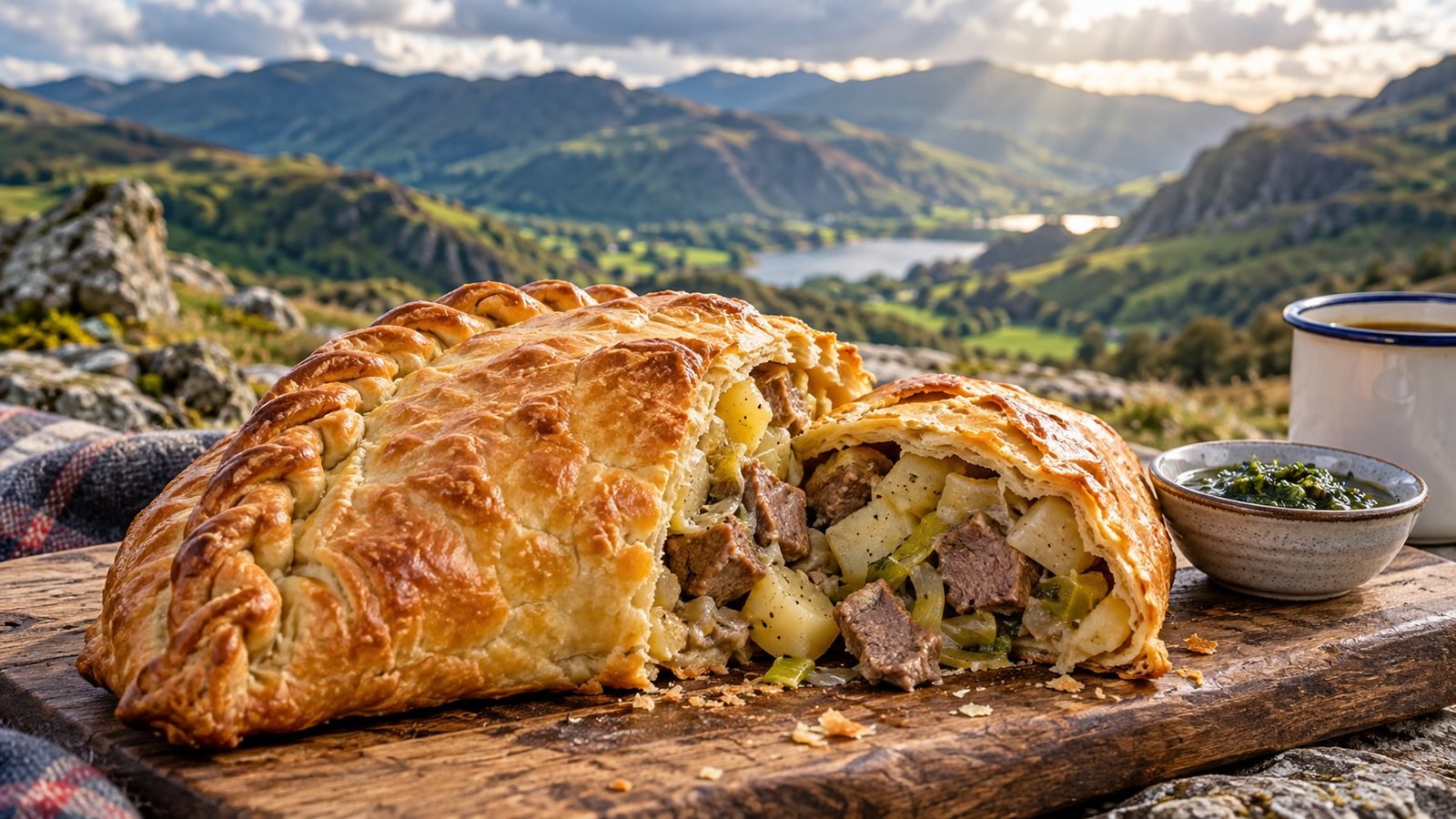
There are foods designed to look elegant on white plates, preferably with three decorative drops of sauce. The Welsh oggie belongs to another school entirely. It is large, golden, substantial and quite unapologetic about all four qualities.
Think of it as the Welsh cousin of the Cornish pasty, although mentioning that comparison too loudly may start an unnecessary Celtic border dispute. Inside its sturdy pastry shell sit lamb or mutton, potatoes and leeks. Sometimes onion, swede or herbs join them. The result is less a snack than a portable dinner with architectural ambitions.
Pasties have a surprisingly long history in Wales. In 1768, the naturalist and traveller Thomas Pennant recorded a Welsh fondness for pasties containing goat meat. Therefore, pastry-wrapped meat was hardly an imported novelty when the modern oggie emerged. Over time, local ingredients gave it a distinctly Welsh personality.
The oggie became particularly associated with mining communities. Coal miners needed food that was filling, portable and manageable without knives and forks. A robust pastry case was ideal. It protected the filling, travelled reasonably well and could be held in the hand.
This practical connection resembles the story of Cornwall’s famous pasty. Yet the Welsh version developed its own flavour profile. Lamb and leek became especially characteristic, while potato supplied inexpensive bulk and valuable energy.
There is also the famous cry of “Oggie, oggie, oggie! Oi, oi, oi!” Various stories connect the chant with miners and pasties. One tradition suggests workers called “oggie” underground and received “oi” in response. Another associates the cry with miners discarding dirty pastry crusts. The precise genealogy is difficult to prove, so it is safer to enjoy the story rather than issue it with a birth certificate.
What is certain is that the chant escaped the mine. It eventually became familiar at Welsh sporting events, particularly rugby matches. Few baked goods can claim their own stadium soundtrack.
Traditional oggies are often noticeably bigger than ordinary pasties. That makes sense because they were intended as serious fuel rather than something to nibble between meals. A good one should feel reassuringly heavy in your hand.
The classic filling combines lamb or mutton with leek and potato. Mutton is particularly interesting because its deeper flavour suits the simplicity of the other ingredients. Lamb is easier to find, however, and produces a slightly sweeter, more delicate filling.
Leek does much of the aromatic work. It softens during baking and brings sweetness without overpowering the meat. Meanwhile, potato absorbs meat juices, butter and seasoning. It is culinary teamwork of the most economical sort.
Some recipes include swede or turnip. Others add rosemary, thyme or mint. Modern bakeries have naturally taken things further, offering beef, cheese, chicken and vegetarian versions. Somewhere, inevitably, somebody has probably put pulled pork into one.
There are also interesting coastal possibilities. Laverbread can be added to lamb fillings for a deeper savoury character. Its mineral, slightly marine quality sounds peculiar until you remember that lamb and laver have long appeared together in Welsh cooking.
What makes an oggie special is balance rather than sophistication. The pastry needs enough strength to contain a moist filling. However, it should remain pleasant to eat rather than requiring industrial cutting equipment.
The filling traditionally cooks inside the pastry. Consequently, the meat and vegetables should be cut quite small. As everything cooks, lamb juices mingle with butter, leek and potato. The pastry becomes part cooking vessel, part lunchbox and, finally, part lunch.
That also explains why an oggie tastes particularly good outdoors. Eat one after a long walk and it seems magnificent. Eat one after sitting at a desk for six hours and you may suddenly understand why miners required considerably more calories than accountants.
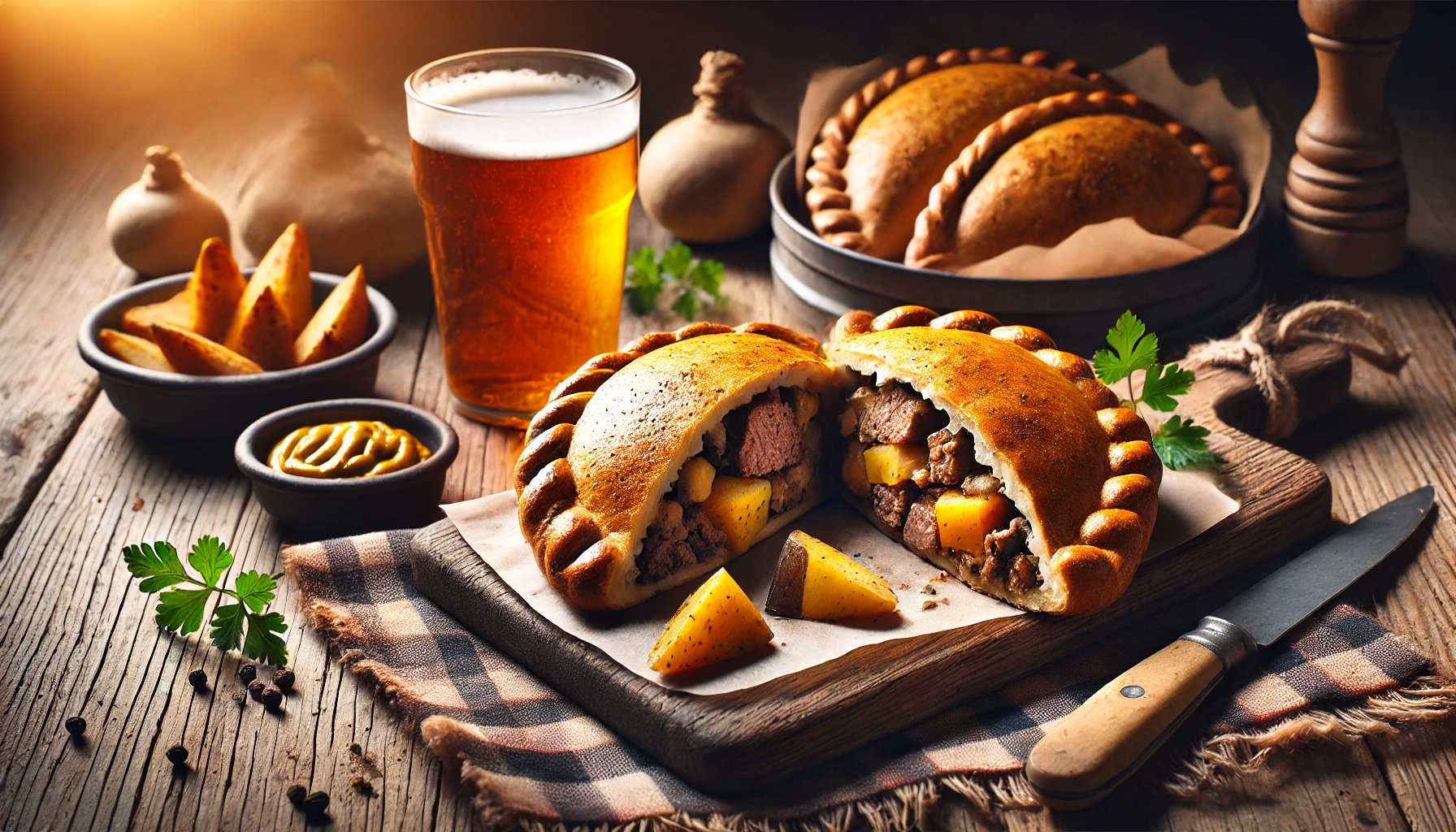
Beer is perhaps the easiest drink pairing. A Welsh bitter or amber ale has enough maltiness to complement lamb without overwhelming the leek. A porter works well with a richer mutton oggie.
Cider is another excellent choice. Its acidity cuts through pastry and meat fat, while apple flavours sit naturally beside lamb. Choose a dry cider rather than an aggressively sweet version.
For wine, try a medium-bodied red with good acidity. Pinot Noir, Cabernet Franc or a lighter Syrah can work nicely. However, enormous tannic reds are unnecessary. The oggie has already proved its masculinity by surviving Welsh mining history.
Tea remains a perfectly respectable non-alcoholic companion. Strong black tea cuts through buttery pastry surprisingly well. Alternatively, sparkling water with lemon keeps things simple.
An oggie does not really require side dishes because it already contains meat, vegetables, starch and pastry. Nevertheless, a sharp green salad works beautifully. Pickled red cabbage, chutney or pickled onions provide useful acidity.
Mint sauce is another natural partner for lamb. Keep it fresh and sharp rather than excessively sweet. For something more substantial, serve the oggie with peas or braised cabbage, although at this stage lunch begins developing into dinner.
Nutritionally, the oggie has genuine strengths. Lamb provides high-quality protein, iron, zinc and vitamin B12. Potatoes contribute potassium, vitamin C and carbohydrate, while leeks provide fibre and useful plant compounds.
However, nobody has ever mistaken pastry for mineral water. Butter or lard increases the saturated-fat and calorie content considerably. Portion size also matters, particularly because traditional oggies can be enormous.
Still, homemade versions offer considerable control. Leaner lamb can reduce fat, while increasing leek and swede adds vegetables without destroying the character of the dish. You can also make smaller oggies. Welsh ancestors may forgive you eventually.
Today, oggies can be found in Welsh bakeries, cafés, markets and some tourist destinations. They remain less internationally famous than Cornish pasties, which seems slightly unfair. Perhaps Wales simply needs a more aggressive pastry marketing department.
Look particularly in Cardiff, South Wales and areas popular with walkers and visitors. They also appear at food festivals and specialist Welsh bakeries. Remarkably, oggies have even been sold on Yr Wyddfa, Wales’s highest mountain. Few places provide a stronger argument for eating one.
For everyone elsewhere, however, the most satisfying solution is probably homemade. The ingredients are uncomplicated, and the technique requires more confidence than expertise. Besides, producing four enormous golden pasties from your oven gives an oddly unreasonable sense of achievement.
Traditional Welsh Lamb Oggie Recipe
This recipe makes four substantial oggies. They are excellent hot, but they also travel well once cooled.
For the pastry, you will need 400g plain flour, 200g cold butter, half a teaspoon of salt and two eggs. Have about four tablespoons of ice-cold water ready. You will also need a little beaten egg for glazing.
For the filling, use 300g boneless lamb or mutton. Leg works well, while shoulder provides more flavour but needs to be sliced particularly small. Add one medium leek, one medium potato and one small swede or turnip.
Season the mixture with one teaspoon of salt and plenty of freshly ground black pepper. Add a teaspoon of chopped rosemary if you like. Finally, include about 40g melted butter.
First, rub the cold butter into the flour and salt until the mixture resembles coarse breadcrumbs. Beat one egg with the cold water, then gradually add enough liquid to form a firm dough. Avoid excessive kneading.
Divide the dough into four portions and flatten them into discs. Wrap and refrigerate for around 30 minutes. Meanwhile, heat the oven to 220°C, or 200°C fan.
Cut the lamb, potato and swede into small pieces, roughly 1cm or slightly smaller. Finely slice the leek. Mix everything with the seasoning, rosemary and melted butter.
Roll each pastry disc to roughly 3mm thick. Using a plate as your guide, cut circles approximately 20cm across. Place a generous quarter of the filling on one half of each circle, leaving a clear border.
Brush the edge lightly with beaten egg. Fold the pastry over the filling to create a large semicircle. Press the edges firmly together, then crimp them securely with your fingers.
Transfer the oggies to a lined baking tray. Brush generously with beaten egg. Bake for about 10 minutes at the higher temperature.
Then reduce the oven to 180°C, or 160°C fan. Continue baking for roughly 45 minutes until the pastry is deeply golden and the filling has cooked through. Rest them for several minutes before eating.
Serve warm with mint sauce, pickled cabbage or a simple green salad. Add a pint of Welsh ale if circumstances permit.
Most importantly, resist the temptation to make them dainty. An oggie should look generous, slightly rustic and capable of sustaining somebody halfway across a Welsh mountain. Otherwise, you have merely made a rather nice little pasty.