Pastiera Napoletana : Three Days to Make and Minutes to Disappear
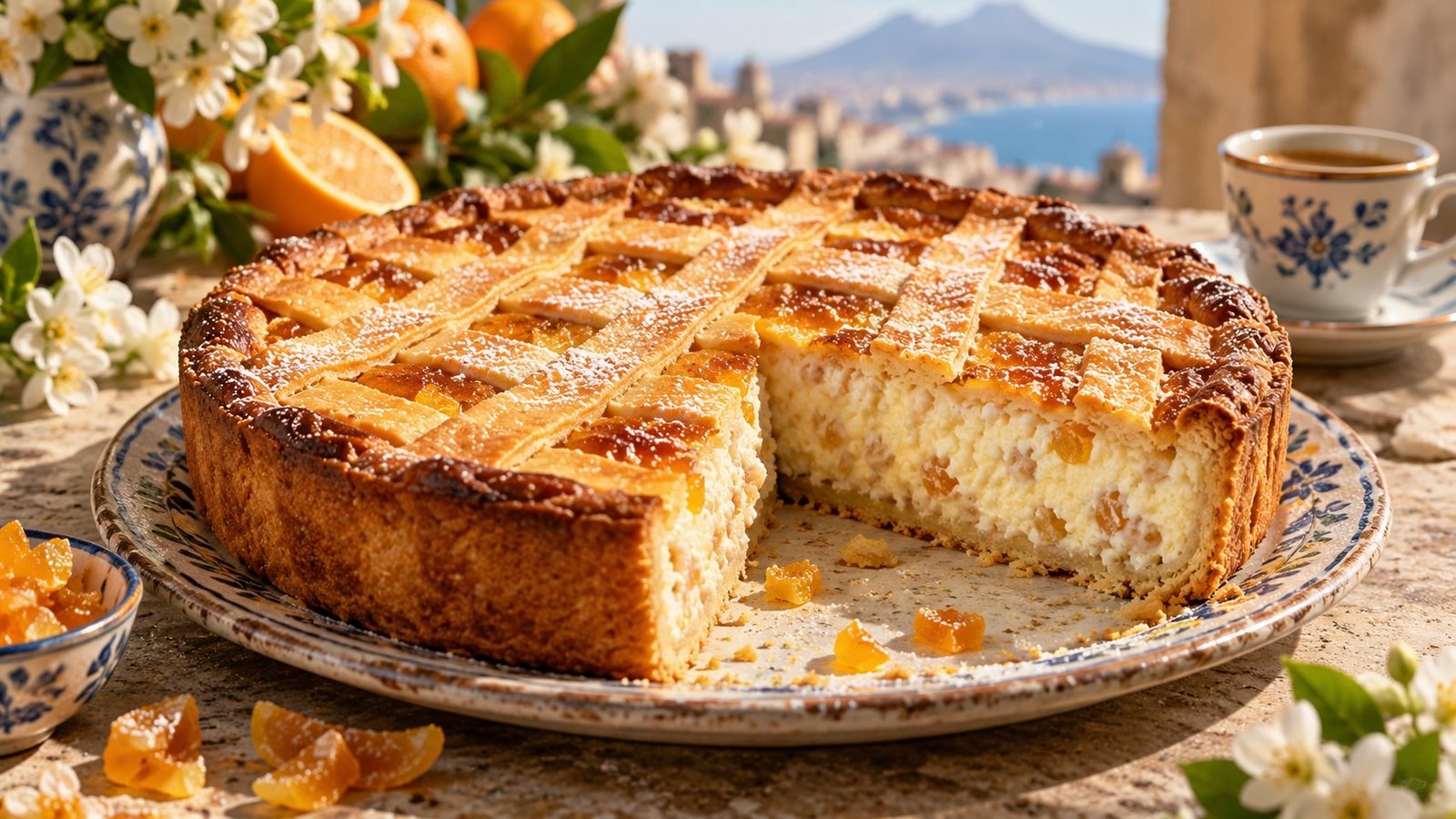
In Naples, Easter comes with church bells, family gatherings and a dessert that refuses to be rushed. Pastiera Napoletana is a fragrant, golden tart filled with ricotta, cooked wheat, eggs, candied fruit and orange blossom water. It looks reasonably innocent, but behind that lattice pastry lies centuries of history, mythology and fierce family disagreement. Naturally, every Neapolitan grandmother knows the only correct recipe, and suspiciously, none of their recipes are quite the same.
Unlike most desserts, pastiera improves when you leave it alone. Traditionally, families prepare it on Maundy Thursday or Good Friday and serve it on Easter Sunday. During those resting days, the citrus, spices and floral aromas settle into the filling. Consequently, patience becomes an ingredient, although convincing hungry relatives of this principle can prove challenging.
Pastiera’s origins belong partly to history and partly to the wonderfully imaginative world of Neapolitan folklore. One legend credits the siren Parthenope, the mythical figure associated with the founding of Naples. According to the story, local people offered her seven gifts, including wheat, ricotta, eggs, flour and orange blossom water. The gods supposedly transformed these offerings into the first pastiera. It’s a charming tale, although historians have found no evidence that ancient sirens possessed pastry-making skills.
Another popular story involves the nuns of the convent of San Gregorio Armeno in Naples. They are traditionally credited with refining pastiera into an elaborate Easter speciality. Their pastries became particularly desirable among wealthy Neapolitan families, who apparently appreciated divine intervention when it came with a buttery crust. Although the exact development remains uncertain, the association with convent kitchens reflects the important role religious communities played in Italian confectionery.
The symbolism is almost as rich as the filling. Wheat represents renewal and abundance, while eggs suggest rebirth. Orange blossom evokes spring, and the sweet ricotta brings richness to the celebration. Together, these ingredients make pastiera a particularly fitting Easter dessert. However, you needn’t be religious to appreciate the spiritual experience of finding an excellent slice.
Pastiera belongs to the wider family of Italian sweet pies, yet its character is unmistakably Neapolitan. Its shortcrust pastry, known as pasta frolla, surrounds a filling that is neither cheesecake nor custard. The cooked wheat grains remain pleasantly noticeable, giving each mouthful a distinctive texture. Meanwhile, ricotta provides creaminess without making the dessert excessively heavy.
The aroma is perhaps its most recognisable feature. Orange blossom water gives traditional pastiera a delicate floral fragrance, complemented by candied citrus and often cinnamon. Too little, and the dessert loses some of its personality. Too much, and your kitchen starts smelling like a particularly ambitious perfume counter. Getting the balance right is one of the secrets of a good pastiera.
Regional and family variations provide further opportunities for argument. Some cooks prefer a smooth filling and blend part of the cooked wheat. Others insist that every grain should remain visible. Traditional recipes often include candied citron and orange peel, although modern versions sometimes omit them. In some households, pastry cream joins the ricotta mixture for a softer texture.
There is also pastiera di riso, a related variation made with rice instead of wheat. It appears in parts of Campania and neighbouring southern Italian regions. Furthermore, some bakers add chocolate, although traditionalists may regard this as an unnecessary diplomatic incident. Vegan and gluten-free adaptations exist too, but replacing the wheat and dairy naturally changes the original character.
What makes pastiera special is its combination of contrasting textures. The pastry should be tender yet sturdy, supporting a moist, fragrant filling. The ricotta creates softness, while the wheat adds gentle resistance. Meanwhile, the lattice top provides a little crispness and gives the tart its familiar appearance. Some people associate its crossing pastry strips with the historic street layout of Naples, although this is better understood as folklore than established fact.
Pastiera also differs from many cakes because it is usually served at room temperature. Refrigerating it can make the filling firmer and mute its aromas. Therefore, even when chilled for storage, it benefits from returning to room temperature before serving. That first slice, ideally accompanied by strong coffee, explains why Neapolitans tolerate the lengthy preparation.
Speaking of drinks, espresso is probably the most natural companion. Its bitterness balances the sweet filling, while its intensity complements the orange blossom fragrance. For something more celebratory, try a small glass of Moscato d’Asti or a sweet Italian dessert wine. A chilled limoncello offers a sharper citrus contrast, although moderation is sensible unless Easter lunch has already become a very long affair.
For a non-alcoholic pairing, consider black tea with lemon or a fragrant Earl Grey. Both work well with the pastry’s citrus notes. Alternatively, a simple cappuccino makes a pleasant afternoon accompaniment. The important thing is to avoid excessively sweet drinks that compete with the filling.
Pastiera rarely needs much company on the plate. However, fresh strawberries or raspberries introduce acidity and colour. A small spoonful of lightly whipped cream works too, although purists may consider it unnecessary. If you’re serving an Italian-style Easter meal, pastiera follows savoury dishes such as roast lamb, seasonal vegetables and traditional Neapolitan Easter bread, casatiello.
From a nutritional perspective, pastiera provides protein from ricotta and eggs, alongside carbohydrates from wheat and pastry. The wheat also contributes some fibre, while ricotta supplies calcium. Nevertheless, pastiera contains substantial sugar and fat, so it belongs firmly in the occasional-treat category. Its nutritional advantages do not magically turn it into breakfast cereal, however convincing the wheat might look.
Anyone with a wheat allergy, coeliac disease or dairy intolerance should take particular care. Traditional pastiera contains gluten, milk products and eggs. Additionally, candied fruit may contribute considerable added sugar. A modest slice can still fit comfortably into a balanced diet, especially when enjoyed as part of a celebration rather than an ambitious personal endurance test.
In Naples, pastiera appears in traditional pastry shops throughout the year, although Easter remains its great season. Historic establishments such as Scaturchio and Pintauro are among the city’s famous pastry destinations, while numerous neighbourhood bakeries produce their own versions. Beyond Naples, Italian delicatessens and specialist bakeries occasionally offer it around Easter. In Britain, availability is less predictable, making a homemade version particularly rewarding.
Fortunately, pastiera is not technically difficult. It simply demands planning, decent ingredients and enough restraint to leave the finished tart untouched overnight. The following recipe follows the traditional Neapolitan approach, using cooked wheat, ricotta and orange blossom water.
Recipe: Traditional Pastiera Napoletana
Serves 10–12
60 min preparation
Cooking: 80–90 minutes Resting: at least 24 hours Tin: 24 cm round, approximately 4–5 cm deep
Ingredients for the pastry
- 350 g plain flour
- 150 g cold unsalted butter, cubed
- 130 g caster sugar
- 1 large egg and 1 egg yolk
- Finely grated zest of 1 lemon
- Pinch of salt
Ingredients for the filling
- 350 g cooked wheat grains (grano cotto, sold in jars)
- 200 ml whole milk
- 30 g unsalted butter
- Finely grated zest of 1 lemon
- 400 g well-drained ricotta
- 300 g caster sugar
- 3 large eggs and 2 egg yolks
- 100 g finely chopped candied citron and orange peel
- 1–2 tablespoons orange blossom water, according to strength
- 1 teaspoon vanilla extract
- ½ teaspoon ground cinnamon
- Icing sugar for serving, optional
Preparing the pastry
Rub the cold butter into the flour until the mixture resembles breadcrumbs. Add the sugar, lemon zest and salt, followed by the egg and yolk. Mix gently until the dough comes together, avoiding excessive kneading.
Divide the dough into two portions, reserving roughly one-third for the lattice. Wrap both portions and refrigerate for at least an hour. Meanwhile, prepare the filling.
Cooking the wheat
Place the cooked wheat, milk, butter and lemon zest in a saucepan. Simmer gently for 15–20 minutes, stirring regularly, until the mixture becomes thick and creamy. Some grains should remain intact.
Remove the saucepan from the heat and allow the mixture to cool completely. For a smoother filling, briefly blend a small portion before combining it with the remaining grains.
Making the ricotta filling
Beat the drained ricotta with the sugar until smooth. Add the eggs and yolks gradually, mixing gently rather than whipping excessive air into the mixture.
Stir in the cooled wheat, candied fruit, orange blossom water, vanilla and cinnamon. The filling should be creamy, fragrant and thick enough to pour slowly. Start with less orange blossom water, as its strength varies considerably between brands.
Assembling the pastiera
Heat the oven to 160°C fan or 180°C conventional. Grease the tart tin and roll out the larger pastry portion to approximately 3–4 mm thick. Line the base and sides, trimming away excess pastry.
Pour in the filling, leaving a little space below the rim. Roll out the remaining pastry and cut it into long strips. Arrange them diagonally across the surface to create a lattice, pressing the ends gently into the pastry edge.
Baking and resting
Bake for approximately 80–90 minutes, until the surface turns deep golden and the filling is mostly set. A slight wobble in the centre is acceptable, as it will firm up while cooling.
Allow the pastiera to cool completely in its tin. Then leave it in a cool place for at least 24 hours, refrigerating if the room is warm. For food safety, refrigeration is the more reliable option, particularly when keeping it longer.
Bring the tart back to room temperature before serving. Dust lightly with icing sugar if desired, although many traditional versions need no decoration.
The reward is a fragrant, beautifully textured Easter pie that tastes even better the following day. Of course, persuading everyone to wait that long may be the most difficult part of the recipe.
Post Comment