Koláče: The Sweet Little Wheels of Czech Tradition
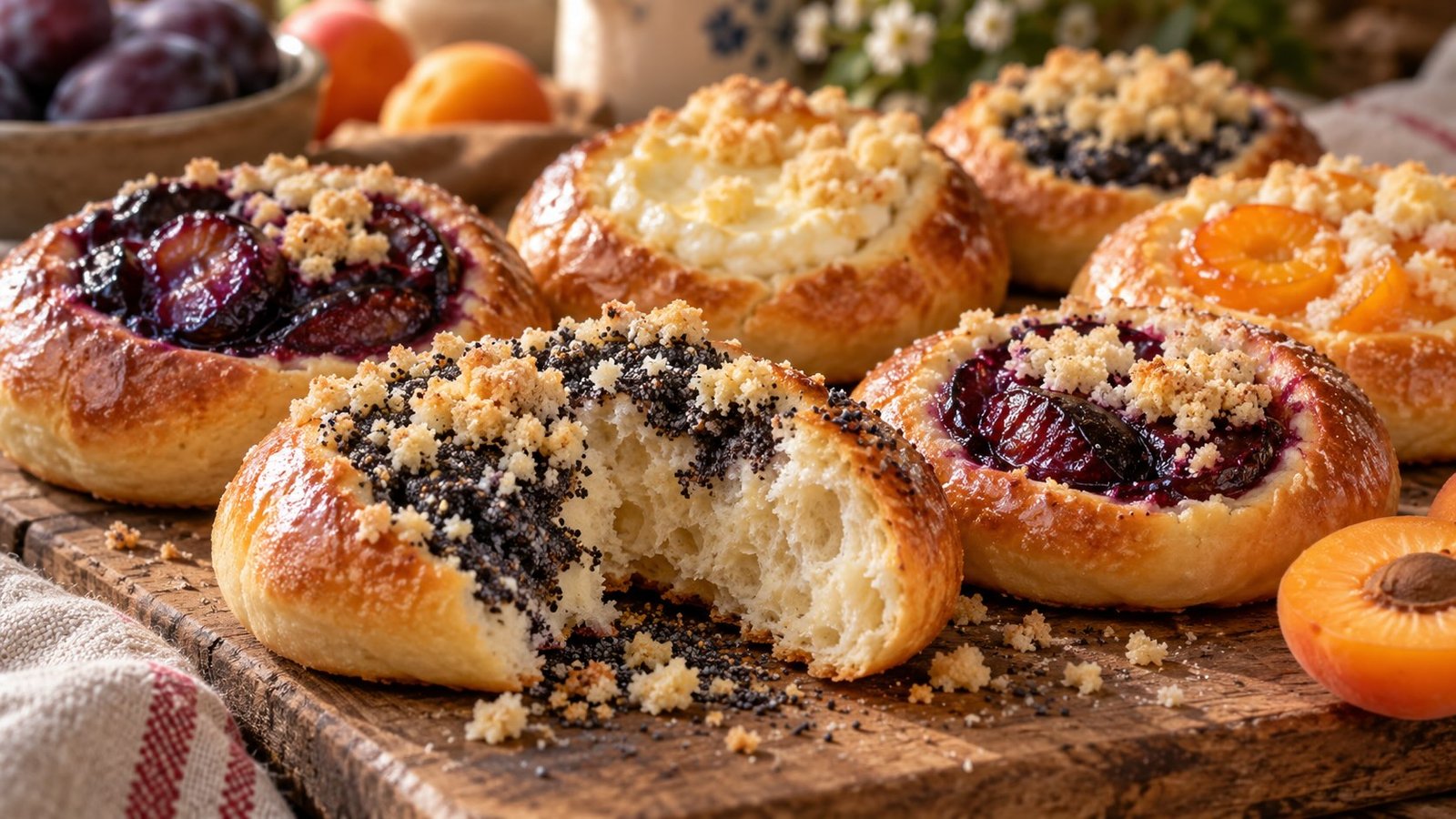
Some countries express their national identity through monuments, flags or stirring patriotic songs. The Czech Republic has another approach: a small, round pastry filled with poppy seeds, sweet cheese or plum jam. Frankly, it is a rather convincing argument for national pride.
Known as koláče (singular koláč), these soft, golden yeast pastries are among the most beloved treats in Czech baking. Their charm lies in simplicity. A pillowy dough surrounds a generous filling, often crowned with buttery crumbs. However, behind that innocent appearance lies a fascinating history of weddings, village celebrations, regional rivalries and transatlantic reinvention.
The name comes from the Czech word kolo, meaning wheel or circle. Indeed, the round shape is central to the pastry’s identity. Traditionally, koláče were associated with festive occasions rather than everyday breakfasts. Flour, butter, eggs and sweet fillings were once valuable ingredients. Consequently, producing trays of beautifully decorated pastries was a demonstration of hospitality, prosperity and considerable kitchen ambition.
Their roots stretch back through centuries of Central European baking, although pinpointing the first koláč is impossible. Early forms of filled festive cakes evolved into the smaller pastries familiar today. By the nineteenth century, koláče were firmly established in Czech rural celebrations, particularly weddings and religious festivals.
Weddings provided the perfect excuse for competitive baking. Families prepared enormous quantities, sometimes involving neighbours and relatives in the production. Moreover, the pastries carried symbolic meaning, representing generosity, good fortune and community bonds. Apparently, marrying someone was not enough; one also had to feed half the village.
In Moravia, the eastern historical region of today’s Czech Republic, wedding koláče remain especially important. Some are tiny, delicate creations, while others are larger and elaborately decorated. Meanwhile, in Bohemia, regional traditions developed their own distinctive shapes, fillings and finishing touches.
One particularly impressive relative is the Chodský koláč, associated with the Chodsko region of western Bohemia. Unlike the familiar individual pastries, this is a large, flat, decorated cake. Its surface becomes an edible artwork, with contrasting patterns of poppy seeds, quark and plum butter.
Another celebrated variety comes from Valašsko, or Wallachia, in eastern Moravia. The Valašský frgál is a large, thin yeast cake traditionally covered with a generous layer of filling. Pear, plum, quark and poppy seed versions are particularly characteristic. In fact, Valašský frgál has protected geographical indication status in the European Union, recognising its regional heritage.
Then there are the famous Moravské koláče, often made with a sweet cheese filling enclosed in dough and a second filling placed on top. Depending on the baker, they may feature plum butter, poppy seeds or fruit. Thus, what looks like one modest pastry can conceal a rather elaborate arrangement.
The fillings themselves tell another story. Poppy seeds have long been important in Central European cooking. Ground and cooked with milk and sugar, they produce a dark, aromatic paste with a pleasantly nutty flavour. Sweet quark, known locally as tvaroh, provides a creamy, slightly tangy contrast. Plum butter, or povidla, contributes concentrated fruit sweetness without needing excessive added sugar.
Apricots, blueberries and cherries also appear, particularly when seasonal fruit is abundant. However, traditional fillings tend to be thick rather than watery. Nobody wants a beautifully risen pastry transformed into a soggy little tragedy.
What makes koláče special is their balance. The dough should be soft, light and gently sweet, never heavy or bread-like. Meanwhile, the filling should be sufficiently generous to define each bite without overwhelming the pastry. A scattering of drobenka, the Czech version of buttery crumble topping, adds a delicate contrast.
Unlike heavily iced pastries, koláče rarely depend on extravagant decoration. Their beauty comes from the colours and textures of the fillings. Deep purple plum butter, golden apricot, ivory quark and almost black poppy seeds create a naturally appealing display.
Their journey beyond Europe is equally interesting. During the nineteenth century, Czech immigrants carried their baking traditions to the United States, particularly Texas. There, kolaches became a cherished part of Czech-American food culture.
Towns such as West, Texas, are famous for their kolache bakeries. However, American adaptations have occasionally wandered far from the original recipe. Sausage-filled pastries are frequently sold as kolaches, although Czech-American tradition generally distinguishes these savoury creations as klobasniky.
The result is a fascinating culinary misunderstanding. Ask for a kolache in parts of Texas and you might receive a sausage wrapped in dough. Ask for one in Prague and you are considerably more likely to receive something sweet. Geography, it seems, can change the contents of your breakfast.
Back in the Czech Republic, koláče are natural companions to coffee. A strong espresso or smooth cappuccino balances the sweetness beautifully. However, traditional Czech coffee, served black and robust, is equally appropriate.
Tea works particularly well with fruit-filled versions. Black tea complements plum and poppy seed fillings, while delicate herbal teas suit quark or apricot. For something more celebratory, a glass of demi-sec sparkling wine can accompany a platter of assorted pastries.
Koláče also fit comfortably into a larger afternoon spread. Fresh berries, sliced pears or lightly sweetened yoghurt provide refreshing contrasts. Meanwhile, a selection of mild cheeses offers a pleasant savoury counterpoint. Admittedly, serving pastries alongside more pastries is also an entirely defensible Czech-inspired strategy.
Nutritionally, koláče are best regarded as occasional treats rather than health foods. Poppy seeds contribute minerals, including calcium and magnesium, while quark provides protein. Fruit fillings may offer some fibre and beneficial plant compounds. Nevertheless, butter, refined flour and sugar remain important ingredients.
Portion size therefore matters. Fortunately, their small format makes it easy to enjoy one or two alongside fruit or yoghurt. Homemade versions also allow greater control over sugar and filling quantities. Still, removing every indulgent ingredient would rather defeat the point.
For authentic koláče, the Czech Republic remains the obvious destination. Traditional bakeries, village markets and regional festivals offer excellent opportunities to taste different styles. Prague has plenty of bakeries, although exploring smaller towns can reveal particularly interesting local variations.
In Moravia, look for wedding-style pastries and richly filled regional specialities. In Chodsko, seek out the elaborately decorated Chodské koláče. Meanwhile, Wallachian bakeries are the natural place to appreciate a proper frgál.
Outside the Czech Republic, specialist Central European bakeries occasionally offer traditional versions. Czech-American bakeries in Texas provide another fascinating interpretation. Alternatively, the most reliable way to experience freshly baked koláče may be to make them yourself.
And that is where the real temptation begins. Once the smell of buttery yeast dough and warm plum filling fills the kitchen, buying pastries suddenly seems like an unnecessary compromise.
Recipe: Traditional Czech Koláče with Three Classic Fillings
2 hours 30 minutes
Moderate
Makes 18–20 pastries
This recipe produces soft, buttery koláče with three traditional fillings: sweet quark, poppy seed and plum butter. The dough is enriched with milk, butter and egg yolks, creating a tender texture that stays delicious after cooling.
Ingredients for the dough
- 500g plain flour
- 250ml whole milk, lukewarm
- 75g unsalted butter, melted and cooled
- 70g caster sugar
- 7g instant dried yeast
- 2 egg yolks
- ½ tsp salt
- Finely grated zest of 1 lemon
- 1 beaten egg for glazing
For the quark filling
- 200g quark or well-drained ricotta
- 35g caster sugar
- 1 egg yolk
- 1 tsp vanilla extract
- 1 tsp cornflour
For the poppy seed filling
- 100g finely ground culinary poppy seeds
- 120ml whole milk
- 35g caster sugar
- 1 tsp honey
- A little grated lemon zest
For the plum filling
- 180g thick plum butter or plum jam
- ¼ tsp ground cinnamon
For the crumble topping
- 50g plain flour
- 35g cold butter
- 35g caster sugar
Method
Prepare the dough. Combine the flour, yeast, sugar and salt in a large bowl. Add the lukewarm milk, egg yolks, melted butter and lemon zest. Mix until a soft dough forms, then knead for 8–10 minutes until smooth and elastic.
Allow the dough to rise. Transfer it to a lightly greased bowl, cover with a clean tea towel and leave somewhere warm for 60–90 minutes. It should approximately double in size.
Make the fillings. Mix the quark with sugar, egg yolk, vanilla and cornflour until smooth. For the poppy seed filling, gently heat the ground seeds with milk, sugar, honey and lemon zest until thickened. Allow to cool completely. Separately, stir the cinnamon into the plum butter.
Prepare the crumble. Rub the cold butter into the flour and sugar until the mixture resembles coarse breadcrumbs. Refrigerate until needed.
Shape the pastries. Divide the risen dough into 18–20 equal pieces. Roll each into a smooth ball and arrange on baking trays lined with parchment, leaving space between them. Cover and rest for 15 minutes.
Add the fillings. Press the bottom of a small glass into the centre of each ball to create a deep indentation, leaving a raised rim. Fill each centre generously with one of the three fillings. Brush the exposed dough with beaten egg and scatter a little crumble over the top.
Bake until golden. Preheat the oven to 180°C (160°C fan). Bake for approximately 15–20 minutes, until the edges are golden and the dough is cooked through. Cool on a wire rack.
Serve slightly warm with freshly brewed coffee. For an especially tender finish, brush the pastry edges with a little melted butter immediately after baking.
The secret is not to rush the dough or skimp on the filling. A proper koláč should taste like a soft, buttery embrace surrounding something wonderfully sweet. And if several disappear before they reach the serving plate, consider that a perfectly normal part of Czech baking tradition.
Post Comment