Ovocný koláč s drobenkou, the Czech cake that follows the fruit
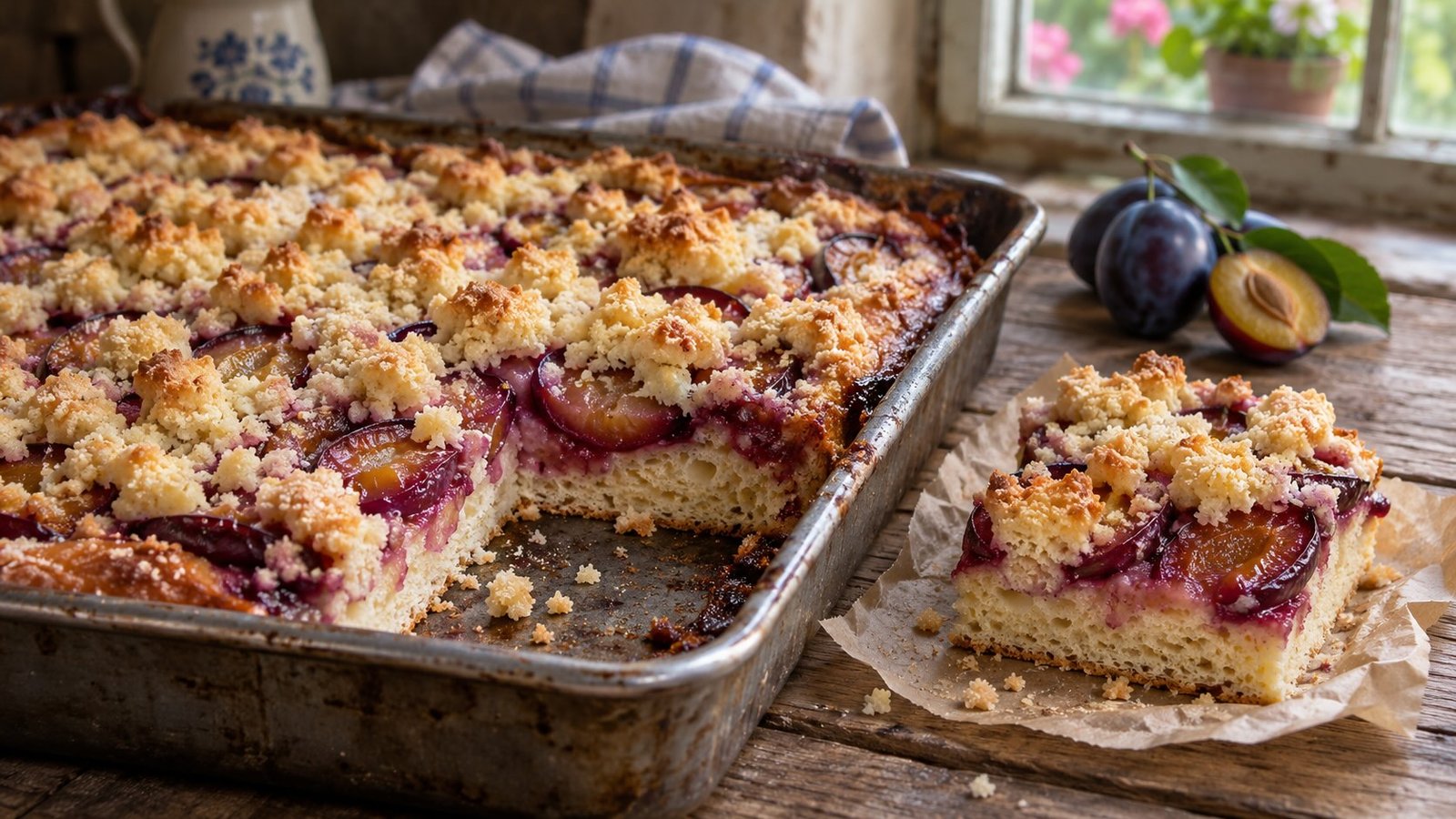
In a Czech kitchen, a bowl of plums can dictate the afternoon. If they’re ripe enough to bruise on the way home, there’s a good case for putting the kettle on and turning on the oven. Halve the plums, settle them on a soft dough and scatter over a handful of buttery crumbs. By the time the cake comes out, purple juice will have bubbled through the topping. Naturally, the cook gets first refusal on the sticky corner.
The Czech name, ovocný koláč s drobenkou, means fruit cake with a crumb topping. Its origins lie in Czech home baking, where one dough could see a household through several months of changing fruit. A classic version starts with lightly sweetened yeast dough, rolled thin or pressed into a baking tray. These days, you’ll also find versions made with a quick, pourable cake batter. Both give the fruit plenty of room, which is handy when the apricot tree has made plans for your weekend. Sever
The fruit changes with the season. Apricots turn soft and tangy in the oven, while blueberries stain the dough an extravagant violet. Later in the summer, plums give the cake jammy pockets and slightly chewy edges. Some bakers spread a layer of tvaroh, a fresh curd cheese, beneath the fruit. Meanwhile, in Moravian Wallachia, the related valašský frgál takes the form of a broad, thin round. Its toppings can include blueberries, pear or poppy seed, with sweet crumbs scattered over the surface. Sever
The drobenka is where the pleasure lies. Rub butter, flour and sugar between your fingertips and stop while you still have a mixture of fine crumbs and knobbly clumps. In the oven, the smaller crumbs soak up a little juice, while the larger ones stay crisp. A thin yeast base gives each slice a gentle chew. The result sits somewhere between the fruit crumble you’d eat with a spoon and the cake you’d happily pick up for a second helping.
Strong black coffee is my first choice, especially with plums. However, a cup of Assam suits the buttery topping just as well, and a lightly sweet Riesling would be lovely with the apricot version. Serve a warm slice with crème fraîche or spoon over some plain yoghurt if you like a tangier finish. The fruit contributes fibre, particularly when you leave the skins on. The butter and sugar make it a rich afternoon treat, and the recipe contains wheat, milk and egg.
Recipe for Czech plum crumble cake
This yeast-dough version makes 12 squares in a 23 × 33 cm baking tin. Choose ripe plums that still hold their shape when halved, so they soften in the oven without flooding the base.
For the dough, use 300 g plain flour, 5 g fast-action dried yeast, 40 g caster sugar, ½ teaspoon fine salt, 130 ml lukewarm whole milk, one large egg and 50 g softened unsalted butter. For the fruit layer, you’ll need 650 g plums, weighed before stoning.
Now the drobenka. Set aside 100 g plain flour, 65 g cold unsalted butter, cubed, and 60 g caster sugar.
Mix the flour, yeast, sugar and salt in a large bowl. Stir in the milk and egg, then knead in the softened butter a little at a time. Continue kneading for about eight minutes, until the dough feels smooth and elastic. Cover the bowl and leave somewhere warm for 60–90 minutes, until roughly doubled in size.
Meanwhile, line the tin with baking parchment and heat the oven to 190°C conventional or 170°C fan. Rub the cold butter into the topping flour and sugar, leaving some pea-sized clumps. Then halve and stone the plums, cutting any particularly large ones into quarters.
Press the dough evenly into the tin with lightly floured fingers. Leave it to rest for 15 minutes, then arrange the plums cut side up and scatter the crumbs over them. Bake on the middle shelf for 30–35 minutes, until the edges are golden and the fruit is bubbling. Finally, cool in the tin for at least 20 minutes before slicing, giving the plum juices time to settle.
Post Comment