Crostata alla Confettura di Albicocche: Sunshine Under a Lattice
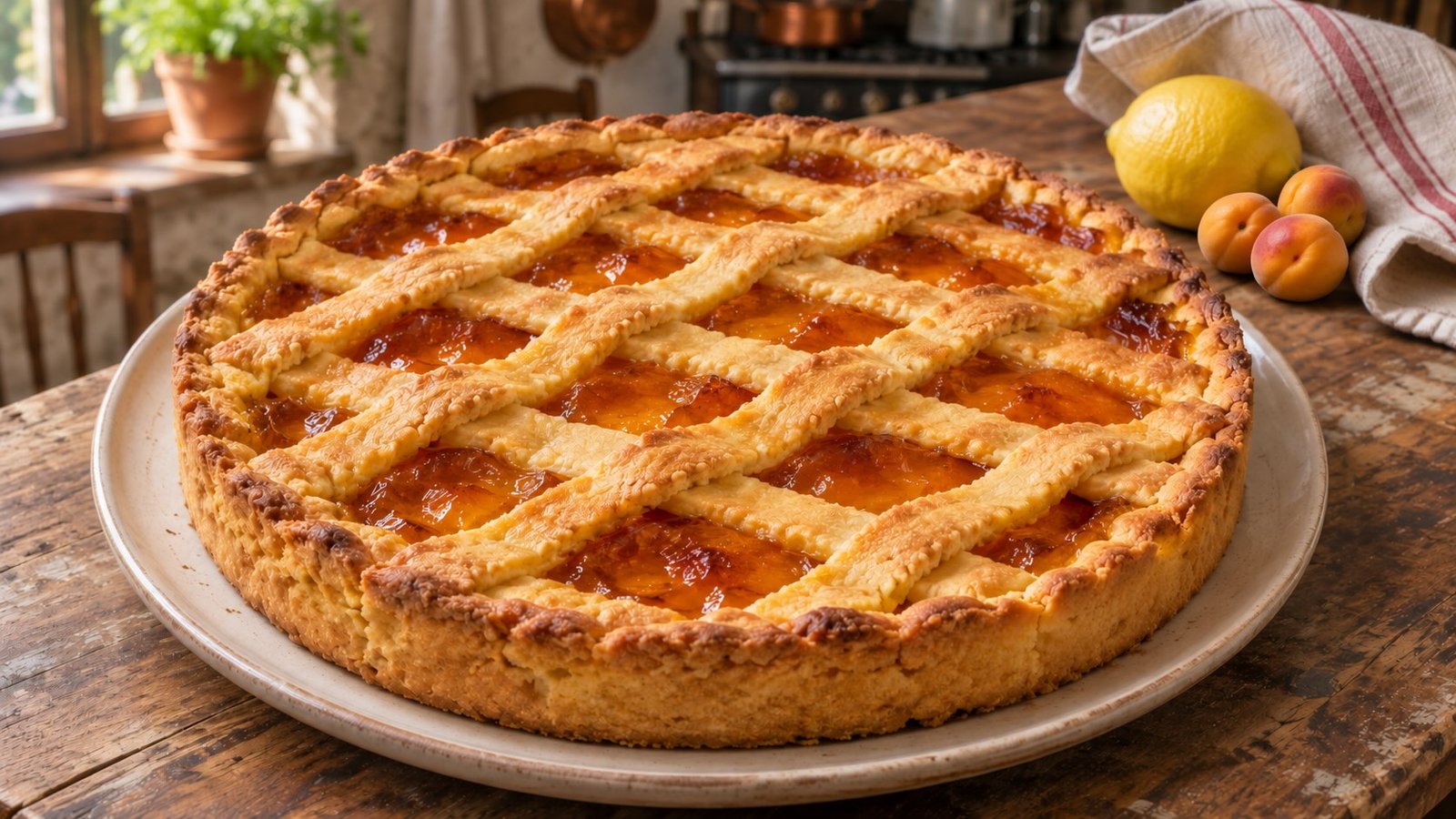
Some breakfasts demand a sensible bowl of something beige. Others offer crostata alla confettura di albicocche: golden pastry, bright apricot jam and enough lemon fragrance to improve your opinion of mornings. Beside a cappuccino, a modest slice feels entirely reasonable. After all, Italy has considerable experience in making small pleasures look like established cultural policy.
This tart belongs to the broad Italian crostata family, whose history stretches back through Renaissance cooking and earlier pastry traditions. However, those older tarts included savoury fillings and elaborate ingredients, rather than simply the familiar breakfast jam. Bartolomeo Scappi’s sixteenth-century cookery collection devoted attention to crostate alongside other pastries. Today’s apricot version belongs firmly to domestic baking, where a cupboard jar becomes something worth gathering round.
There is no single Italian town entitled to claim every apricot crostata. Instead, families across the country bake their own versions, adjusting pastry thickness, sweetness and filling. Some prefer a crisp shell; others favour a softer, thicker base. Meanwhile, a carefully woven lattice and casually crossed strips both perform the same useful task: persuading everyone that jam counts as decoration.
The wider family offers plenty of regional character. In Rome, ricotta and sour cherries make a celebrated pairing, while other crostate feature plum, blackberry or fig preserves. Apricot, however, offers a particularly pleasing balance of sweetness and acidity. For a variation, add a little finely chopped rosemary to the pastry, or replace a small proportion of flour with ground almonds.
What makes this version special is the conversation between its few ingredients. Buttery pasta frolla provides a crumbly bite, while lemon zest keeps its richness lively. Meanwhile, the jam thickens slightly as it bakes, creating a concentrated fruit layer beneath the golden strips. Choose a preserve that tastes distinctly of apricots, with some tartness. Otherwise, you risk producing a handsome delivery system for sugar.
Cappuccino suits the breakfast setting beautifully, its milk softening the fruit’s sharpness and coffee bitterness balancing the sweetness. Alternatively, try espresso, unsweetened black tea or a lightly brewed Earl Grey. For dessert, a small glass of Moscato d’Asti makes a cheerful companion. However, the tart is equally happy beside plain yoghurt, fresh berries or a spoonful of crème fraîche.
There are nutritional pleasures here, but no reason to recruit the tart into a wellness campaign. Apricot jam supplies fruit flavour, although it cannot replace the fibre and range of nutrients in whole fruit. Meanwhile, butter and sugar make this an occasional treat. A small slice with plain yoghurt offers a more balanced plate. Remember, too, that conventional pastry contains wheat, egg and dairy.
Recipe
This makes one 23cm tart, serving eight to ten. Allow about 30 minutes for preparation, at least one hour for chilling and 35–40 minutes for baking.
For the pastry, gather 250g plain flour, 125g cold unsalted butter, cubed, 85g caster sugar, one medium egg, finely grated zest of one unwaxed lemon and a pinch of salt. You will also need 300g thick apricot jam. Keep a little extra flour handy for rolling.
First, rub the butter into the flour until the mixture resembles breadcrumbs. Stir in the sugar, lemon zest and salt, then add the beaten egg. Bring everything together gently without kneading. If necessary, add a teaspoon of cold water. Flatten into a disc, wrap and chill for one hour.
Heat the oven to 180°C, or 160°C fan, and place a baking tray inside. Lightly butter a 23cm loose-bottomed tart tin. Next, reserve one-third of the dough and roll the remainder about 3mm thick. Line the tin, ease the pastry into its corners and trim the edges.
Stir the jam until spreadable, then distribute it evenly across the base. Roll out the reserved dough and cut strips approximately 1.5cm wide. Lay them across the filling in a loose diamond pattern, pressing the ends against the rim. Meanwhile, chill the assembled tart for 15 minutes.
Bake on the hot tray for 35–40 minutes, until the pastry is golden and the jam gently bubbles. If the edges darken early, cover them loosely with foil. Finally, cool completely before removing the tin and slicing. Keep covered in a cool place for up to three days, and serve with that well-earned cappuccino.
Post Comment