The Bedfordshire Clanger Puts Dinner and Pudding in One Pastry
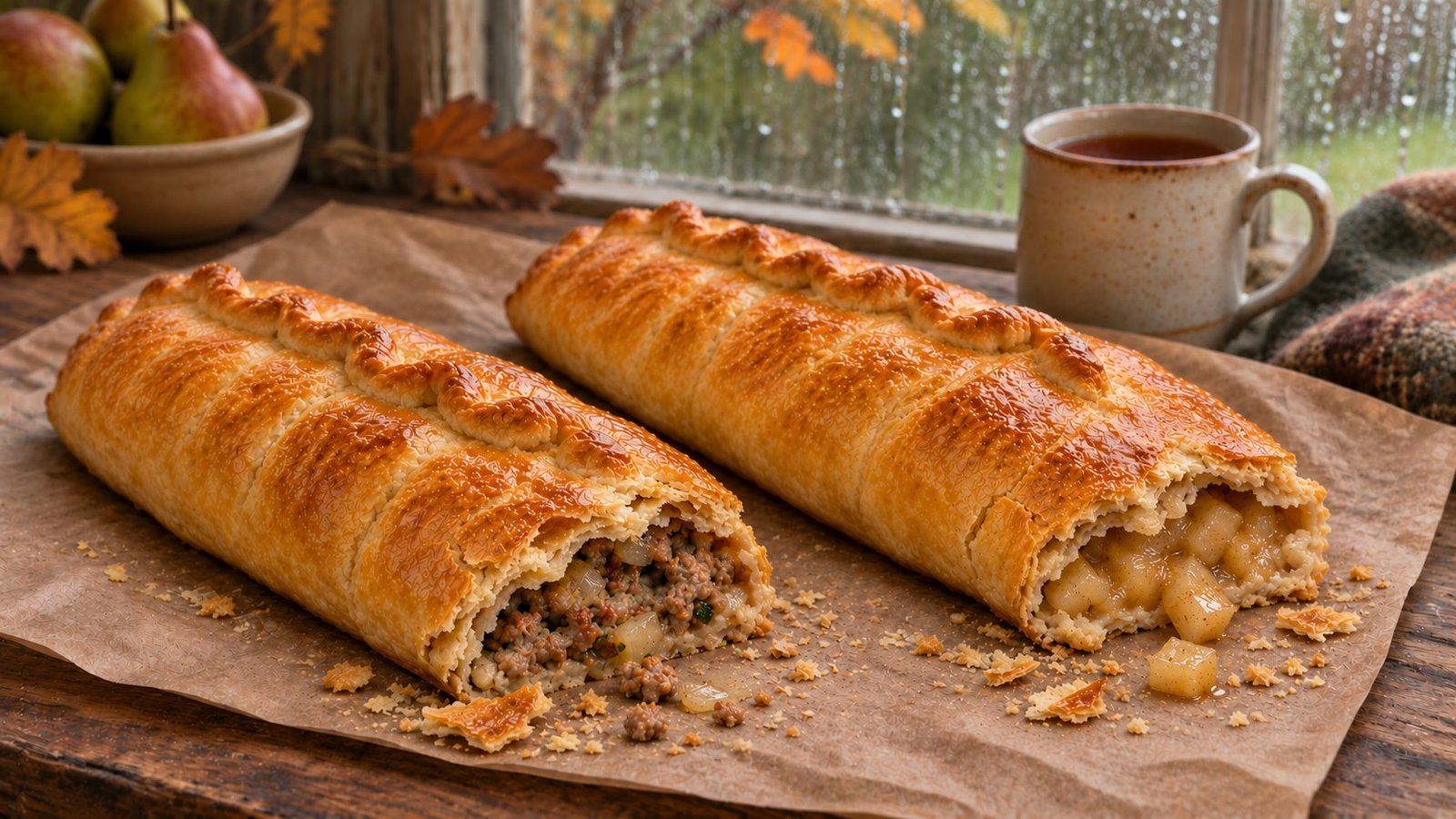
The first decision when eating a Bedfordshire clanger is which end to bite. Pick wisely and you get pork, onions and sage. Start at the other end and it’s warm pear pudding, which is a perfectly respectable lunch if nobody is watching. A small wall of pastry keeps the two fillings apart. For a dish with such an unfortunate name, the engineering is surprisingly sound.
In nineteenth-century Bedfordshire, agricultural workers took clangers into the fields for their midday meal. The older version was a long suet dumpling, boiled in a cloth. A household could put the remains of Sunday’s joint to work again on Monday, padded out with onions or potatoes. The pastry was filling, and the whole thing could travel. Anyone who has carried a tub of soup in a work bag can appreciate the appeal.
However, the sweet end may have come later. Some historical accounts describe an entirely savoury clanger, with the two-course version known as an ‘alf an’ ‘alf. The dish also travelled beyond Bedfordshire into neighbouring counties, including Huntingdonshire and Hertfordshire. Meanwhile, the local bakery revival in the 1990s helped popularise a baked version with a golden crust. The pastry changed, but the idea of getting a whole meal into one parcel survived.
Pork and onion is a well-attested savoury filling, while apple or jam often supplied the pudding. Here, pear takes the sweet end. A firm Conference pear softens in the oven while keeping enough shape to give each bite some texture. Elsewhere, you might find gammon and potato paired with apple, or even a modern bakery version with vegetable curry and mango. The divider earns its keep in every one.
A dry cider goes well with the pork and carries you comfortably into the pear. Alternatively, a mug of strong black tea suits both ends, particularly if you’re eating the clanger warm from a paper bag. At the table, serve the savoury end with mustard-dressed cabbage or sharp pickled onions. Then turn the parcel round and offer a spoonful of plain yoghurt with the pear.
Pork supplies protein, and the pear contributes some fibre. Still, a suet-and-butter crust is rich in saturated fat, and the pudding end brings a little added sugar. For a lighter lunch, split a clanger and serve it with a generous helping of greens. Cut it lengthways if you’re sharing, so both people get dinner and pudding. Otherwise, somebody is going to feel short-changed.
The pork and pear Bedfordshire clanger recipe
Makes four. Allow about 1 hour 30 minutes, including cooling and baking.
For the pastry, use 350g self-raising flour, ½ tsp fine salt, 60g cold unsalted butter, 85g shredded suet and 150–180ml cold water. Have one beaten egg ready for sealing and glazing. For the savoury end, use 1 tbsp rapeseed oil, one finely chopped onion, 300g pork mince, 1 tsp dried sage, 60ml dry cider, salt and black pepper. For the sweet end, use two firm pears, 1 tbsp light brown sugar, 1 tsp cornflour, 1 tsp lemon juice and ¼ tsp ground cinnamon.
First, soften the onion in the oil over a medium heat for about 8 minutes. Add the pork and sage, breaking up the mince as it cooks. Once the pork is cooked through, pour in the cider and simmer until almost dry. Season and spread the filling on a plate to cool. Meanwhile, peel and core the pears, dice them into 1cm pieces and toss with the sugar, cornflour, lemon juice and cinnamon.
Rub the butter into the flour and salt, then stir in the suet. Gradually add enough cold water to make a soft, workable dough. Set aside about a tenth for the dividers. Divide the rest into four and roll each piece into a rectangle roughly 16 × 20cm. Heat the oven to 200°C/180°C fan and line a baking tray.
Put pork at one end of each rectangle and pear at the other, keeping the edges clear. Shape the reserved dough into four short bars and set one snugly between each pair of fillings. Brush the edges and divider with egg, fold the pastry over and press down firmly, including over the divider. Finally, glaze each parcel and cut two short vents over the pork and one over the pear. Bake for 30–35 minutes until golden. Rest for 10 minutes before serving.

Post Comment