Bublanina: When Cherries Meet Fluffy Sponge
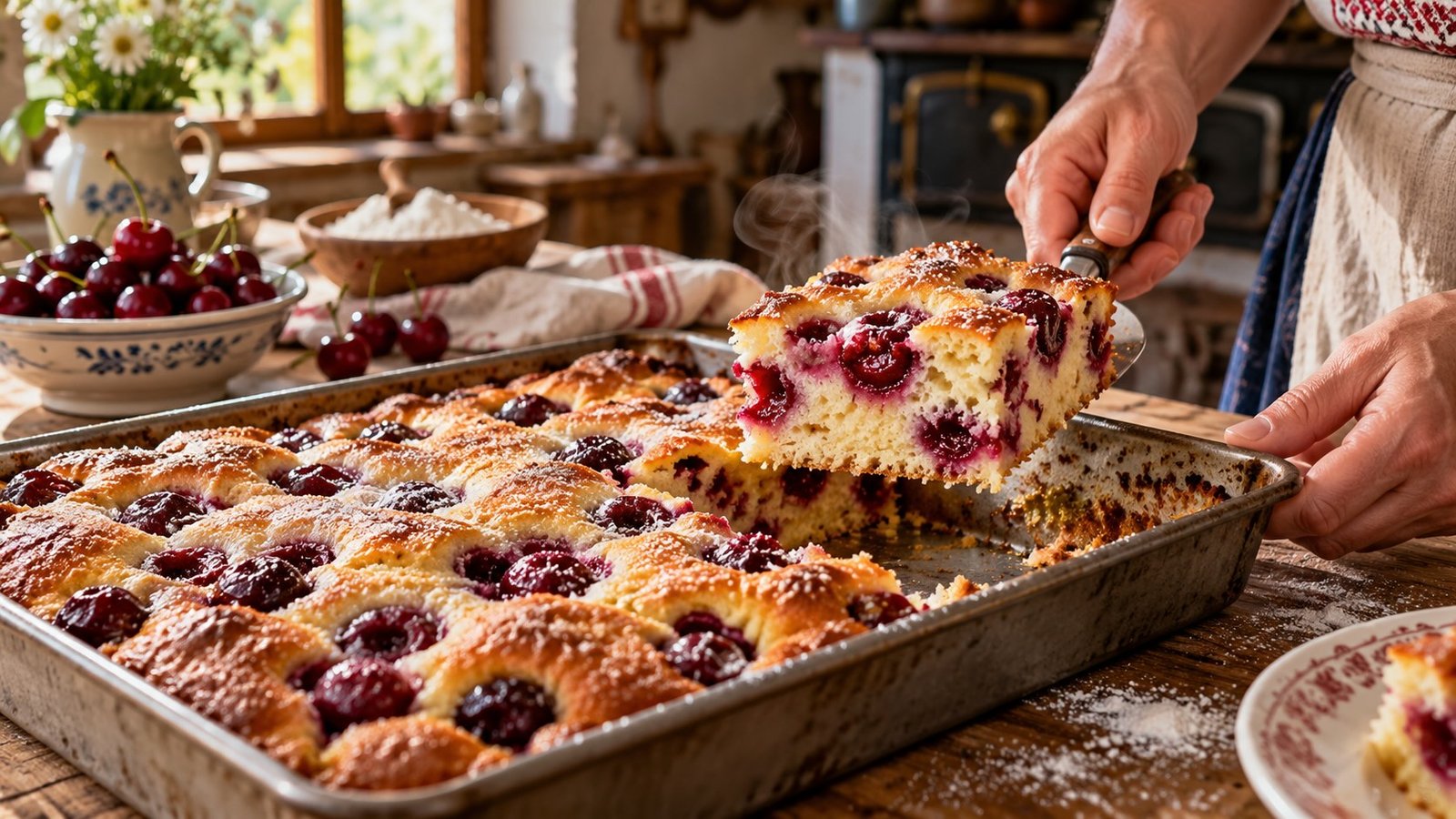
Some cakes demand elaborate decorations, expensive ingredients and the patience of a medieval monk. Bublanina, the Czech Republic’s beloved fruit sponge cake, has other priorities. Give it a handful of cherries, a few eggs and a hot oven, and it happily gets on with the job. The result is a soft, golden cake dotted with juicy fruit. It looks wonderfully homemade, tastes of summer and rarely survives an afternoon coffee gathering.
The name bublanina comes from the Czech verb bublat, meaning ‘to bubble’. As the cake bakes, the batter rises around the fruit, creating little pockets and bumps. The effect suggests bubbles frozen in a golden sponge. Fortunately, the cake itself doesn’t actually need to bubble like a saucepan of boiling soup. That would make afternoon tea considerably more alarming.
Bublanina belongs to the Czech tradition of practical home baking, where seasonal ingredients matter more than elaborate presentation. Its precise origins are difficult to establish. However, older versions reportedly resembled a sweet baked omelette, relying on eggs, milk and flour rather than modern raising agents. Over time, lighter sponge recipes became popular, particularly in Bohemian and Moravian households. By the twentieth century, bublanina had become a familiar way to celebrate the summer harvest. Grandmothers passed down their favourite recipes, often insisting that every other family’s version was slightly inferior.
Traditionally, cherries are the stars. Sweet cherries produce a mellow cake, while sour cherries add a lively sharpness that balances the sugar beautifully. In fact, some older recipes leave the stones inside, supposedly preserving more flavour. This makes eating the cake an unexpectedly demanding exercise in dental awareness. Modern bakers generally remove the stones, especially when children are involved.
Yet bublanina is remarkably democratic about fruit. Across Czech kitchens, strawberries, raspberries, blueberries, redcurrants and apricots all make appearances. Plum versions are particularly appealing towards the end of summer. Some households add lemon zest, while others prefer vanilla or a little cinnamon. Furthermore, recipes vary in their choice of fat. Butter creates richness, whereas vegetable oil produces a particularly soft crumb. A scattering of buttery crumble topping adds another dimension, although traditionalists may consider it unnecessary extravagance.
What makes bublanina special is its relationship between fruit and sponge. Unlike a fruit tart, it has no pastry shell. Unlike French clafoutis, its texture is distinctly cake-like rather than custardy. The fruit sinks slightly into the batter as it bakes, leaving colourful pockets of sweetness and acidity. Consequently, every slice tastes a little different. One mouthful might contain soft vanilla sponge, while the next delivers a delicious burst of sour cherry.
Bublanina also understands the importance of good company. In Czech homes, it commonly accompanies afternoon coffee, particularly during the summer fruit season. Strong black coffee provides a welcome contrast to its sweetness. Meanwhile, Earl Grey or a delicate fruit tea makes an excellent alternative. For something more celebratory, try a glass of chilled Czech sparkling wine or a lightly sweet Riesling. The cake doesn’t require champagne, although it would hardly object.
As for accompaniments, simplicity works best. A spoonful of crème fraîche adds pleasant acidity, while lightly whipped cream makes the cake more indulgent. Vanilla ice cream works beautifully when the sponge is still warm. Alternatively, serve it beside fresh berries and thick natural yoghurt for a lighter afternoon treat. However, an excellent bublanina needs little assistance beyond a dusting of icing sugar.
Nutritionally, the cake offers a few modest advantages over heavily iced desserts. Fresh fruit contributes fibre, vitamins and beneficial plant compounds. Cherries, for example, contain vitamin C and antioxidant pigments called anthocyanins. Eggs supply protein, while the absence of heavy frosting can keep portions relatively moderate. Nevertheless, bublanina remains a cake containing sugar, flour and fat. Its fruit content doesn’t magically transform it into a health food. Enjoying a sensible slice is probably wiser than attempting to classify it as one of your five a day.
Perhaps bublanina’s greatest charm lies in its lack of pretension. It doesn’t require perfect fruit, extraordinary equipment or professional decorating skills. Indeed, slightly irregular fruit distribution makes the finished cake more attractive. It’s a reminder that some of Europe’s most enjoyable desserts emerged from ordinary kitchens, where the principal culinary ambition was simply to make something delicious before the cherries disappeared.
Recipe: Traditional Czech Cherry Bublanina
Preparation: 20 minutes | Baking: 30–40 minutes | Serves: 8–10
This version produces a light, buttery sponge with juicy cherries and a delicate golden crust. Sour cherries provide the most distinctive contrast, although sweet cherries work equally well.
Ingredients
- 350–400 g fresh cherries or sour cherries, pitted
- 200 g plain flour
- 120 g unsalted butter, softened
- 140 g caster sugar
- 3 large eggs, separated
- 100 ml whole milk
- 2 tsp baking powder
- 1 tsp vanilla extract
- Finely grated zest of ½ lemon
- A pinch of salt
- Butter and flour for preparing the tin
- Icing sugar for dusting
Method
Prepare the oven and fruit. Preheat the oven to 180°C (160°C fan). Butter a rectangular baking tin, approximately 20 × 30 cm, and dust lightly with flour. Alternatively, line it with baking parchment. Wash, stone and thoroughly dry the cherries. Excess moisture can make the sponge soggy.
Make the batter. Beat the softened butter with the caster sugar until pale and fluffy. Add the egg yolks individually, mixing well after each addition. Stir in the vanilla extract and lemon zest. Meanwhile, combine the flour, baking powder and salt in a separate bowl.
Add the flour and milk. Gradually fold the dry ingredients into the butter mixture, alternating with the milk. Mix gently until the batter becomes smooth. Avoid excessive beating, which can make the finished cake dense.
Whisk the egg whites. In a clean bowl, beat the egg whites until they form firm peaks. Fold a third into the batter to loosen it. Then gently incorporate the remaining whites, preserving as much air as possible. This creates the characteristic light texture.
Arrange the cherries. Spread the batter evenly into the prepared tin. Scatter the cherries across the surface without pressing them deeply into the mixture. As the cake rises, some fruit will settle naturally into the sponge.
Bake until golden. Place the tin on the middle shelf and bake for 30–40 minutes. The surface should turn golden, and a skewer inserted into a fruit-free section should come out clean. If necessary, cover loosely with foil towards the end to prevent excessive browning.
Cool and serve. Allow the cake to rest in its tin for 10–15 minutes before transferring it to a wire rack. Once warm or completely cooled, dust generously with icing sugar. Cut into squares and serve with coffee, tea or a spoonful of crème fraîche.
For an autumn variation, replace the cherries with sliced plums and add a pinch of cinnamon. In winter, well-drained frozen berries can bring back a little summer sunshine. And if your cherries sink unevenly? Congratulations. You’ve made a perfectly authentic-looking homemade bublanina.


Post Comment