The Sweet Indulgence of Brazilian Banana Pie
Some desserts arrive with a trumpet fanfare. Brazilian banana pie usually walks in more casually, carrying aromas of warm fruit, cinnamon, butter, and slightly dangerous levels of comfort. It is not one of those precious pastries that behaves as though it trained in Paris and expects admiration from a distance. Instead, it is softer, messier, and far more interested in being eaten than photographed. Frankly, that is a quality more desserts should cultivate.
In Brazil, banana-based bakes sit very naturally in everyday life because bananas themselves do. The fruit appears everywhere, across home kitchens, bakeries, markets, and afternoon coffee rituals. As a result, Brazilian banana pie is not really a “special occasion only” creature. It belongs just as easily to a family table, a café da tarde gathering, a grandmother’s kitchen, or that moment when a bunch of bananas on the counter has crossed from hopeful yellow into urgent brown and everyone silently agrees that something must be baked before nature takes over.
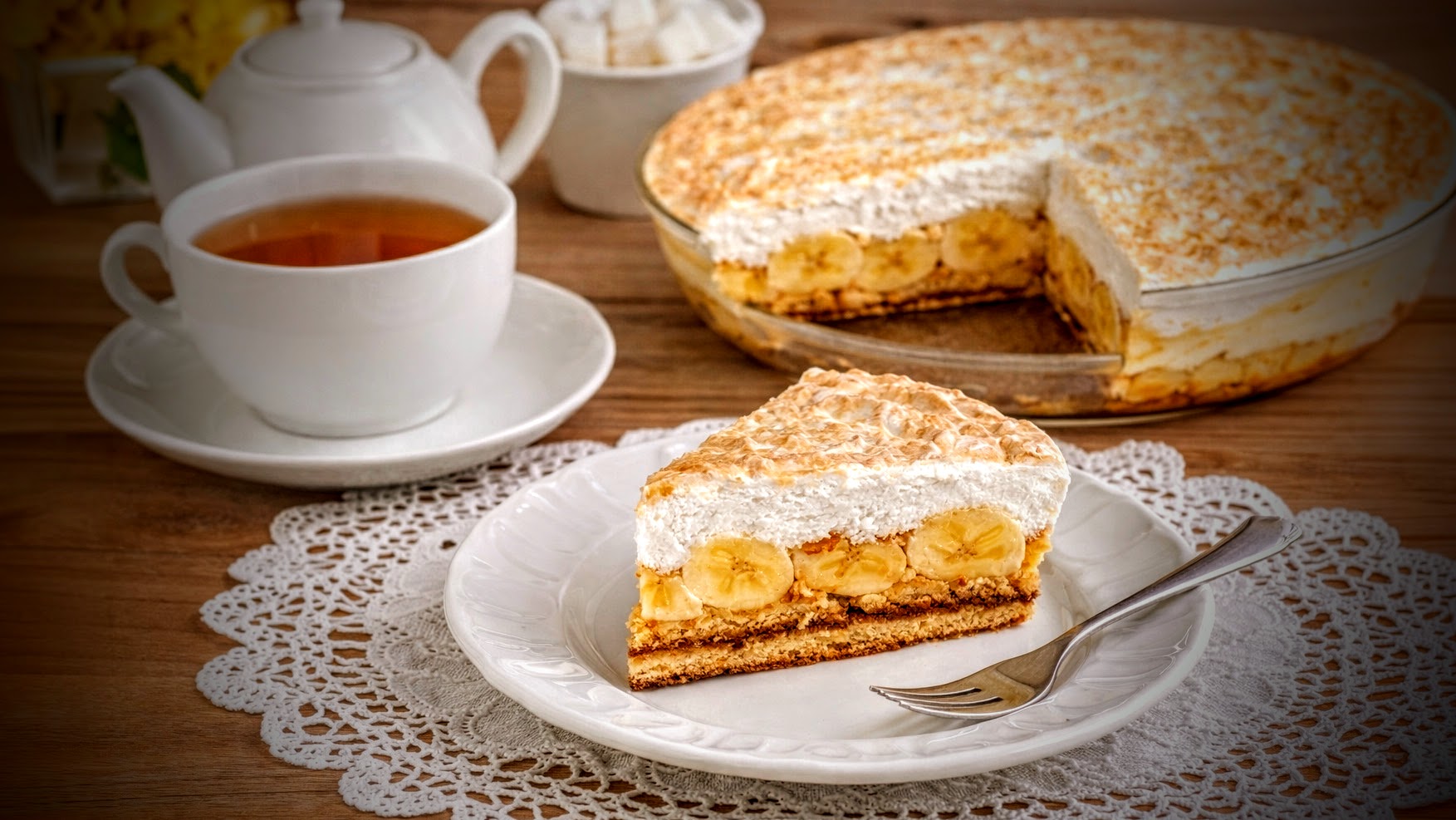
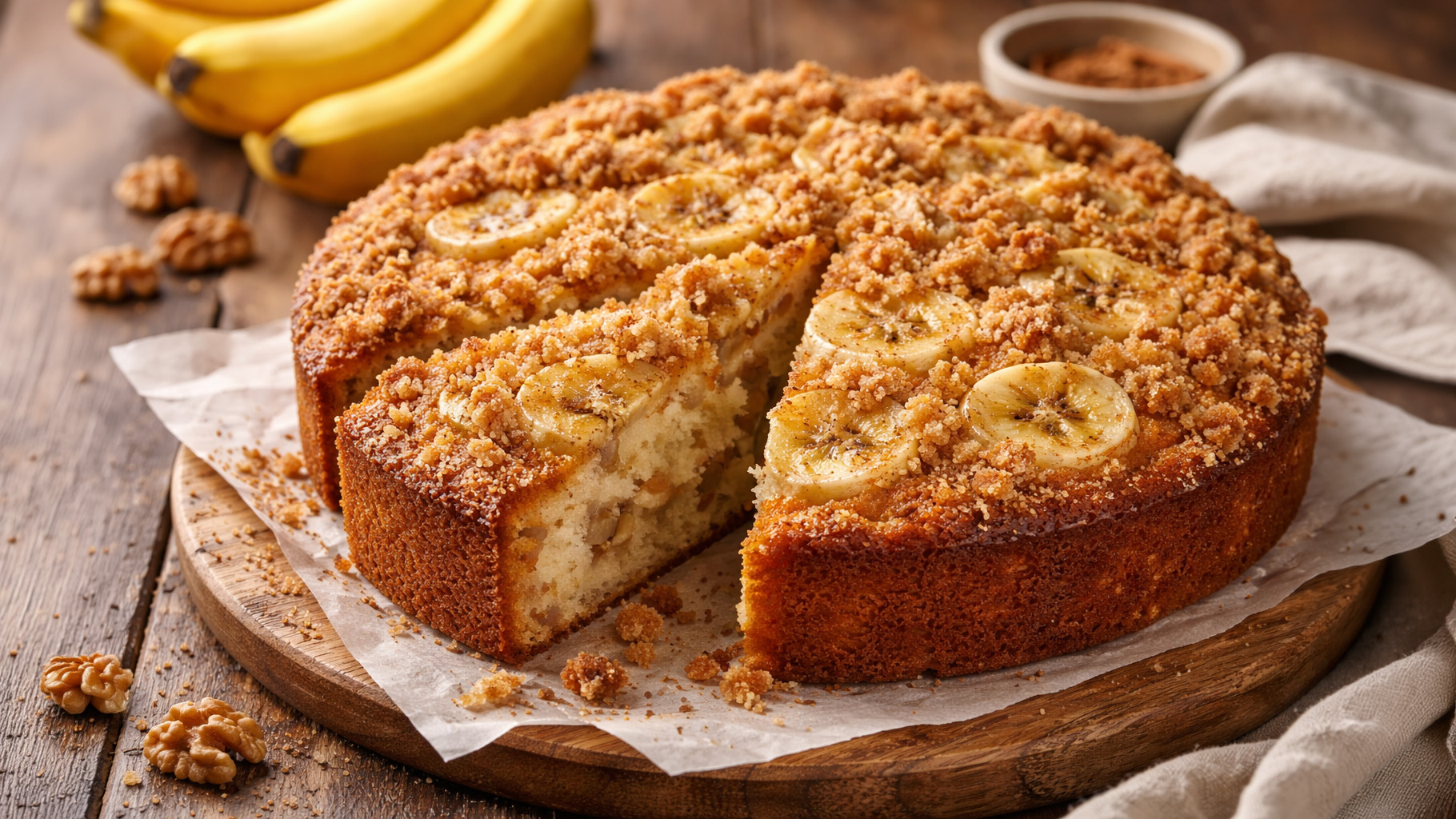
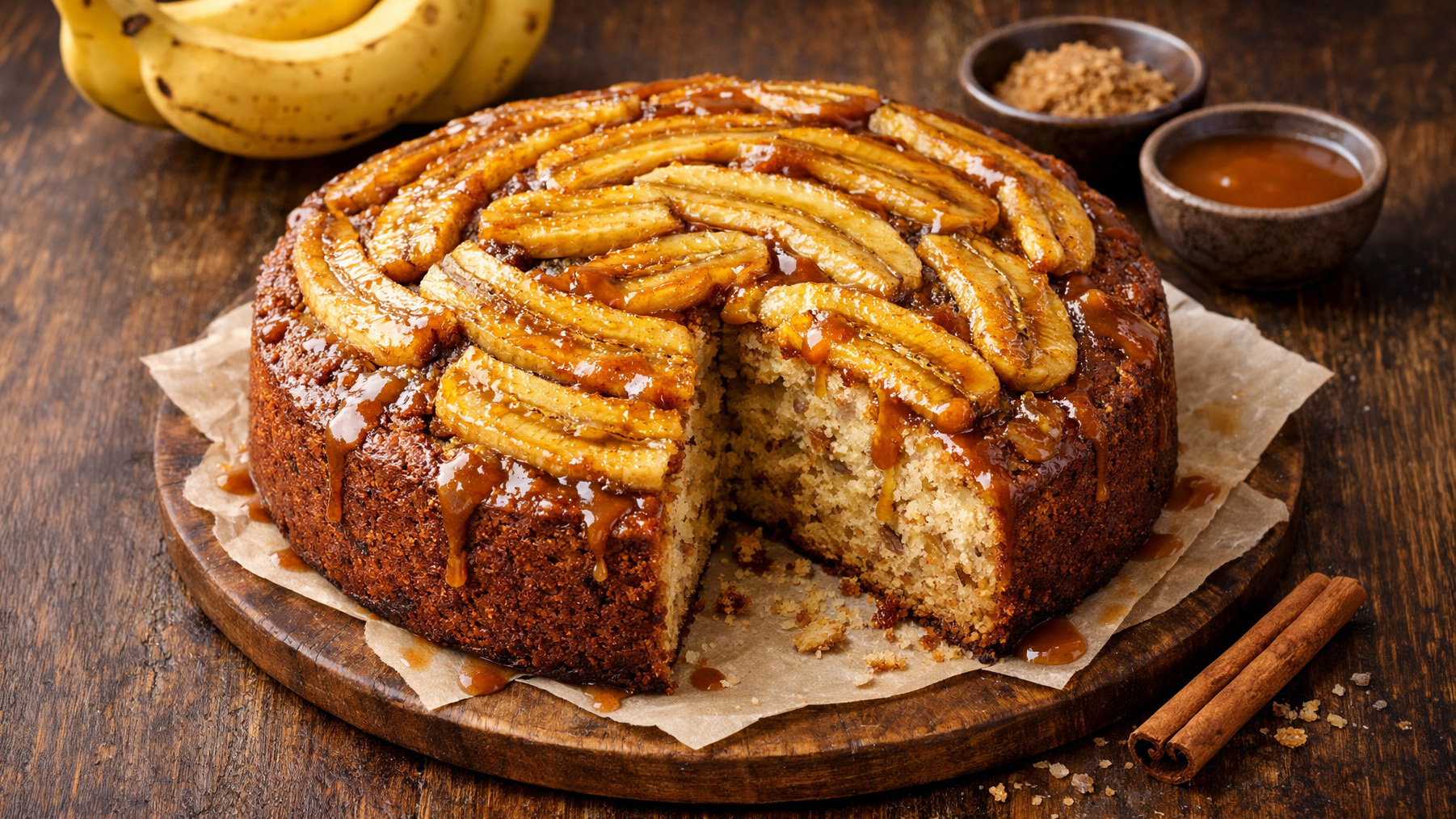
The name can be a little slippery, because Brazil has several banana desserts living close together in the same cheerful family. There is torta de banana, which may be a proper pie, a layered tray bake, or a crustless baked pudding depending on the region and the cook. There is bolo de banana, the cake cousin. Meanwhile, cuca de banana in the South carries a German-Brazilian crumb topping. Then there is Chico Balanceado, a dramatic banana dessert with caramel, custard, and meringue that sounds as though it should come with gossip. Consequently, when people say “Brazilian banana pie”, they often mean a broader idea rather than a single rigid formula.
That flexibility is part of the charm. Brazil is too large and regionally varied to obey a single dessert script. In one kitchen, a banana pie may be built with pastry; in another, it may rely on breadcrumbs, flour, or a streusel-like topping. Elsewhere, it may skip the crust entirely and lean on layers of sliced banana, sugar, eggs, and dairy to create something between pie, pudding, and cake. Not surprisingly, dishes like this tend to make recipe purists slightly nervous, which is usually a promising sign.
The banana itself has a long story in Brazil. The fruit arrived in the Americas with the Portuguese, likely via West Africa. Over time, it settled into Brazilian agriculture and daily cooking so completely that it now feels less like an import and more like permanent family. Today, Brazil produces vast quantities of bananas and consumes most of them domestically. Consequently, the fruit appears in everything from snacks to savoury dishes to desserts.
In Brazilian markets, bananas are not just bananas in a generic sense. There are multiple types, each with different textures, sweetness levels, and culinary uses. This matters enormously for pie. Banana-prata is a reliable choice for baking because it holds its shape while turning sweet and fragrant. By contrast, banana-nanica is larger and softer, ideal when you want a lush, jammy result. Banana-maçã brings a more delicate perfume. Meanwhile, banana-da-terra leans towards starchier, often savoury uses, though it can also shine in desserts. In other words, there is a quiet fruit intelligence behind the pie.
Historically, the dessert sits at the crossroads of several forces that shaped Brazilian food: Portuguese baking traditions, tropical abundance, regional migration, and immigrant influence. At the same time, it reflects the domestic ingenuity of turning everyday ingredients into something memorable. Many beloved dishes emerge from this kind of practical creativity. Indeed, banana pie belongs proudly to that tradition, transforming ripeness into flavour and household economy into something resembling luxury.
Regional variations add further richness to the story. In the South, where German immigration shaped local baking, banana desserts often lean towards cuca, with buttery crumb toppings and textures between cake and pudding. In Rio and São Paulo, home-style tortas often appear in rectangular pans, sometimes incorporating oats or wholemeal flour. Occasionally, dulce de leite or condensed milk joins in with cheerful lack of restraint. In the Northeast, flavours become more aromatic, with cinnamon, coconut, and deep sweetness taking centre stage. As a result, each region adds its own accent to the same basic idea.
Beyond ingredients, certain habits make the dessert unmistakably Brazilian. One is the affection for cinnamon-sugar. Another is the role of café da tarde, the afternoon coffee ritual that prioritises pause, conversation, and something homemade. Banana pie fits effortlessly into this rhythm. It is comforting without being ceremonial, requiring neither occasion nor formality.
What makes Brazilian banana pie distinctive is its balance between abundance and restraint. Bananas already provide sweetness and aroma, so the dessert does not need much to feel generous. However, it rarely holds back entirely. Butter, sugar, eggs, and dairy often appear in varying combinations. As these elements bake, bananas soften, edges caramelise, and cinnamon releases its warmth. Gradually, the kitchen fills with the sort of smell that suggests someone sensible has made peace with the world.
Texture provides much of the appeal. A well-made version offers contrast: a lightly crisp top, a soft and custardy middle, and silky banana slices beneath. If there is a base, it anchors the structure; if there is a crumb topping, it adds welcome crunch. Together, these elements create a layered experience that feels both indulgent and grounded.
Unlike desserts engineered for applause, Brazilian banana pie feels designed for a second helping. It values generosity over precision. Even at its most refined, it retains a relaxed honesty. You can see the fruit, smell the spice, and recognise its domestic origin.
Coffee remains the natural partner. Strong Brazilian coffee, whether black or milky, cuts through the richness beautifully. Alternatively, black tea with a malty profile works well, especially if the pie leans heavily on cinnamon. For a colder option, a small glass of cachaça can complement a warm slice. Meanwhile, non-alcoholic choices such as guava juice, passion fruit juice, or cold milk provide a refreshing contrast.
Accompaniments depend on preference. Vanilla ice cream offers a classic hot-and-cold contrast. Whipped cream keeps things lighter. Crème fraîche introduces a useful tang. In a more Brazilian vein, mild white cheese alongside the pie creates a familiar sweet-savoury pairing. Additionally, toasted nuts can add texture and depth.
There is, inevitably, a modest health angle. Bananas contribute fibre, potassium, and vitamin B6, making them nutritionally valuable. However, once butter and sugar enter the equation, restraint becomes theoretical. Therefore, it is best to think of banana pie as a dessert with better beginnings rather than a health food in disguise.
A few practical considerations help at home. Riper bananas mean more sweetness, allowing you to reduce added sugar. Wholemeal flour or oats can increase fibre and flavour. Moreover, dairy-free versions work well with coconut milk, while gluten-free adaptations are straightforward using alternative flours. Ultimately, the recipe is forgiving.
In Brazil, the best versions often appear in everyday places: neighbourhood bakeries, padarias, casual cafés, and family-run eateries. These settings suit the dessert’s character far better than formal restaurants. Outside Brazil, Brazilian cafés and community markets offer the best chance of finding it, though names may vary.
If it proves elusive, the solution is simple: make it. Few desserts are as adaptable or approachable.
Brazilian Banana Pie Recipe
You will need 6 to 8 ripe bananas, 180g plain flour, 80g breadcrumbs or oats, 150g light brown sugar plus 2 tablespoons extra, 2 teaspoons cinnamon, 1 teaspoon baking powder, a pinch of salt, 120g cold butter, 3 eggs, 200ml milk, and 1 teaspoon vanilla extract.
Preheat the oven to 180°C (160°C fan). Grease a medium baking dish.
Slice the bananas and toss them with a little sugar and cinnamon. Meanwhile, combine the dry ingredients in a bowl. Rub in the butter until the mixture resembles coarse crumbs.
In a separate bowl, whisk the eggs, milk, and vanilla. Then layer one third of the crumb mixture in the dish, followed by half the bananas. Repeat, finishing with crumbs on top. Pour over the liquid mixture evenly.
Let it rest briefly before baking for 40 to 50 minutes until golden and set. Allow it to cool slightly before serving.
Serve warm with coffee, ice cream, or simply on its own.
Brazilian banana pie remains a reminder that ordinary ingredients, treated with care and a little imagination, can become something quietly celebratory.