Swedish blueberry pie Blåbärspaj
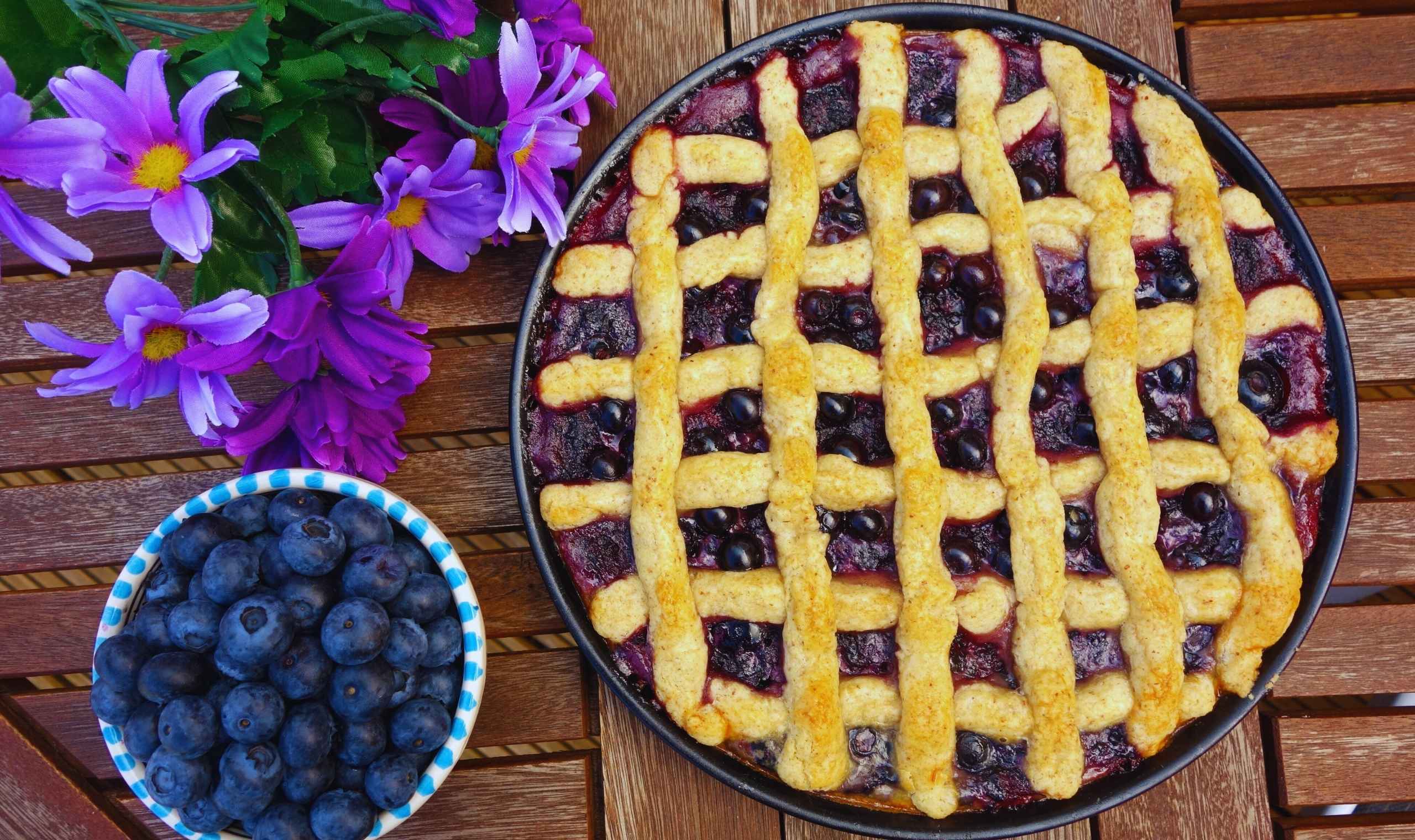
Some desserts try very hard to impress. However, Swedish blåbärspaj does not. It turns up quietly, usually slightly warm, often a little uneven around the edges. Meanwhile, it smells of butter, berries, and forests that feel only half domesticated. It does not chase perfection. Instead, it leans into comfort, and somehow that makes it far more memorable than anything polished to within an inch of its life.
In Sweden, blueberries are not just fruit. Rather, they are a seasonal event, a small ritual, and occasionally a competitive sport involving buckets, forests, and quiet determination. Wild blueberries are smaller and more intensely flavoured than cultivated versions. As a result, they stain fingers, clothes, and sometimes entire afternoons. That matters because blåbärspaj is not really about baking alone. Instead, it is about gathering, and dessert begins long before the oven is switched on.
Historically, this pie sits within the broader Scandinavian tradition of simple, ingredient-led baking. Swedish kitchens have never been particularly interested in excess. Instead, they favour balance: not too sweet, not too heavy, and not too complicated. Blåbärspaj reflects that philosophy. It is less of a structured pastry and more of a relaxed assembly. Berries sit at the bottom, while a crumbly topping rests above. Consequently, exact measurements become, at best, a suggestion.
Regional variations exist, although they rarely announce themselves loudly. In some households, the topping leans towards a crisp crumble, with oats adding texture and a slightly nutty note. Elsewhere, it shifts closer to a soft cake-like layer. As it bakes, it absorbs the juices of the berries underneath. Some recipes introduce almonds, while others add vanilla or cardamom. Meanwhile, a few insist on serving it with vanilla custard rather than ice cream. Unsurprisingly, that feels entirely in character for a country that takes its fika rather seriously.
What makes blåbärspaj special is not complexity but contrast. The berries collapse into a deep, almost jam-like layer, tart enough to keep things interesting. Above them, the topping remains buttery and slightly crisp. As a result, it offers just enough resistance before giving way. Then there is the temperature. Served warm, the pie feels generous and almost indulgent. By contrast, served cold, it becomes quieter and more restrained, as though it has settled into itself overnight.
Drinks matter here more than one might expect. Coffee is the obvious companion, particularly during fika. There, conversation flows as steadily as refills. The slight bitterness of coffee balances the sweetness of the pie. In fact, the pairing feels almost engineered. However, tea works just as well, especially black tea with a clean profile. For something stronger, a small glass of dessert wine or a berry liqueur can mirror the flavours without overwhelming them.
Food pairings follow a similar logic. A simple vanilla ice cream melts slowly into the warm berries. Consequently, it creates a sauce that no one admits they wanted but everyone appreciates. Alternatively, lightly whipped cream offers a softer contrast. Meanwhile, traditional Swedish vanilla sauce brings a custard-like richness that feels unapologetically nostalgic. If one feels ambitious, a spoonful of crème fraîche can add a subtle tang that sharpens the entire experience.
There is, of course, the question of whether something so comforting can also be considered healthy. Blueberries themselves are rich in antioxidants, particularly anthocyanins, which give them their deep colour. In addition, they provide fibre and vitamins, which allows one to feel briefly virtuous. That said, the butter and sugar in the topping are not exactly hiding. Therefore, blåbärspaj sits in familiar territory where health benefits exist, but moderation remains a wise companion.
Finding blåbärspaj outside Sweden is not impossible, although it can be unpredictable. Scandinavian bakeries often carry it, particularly in cities with a strong Nordic presence. In Sweden itself, it appears almost everywhere during blueberry season. From cafés to family kitchens, it is a constant. However, the most reliable way to experience it properly is still to make it at home. That way, you control the balance, the sweetness, and, perhaps most importantly, the amount of topping.
Recipe for Swedish blueberry pie Blåbärspaj
Start with fresh or frozen blueberries, around 500 grams. If using frozen berries, there is no need to thaw them. However, you may wish to add a little extra starch later. Place the berries in a baking dish and mix them gently with a couple of tablespoons of sugar. Adjust depending on how sweet or tart they are. Then add a tablespoon of potato starch or cornflour to help thicken the juices as they cook. A squeeze of lemon juice can brighten the flavour, although it is optional.
For the topping, combine 100 grams of butter, softened but not melted, with around 100 grams of sugar and 150 grams of plain flour. Work the mixture together until it forms a crumbly texture. Some prefer to add oats or ground almonds at this stage. As a result, this introduces extra depth. A pinch of salt is worth including, as it sharpens the sweetness without announcing itself.
Scatter the topping evenly over the blueberries, resisting the urge to press it down too firmly. The uneven surface is part of the charm. Bake in a preheated oven at 180°C for about 30 to 40 minutes. Alternatively, bake until the top turns golden and the berries begin to bubble up at the edges.
Allow the pie to rest briefly before serving. It will still be warm, but the filling will have settled enough to hold together. Then serve with vanilla ice cream, whipped cream, or custard, depending on mood and weather. Ultimately, it rarely lasts long, which is perhaps the most reliable sign that something has gone very right.