Mramorová Bábovka: The Czech Cake Made for Coffee
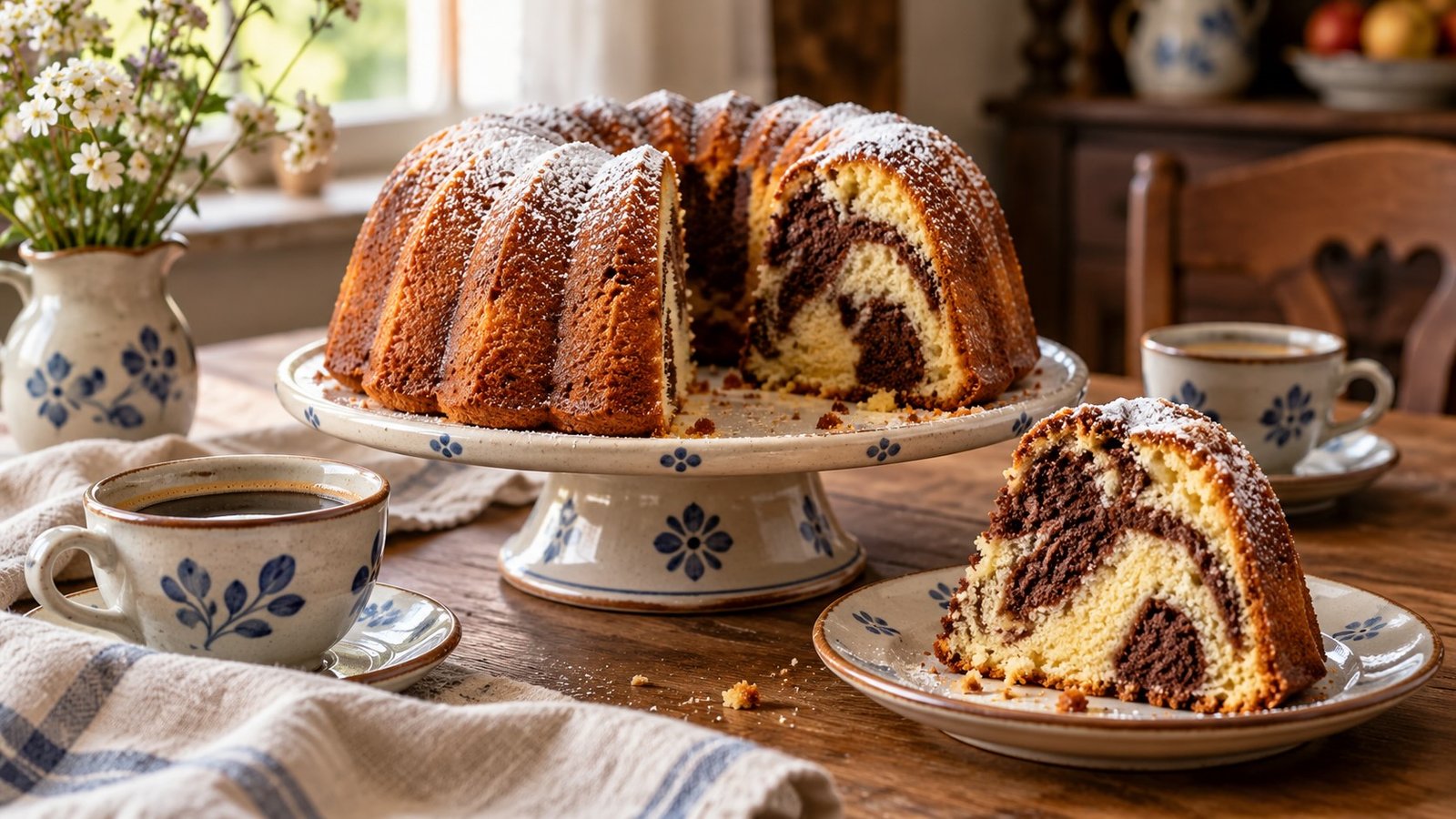
Some cakes demand an occasion, a special knife and possibly a speech. Mramorová bábovka simply expects you to put the kettle on. This Czech marble cake wears a handsome ring shape, usually with fluted sides and a snowy dusting of icing sugar. However, its real charm waits inside. Cut a slice and pale vanilla sponge gives way to dark cocoa swirls. Every slice looks slightly different, which conveniently makes uneven marbling seem like artistic judgement.
Bábovka belongs to Central Europe’s broad family of cakes baked in tall, hollow-centred moulds. Its relatives include Austrian Gugelhupf, German Gugelhupf and Alsatian kougelhopf, although their recipes differ considerably. Historically, this family included yeast-raised cakes, often enriched with butter, eggs and dried fruit. Over time, baking powder helped establish quicker sponge versions. The familiar Czech marble cake therefore represents one branch of a much older baking tradition, rather than a single inventor’s sudden triumph.
In Czech homes, bábovka has become a familiar companion to Sunday visits, afternoon coffee and conversations that outlast both. Slovakia shares the tradition, including the name. Meanwhile, family recipes vary with impressive confidence. Some bakers use butter; others prefer oil for a softer crumb that keeps well. Tvaroh, a fresh curd cheese, features in another popular version. You will also encounter walnut, poppy seed, lemon and raisin bábovky. Nevertheless, vanilla and cocoa remain a particularly recognisable pairing.
What makes the marble version special is its balance of ordinary ingredients and theatrical presentation. The cocoa brings a gentle bitterness, while vanilla softens the overall flavour. Moreover, the central chimney helps heat reach the middle of a substantial cake. A well-greased mould produces those handsome ridges without requiring icing skills or architectural training. However, restraint matters when swirling the batters. Too much enthusiastic stirring produces a uniformly brown cake, which rather defeats the decorative exercise.
Coffee makes an obvious partner, especially a strong filter brew or an espresso with a little milk. Alternatively, black tea offers enough briskness to balance the buttery crumb. Children might prefer warm milk, while rooibos provides a caffeine-free option. Alongside the cake, try tart berries, sliced plums or a spoonful of plain yoghurt. Their freshness offsets its sweetness. For a richer pudding, add lightly whipped cream and warm sour cherries. Suddenly, afternoon cake has acquired evening ambitions.
Nutritionally, bábovka remains cake, despite cocoa’s excellent public relations department. Eggs and milk contribute some protein, but butter and sugar make this an energy-dense treat. Consequently, modest slices offer the most practical balance. Fruit adds freshness and fibre without requiring you to redesign the recipe. Meanwhile, anyone avoiding gluten, eggs or dairy will need suitable adaptations. A successful substitute must preserve the batter’s structure, so casual ingredient swapping can produce disappointing results.
Bábovka Recipe
This home-style version makes approximately twelve slices in a 2.4-litre Bundt or bábovka tin. Allow about twenty-five minutes for preparation and fifty to sixty minutes for baking, plus cooling.
For the batter, gather 250g softened unsalted butter, 220g caster sugar, four large room-temperature eggs and 300g plain flour. You will also need 10g baking powder, ¼ teaspoon salt, 150ml room-temperature whole milk and two teaspoons vanilla extract. For the dark batter, measure 25g unsweetened cocoa powder and two tablespoons extra milk. Finally, reserve softened butter and flour for the tin, plus icing sugar for finishing.
Heat the oven to 170°C conventional, or 150°C fan. Thoroughly butter every groove of the tin, including its central tube. Then dust lightly with flour and tap out the excess. Beat the butter and sugar until pale and fluffy, allowing around four minutes. Next, beat in the eggs individually, followed by the vanilla. If the mixture curdles slightly, add a spoonful of the measured flour.
Mix the remaining flour with the baking powder and salt. Fold this into the butter mixture in batches, alternating with the milk. Afterwards, transfer one-third of the batter to another bowl. Blend the cocoa with the extra milk, then stir it into this smaller portion.
Spoon alternating portions of both batters into the tin. Draw a skewer through them in two loose curves, then level gently. Bake for fifty to sixty minutes, until a skewer emerges without wet batter. Afterwards, cool in the tin for fifteen minutes before turning onto a rack. Leave until completely cool, then dust with icing sugar. Store airtight for up to three days.

Post Comment