Kruimelvlaai: The Dutch Delight of Crumbled Indulgence
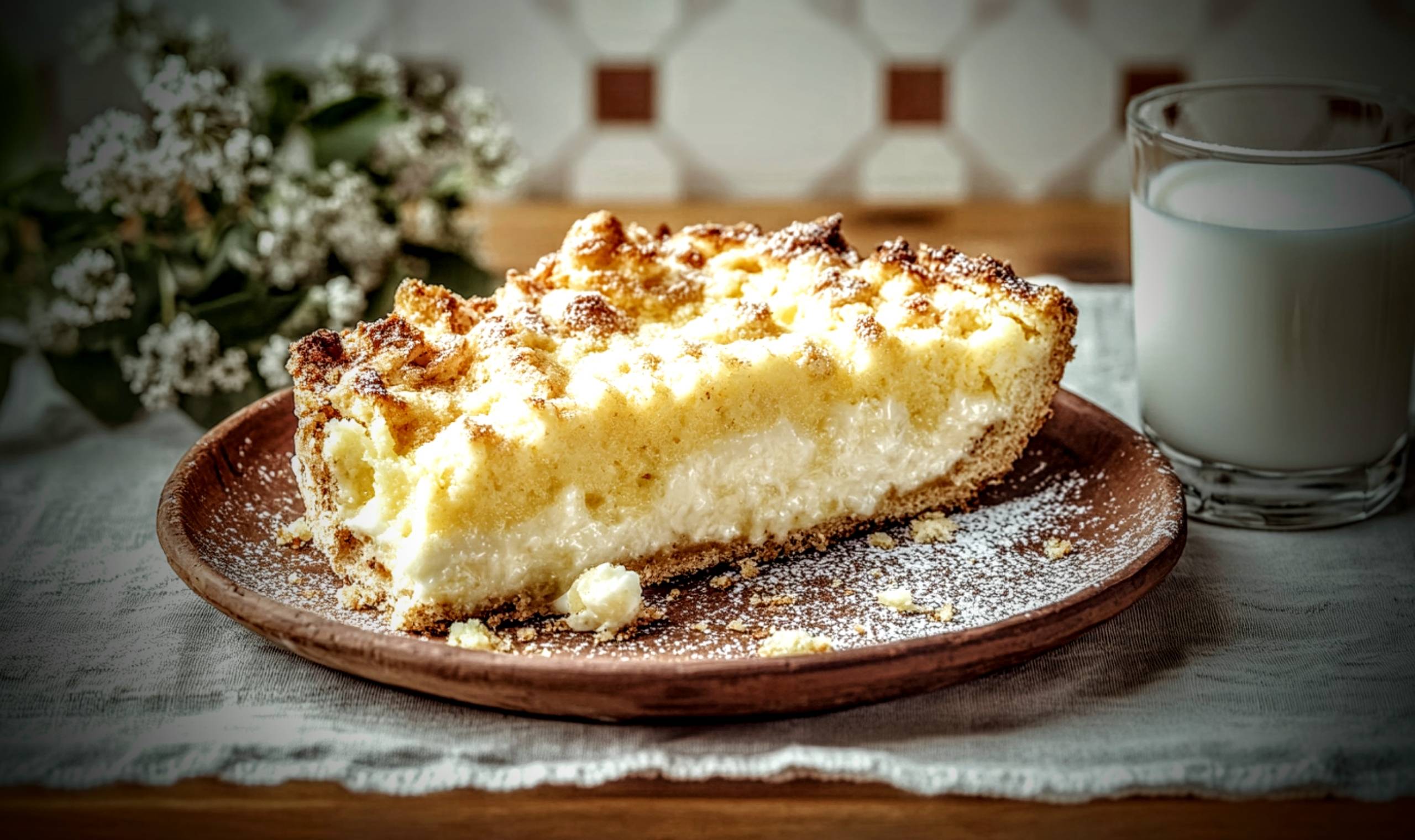
The Dutch have a particular talent for making sensible food dangerously comforting. Kruimelvlaai is a perfect example. At first glance, it looks remarkably well behaved: a round tart, modestly golden and covered with buttery crumbs. Then you cut a slice. Underneath that innocent rubble sits soft yeast dough and a creamy filling. Suddenly restraint seems rather unnecessary.
Kruimelvlaai belongs to the great family of Limburgse vlaai. This baking tradition comes from Limburg, the region shared by the Netherlands and Belgium. Unlike many pies, a traditional vlaai does not begin with shortcrust pastry. Instead, its base is made from sweetened yeast dough. Consequently, the finished tart sits somewhere between bread, pastry and cake.
The precise origins of vlaai disappear into the usual fog surrounding old regional foods. Recipes developed gradually in households and village bakeries rather than appearing dramatically in a cookbook. However, vlaai became deeply connected with Limburg life. It was served at birthdays, weddings, family visits and funerals. Basically, if something important happened, somebody brought a vlaai.
Its reputation eventually travelled well beyond Limburg. In 2024, Limburgse vlaai received Protected Geographical Indication status from the European Union. The protected name applies to qualifying vlaai produced in Dutch or Belgian Limburg. The specification describes a round, generously filled tart made with sweet yeast dough, with the base and filling baked together.
Kruimelvlaai is one of the most comforting members of this large family. Its Dutch name tells you exactly what to expect. “Kruimel” means crumb, while “vlaai” refers to the Limburg tart itself. In Limburgish, versions may also appear under names such as greumellevlaai or greumelkesvlaai. There is no attempt at mysterious culinary branding here. It is a tart with crumbs, and the crumbs are very much the point.
However, those crumbs need something underneath them. One popular version uses a thick vanilla custard filling. The three textures then work beautifully together. First comes the crisp, buttery topping. Next comes smooth custard. Finally, there is the slightly chewy, bread-like base.
That contrast is what makes kruimelvlaai special. A conventional crumble tends to be spooned from a dish. A custard tart usually relies on pastry. Kruimelvlaai cheerfully ignores both arrangements. Instead, it combines bakery dough, custard and streusel into something that feels simultaneously substantial and delicate.
The broader vlaai family offers plenty of competition. Limburg bakeries commonly sell cherry, apricot, plum and apple versions. Rice pudding vlaai is another regional classic. Custard, fresh cheese and semolina fillings also appear. The official description of Limburgse vlaai deliberately accommodates this remarkable variety.
There are also variations within the crumb-topped category. Some bakers put crumbs directly over custard. Others combine them with apple or fruit filling. Another version uses a sweeter cream beneath the topping. Naturally, every bakery may regard its own proportions as perfectly normal and everybody else’s as faintly suspicious.
Traditional vlaai is relatively shallow and broad. That shape matters because it creates the proper balance between dough and filling. A deep pie would become heavy. Meanwhile, a very thin one would lose the generous character that makes vlaai so appealing. Modern versions vary in size, although protected Limburgse vlaai specifications permit diameters from 10 to 30 centimetres.
Coffee is the obvious partner. Indeed, coffee and vlaai are almost inseparable in Limburg café culture. Choose something fairly strong and slightly bitter. The roast cuts through the butter and custard beautifully. Black tea works nearly as well, particularly Assam or English breakfast.
For something more celebratory, try a lightly sweet sparkling wine. An off-dry Riesling can also work, especially with fruit-filled kruimelvlaai. Alternatively, cold milk provides an unexpectedly satisfying old-fashioned pairing. Nobody will photograph it for a fashionable cocktail menu, but that is probably part of its charm.
Kruimelvlaai does not particularly require another dessert beside it. Nevertheless, fresh berries can provide useful acidity. A small spoonful of crème fraîche also works if the filling is not already very rich. With fruit versions, lightly whipped cream is traditional territory. Keep it restrained, though. The vlaai has already done most of the work.
Nutritionally, kruimelvlaai contains some useful ingredients hidden among the obvious pleasures. Milk and eggs provide protein, calcium and several micronutrients. Flour contributes carbohydrates for energy. Unfortunately, butter and sugar also arrived at the party and appear unwilling to leave.
Therefore, this is better viewed as an occasional treat than an ingenious wellness strategy. The custard and crumble can make it calorie-dense, particularly in generous bakery portions. Still, homemade versions allow some control over sweetness and portion size. Fruit-filled variations may add fibre and nutrients, although nobody should confuse cherry vlaai with a fruit salad.
For the most authentic experience, Limburg remains the place to look. Bakeries throughout Maastricht and other towns in Dutch Limburg specialise in vlaai. Belgian Limburg has its own strong tradition too. Elsewhere in the Netherlands, good bakeries often sell versions, although protected “Limburgse vlaai” must meet geographical and production requirements.
Finding genuine kruimelvlaai in Britain is considerably less straightforward. Dutch bakeries and specialist continental food shops are your best possibilities. Fortunately, this is also an excellent pie to make at home. The ingredients are ordinary. The result, however, tastes reassuringly unlike anything from the standard British tart repertoire.
Recipe: Traditional Kruimelvlaai
This version uses a soft yeast base, vanilla custard and plenty of buttery crumbs. It makes one 28 cm vlaai, giving roughly ten generous slices. Allow about two and a half hours, including rising and cooling time.
For the yeast dough
- 200 g strong white flour
- 7 g dried instant yeast
- 25 g caster sugar
- ½ teaspoon fine salt
- 100 ml whole milk, lukewarm
- 30 g unsalted butter, softened
- 1 medium egg
The custard filling
- 500 ml whole milk
- 1 teaspoon vanilla extract or vanilla bean paste
- 4 medium egg yolks
- 80 g caster sugar
- 40 g cornflour
- 20 g unsalted butter
For the crumble topping
- 150 g plain flour
- 90 g cold unsalted butter, cubed
- 90 g caster sugar
- Pinch of salt
- Icing sugar for finishing, optional
Begin with the custard because it needs time to cool. Heat the milk and vanilla until steaming but not boiling. Meanwhile, whisk the egg yolks with the sugar and cornflour until smooth. Slowly pour some hot milk into the yolk mixture while whisking continuously. Then return everything to the saucepan.
Cook over medium-low heat while stirring constantly. Within several minutes, the mixture should become thick and glossy. Remove it from the heat and stir in the butter. Transfer the custard to a bowl and cover the surface directly with baking parchment. Leave it to cool completely.
Next, prepare the dough. Mix the flour, yeast, sugar and salt in a large bowl. Add the warm milk, butter and egg. Knead for around eight minutes until you have a soft, smooth and slightly elastic dough. Add a little flour only if it remains excessively sticky.
Cover the bowl and leave the dough somewhere warm for about one hour. It should become noticeably larger, although it need not dramatically double. Meanwhile, grease a 28 cm shallow tart or vlaai tin.
Make the crumble while the dough rises. Rub the cold butter into the flour using your fingertips. Add the sugar and salt, then mix until irregular crumbs form. Some should be fine, while others should remain pleasantly chunky. Refrigerate until needed.
Roll the risen dough into a circle slightly larger than the tin. Transfer it carefully and press it across the base and slightly up the sides. Trim excess dough, then prick the base several times with a fork. Leave it for another 15 minutes.
Spread the cooled custard evenly over the dough. Scatter the crumble generously across the entire surface. Do not press it down. Those rough little peaks become wonderfully crisp in the oven.
Bake at 190°C, or 170°C fan, for about 25 to 30 minutes. The edges should turn golden brown and the crumble should develop deeper golden patches. Allow the vlaai to cool in its tin before removing it.
Serve at room temperature with strong coffee. Add a light dusting of icing sugar if desired. Then watch half the tart disappear while everybody insists they are merely having “another small piece”.