Imotska Torta: The Quiet Power of a Croatian Almond Cake
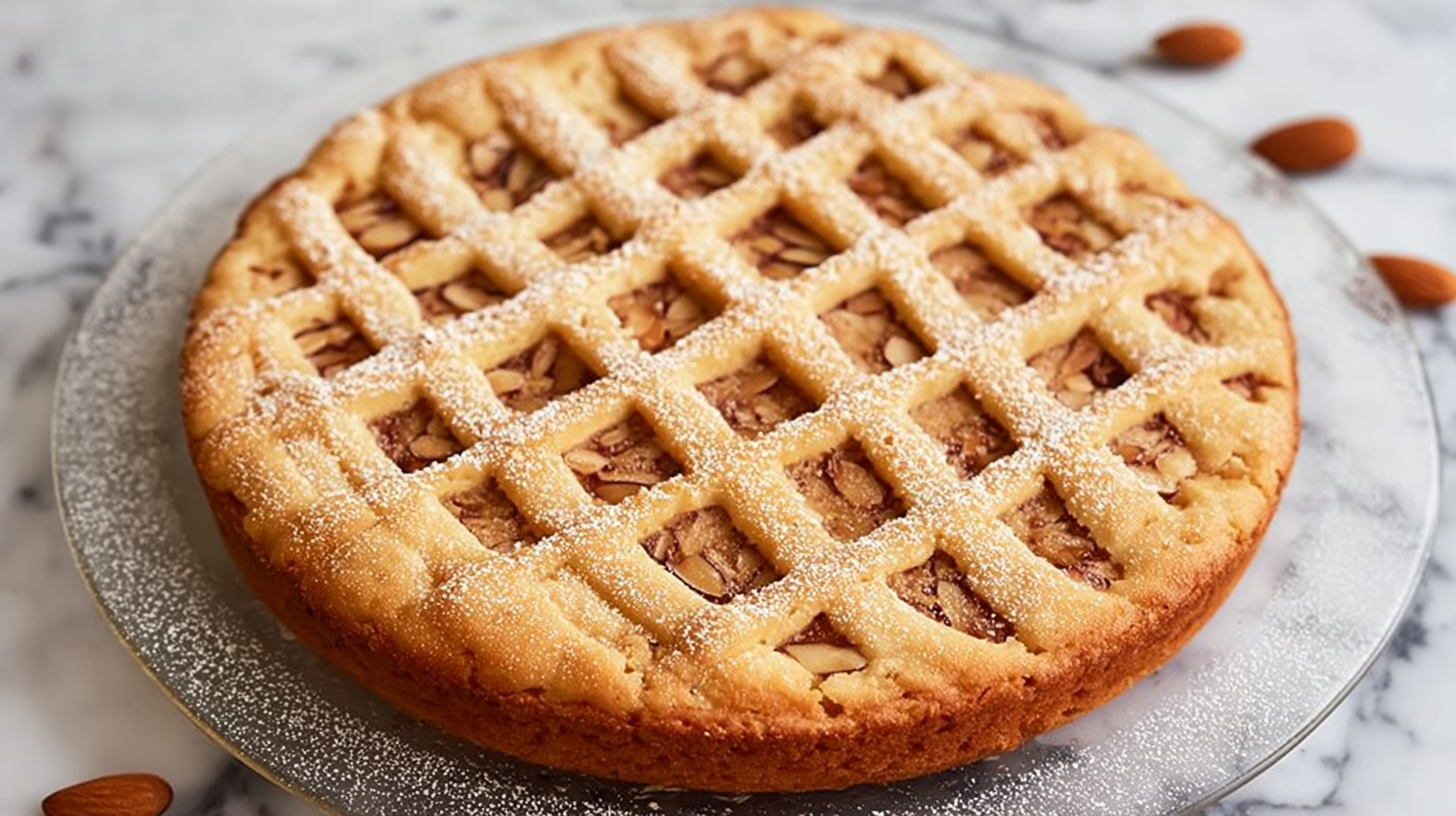
Imotska Torta does not try to impress you at first glance. It sits there quietly on the table, pale, dense, neatly latticed, looking more like a well-behaved guest than the star of the party. And that is exactly the point. This is a cake that knows it belongs at serious occasions. Weddings. Christenings. Big birthdays where three generations argue about politics while pretending not to. In the Dalmatian hinterland, especially around the town of Imotski, this almond torte has long been a signal that something important is happening and that people have made an effort.
The story of Imotska Torta begins inland, away from the postcard Dalmatia of beaches and yachts. The Imotski region sits near the border with Bosnia and Herzegovina, shaped by karst landscapes, harsh summers, cold winters, and a way of life that historically rewarded thrift, planning, and patience. Cakes here were never fluffy, ephemeral things designed to be eaten five minutes after baking. They needed to last. They needed to feed many people. And they needed to survive being made a day or two ahead, transported, sliced thinly, and still taste like something worth talking about.
Almonds were an obvious solution. They store well, grind beautifully, and turn into something luxurious without requiring dairy, fancy equipment, or imported ingredients. Sugar, eggs, lemon zest, and a splash of Maraschino liqueur complete the picture. Nothing is wasted. Nothing is excessive. The lattice on top is not decoration for decoration’s sake. It is a quiet announcement of skill. Anyone can spread batter into a tin. Creating a neat, even lattice from dense almond dough requires steady hands and time. In other words, respect for the occasion.
Historically, Imotska Torta was a communal affair. Almonds were often ground at home or taken to local mills. Eggs came from the yard, lemons from the coast or via trade, sugar carefully measured because it was not always abundant. Maraschino, made from sour Marasca cherries along the Dalmatian coast, connected inland kitchens to maritime trade routes and a wider world. Even today, the liqueur is used sparingly, more aroma than alcohol, more tradition than indulgence.
Every family in the Imotski area claims to make the best version. Some insist on more lemon, others on less sugar, some swear the cake improves after three days, others say two is ideal. This is not a dessert that has been standardised for cookbooks or café menus. It lives in handwritten notebooks, memory, and the unspoken authority of grandmothers who do not measure but somehow always get it right.
Regional variations exist, though they are subtle. In parts of the wider Dalmatian hinterland, the lattice may be thicker, almost architectural, while elsewhere it is delicate and restrained. Some versions include a touch of rose water instead of or alongside Maraschino, a nod to older Ottoman influences that passed through the region centuries ago. Others replace part of the almonds with walnuts when almonds were scarce, creating a slightly earthier flavour but keeping the same dense character.
Comparisons are often made to other Mediterranean almond cakes, from Spanish tortas to Italian torta di mandorle. Technically, they are cousins. Spiritually, Imotska Torta is something else. Those other cakes often aim for lightness or elegance. This one aims for reliability. It wants to sit on the table all afternoon without complaint. It wants to be sliced thin and eaten slowly, ideally while someone tells a story that begins with “Do you remember when…” and ends in laughter or mild outrage.
What makes Imotska Torta special is precisely this refusal to perform. There is no icing sugar snowfall, no glossy glaze, no cream. The flavour comes from almonds, sharpened by lemon zest, rounded by sugar, and lifted by the faint bitterness of cherry liqueur. The texture is dense but not heavy, more compact than rich, closer to marzipan than sponge. It fills you up without making you sleepy, which is useful when celebrations last for hours.
There is also the matter of symbolism. The lattice is often interpreted as a sign of unity, family, and continuity. Whether that was ever the original intention is debatable, but symbolism has a way of attaching itself to food over time. Cutting through that lattice to serve guests is a small ritual in itself. The first slice is always inspected. Too dry and someone will comment. Too sweet and someone else will. Perfect, and there will be silence, followed by nodding.
Pairing drinks with Imotska Torta requires a bit of restraint. This is not a cake that wants to fight for attention. Strong espresso works beautifully, especially the thick, no-nonsense kind served in small cups. The bitterness cuts through the sweetness and makes each bite feel deliberate. In the afternoon, a lighter coffee or even a long black is common, particularly when the cake has had a day or two to settle and the flavours have deepened.
For those who prefer something stronger, dessert wines are an option, but choose carefully. A heavy, syrupy wine will overwhelm the almonds. A dry or semi-dry Prošek, served sparingly, complements the nutty richness without tipping into excess. Some families serve a small glass of Maraschino alongside the cake, leaning into tradition rather than balance. It works, as long as the glass is truly small.
Tea drinkers need not feel excluded. Black tea with minimal aromatics is the safest choice. Earl Grey, with its bergamot notes, can clash with the lemon and cherry if brewed too strongly, but a lighter infusion can work. Herbal teas are generally a miss, unless they are very mild. This cake does not enjoy competition.
As part of a larger table, Imotska Torta usually appears towards the end but not necessarily as the grand finale. It pairs well with simple biscuits, dried figs, walnuts, or oranges sliced and dusted with sugar. In the Dalmatian hinterland, dessert spreads are rarely about one showstopper. They are about abundance and choice, even if each individual element is modest.
Health benefits are not why this cake exists, but it does have a few redeeming qualities. Almonds are rich in healthy fats, protein, and vitamin E. The cake contains no flour, making it naturally gluten-free, which is convenient rather than intentional. Lemon zest adds a small dose of antioxidants, and the lack of butter or cream keeps the fat profile different from many celebratory cakes.
That said, it is still a cake. It contains sugar, it contains eggs and it is calorie-dense, especially given how deceptively small each slice looks. Moderation is not enforced by the recipe but by tradition. Thin slices are the norm, and seconds are taken slowly, if at all. This is not a dessert you inhale. It is one you negotiate with.
Finding Imotska Torta outside its home region can be challenging. It rarely appears in tourist cafés along the coast, where lighter, flashier desserts sell better. In Imotski itself, local bakeries sometimes make it to order, especially around wedding season. The best versions, however, are still homemade, produced for specific events rather than daily commerce.
In larger Croatian cities, you might find it in specialist pastry shops or during food festivals celebrating regional cuisine. Diaspora communities occasionally keep the tradition alive, particularly in Germany, Austria, and Australia, where many families from the Dalmatian hinterland settled. Even there, it tends to appear only when there is something worth celebrating.
Making Imotska Torta at home is an act of patience rather than technical difficulty. The ingredients are simple. The process is straightforward. The key is time and attention, especially when forming the lattice. Rushing shows. The cake knows.
For those ready to try, here is a traditional-style recipe that respects the spirit of Imotski kitchens while being realistic for a modern home.
Imotska Torta Recipe
You will need finely ground almonds, ideally blanched and milled to a texture somewhere between flour and sand. Eggs at room temperature. Caster sugar. Unwaxed lemons for zest. Maraschino liqueur. A little butter or oil for the tin, and baking paper.
Separate the eggs, placing whites and yolks in different bowls. Beat the yolks with the sugar until pale and thick, the mixture falling back on itself in slow ribbons. Add finely grated lemon zest and a small measure of Maraschino, stirring gently to combine. The aroma should be present but not aggressive.
Fold in the ground almonds gradually, mixing until a dense, cohesive batter forms. It will be thick and slightly sticky, more dough-like than cake batter. Set aside a portion of this mixture, roughly a quarter, to use for the lattice.
In a clean bowl, beat the egg whites to firm peaks. Fold them carefully into the almond mixture in stages, lightening the batter without losing too much structure. This step gives the cake just enough lift to avoid heaviness.
Line a round cake tin with baking paper and lightly grease the sides. Spoon the main batter into the tin and smooth the surface. Using the reserved almond mixture, roll thin ropes and arrange them in a lattice pattern over the top, pressing gently so they adhere.
Bake in a preheated oven at around 170°C until the cake is set, lightly golden, and firm to the touch. This can take anywhere from 45 minutes to an hour, depending on your oven and the depth of the tin. If the top browns too quickly, cover loosely with foil.
Once baked, allow the cake to cool completely in the tin. Do not rush this. The texture settles as it cools, and the flavour improves with time. Traditionally, the cake is left for at least a day before serving, wrapped loosely and kept in a cool place.
Serve in thin slices, preferably with coffee and conversation. Compliments are optional but expected. Arguments over whose version is better are traditional and encouraged.