Pastel Imposible, the Mexican Cake That Bakes Upside Down
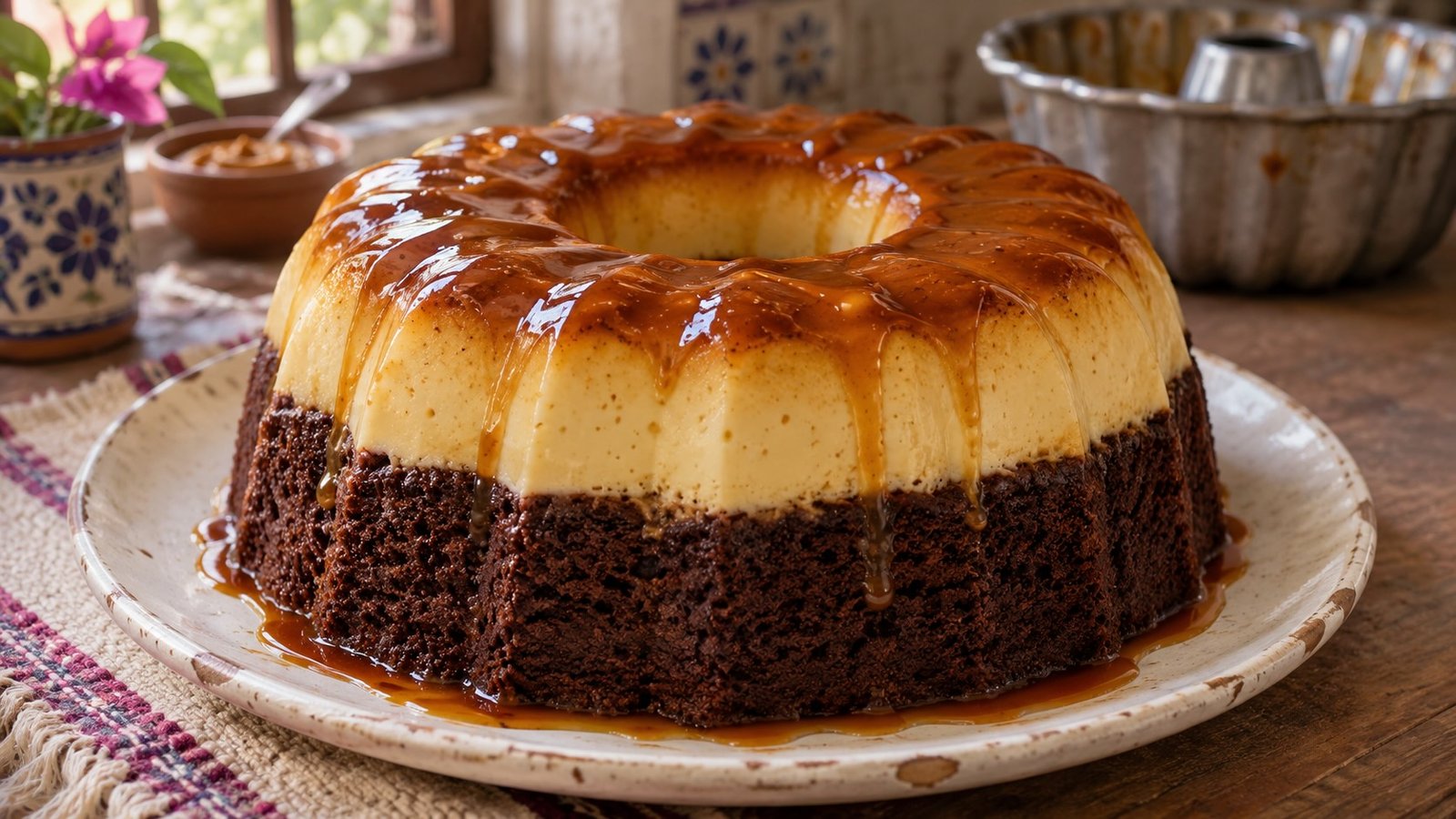
The best moment comes when you lift the tin. Out slides a glossy ring of vanilla flan perched on dark chocolate cake, with caramel running down the sides. Your guests assume you assembled it with the patience of a pastry chef. You can tell them what happened in the oven, or you can enjoy the misunderstanding for another minute.
In Mexico, this dessert goes by pastel imposible or chocoflan. Its birthplace and inventor are hard to pin down. Rick Bayless recalls trying it at a market stall in Mérida and later getting a recipe from a baker in Puebla. That gives us two sightings and no birth certificate. Meanwhile, the popularity of versions made with boxed cake mix and tinned milk tells us something about how readily the recipe travels.
The caramel, however, has a firmer geographical footing. Cajeta, traditionally made with goat’s milk, is a speciality of Celaya and neighbouring towns in Guanajuato. Its deep, cooked-milk flavour holds its own against the cocoa. If you’re shopping in Britain, cow’s-milk dulce de leche is an easy substitute. It gives the cake a rounder, milder caramel finish.
So what actually happens in the tin? You pour the flan over the chocolate batter, which sits on a layer of cajeta. As the batter heats, bubbles make it buoyant enough to rise through the custard. Meanwhile, the water bath helps the flan set gently. Once you turn the cake out, the custard is back on top, wearing the caramel that went in first.
The flan can take the cake in several directions. Larousse Cocina uses milk infused with cinnamon and vanilla, giving the custard a little warmth alongside the cocoa. A cream cheese version takes its cue from flan napolitano and makes for a denser slice. You can also replace half the milk in the chocolate batter with coffee for a slightly darker finish.
Serve it with black coffee or, for a spiced pairing, a small cup of café de olla. If you fancy a drink after dinner, try a little aged rum. Meanwhile, tart raspberries or orange segments bring freshness to the plate. Toasted pecans add crunch, which is welcome in a dessert whose two layers are both determined to be soft.
The eggs and milk contribute protein, and the dairy supplies some calcium. Still, condensed milk and cajeta make this a rich, sweet dessert, so a slim slice goes a fair way. The recipe contains wheat, eggs and milk. If you’re serving guests with allergies, check the caramel label as well.
Pastel Imposible Recipe
This makes 12 slices in a 2.4-litre Bundt tin. The recipe uses UK-friendly tin sizes for the milk. Allow about 75 minutes for baking, then chill for at least four hours, ideally overnight.
For the tin and topping, use softened butter for greasing and 250 g cajeta or dulce de leche. For the sponge, measure 190 g plain flour, 200 g caster sugar, 40 g unsweetened cocoa powder, ½ tsp fine salt, ¾ tsp baking powder and ¾ tsp bicarbonate of soda. Have ready 240 ml whole milk, 1 large egg and 120 ml sunflower oil. For the flan, use 397 g sweetened condensed milk, 354 ml evaporated milk, 4 large eggs and 1 tsp vanilla extract.
Heat the oven to 180°C conventional or 160°C fan. Generously butter the tin, including the central tube. Then gently warm the cajeta until pourable and spread it over the base. Whisk the dry sponge ingredients in a bowl. In a jug, whisk the milk, egg and oil, then stir them into the dry mixture until smooth. Spoon the batter over the cajeta and level it.
Briefly blend the flan ingredients until smooth. Then pour the mixture slowly over the back of a spoon held just above the batter. Cover the tin tightly with buttered foil, greased side down. Set it in a deep roasting tin and pour in enough hot water to come about 5 cm up the outside. Bake for about 75 minutes, until a skewer inserted into the exposed sponge comes out without wet batter.
Lift the Bundt tin out of the water and cool it for about an hour. Then refrigerate until thoroughly chilled. Run a thin knife around the outer edge and central tube. Set a rimmed plate over the tin, turn both over together and lift the tin gently. Finally, spoon any cajeta left in the tin over the top and serve cold.
Post Comment