Devizes Simnel Cake, the Easter Star of Wiltshire
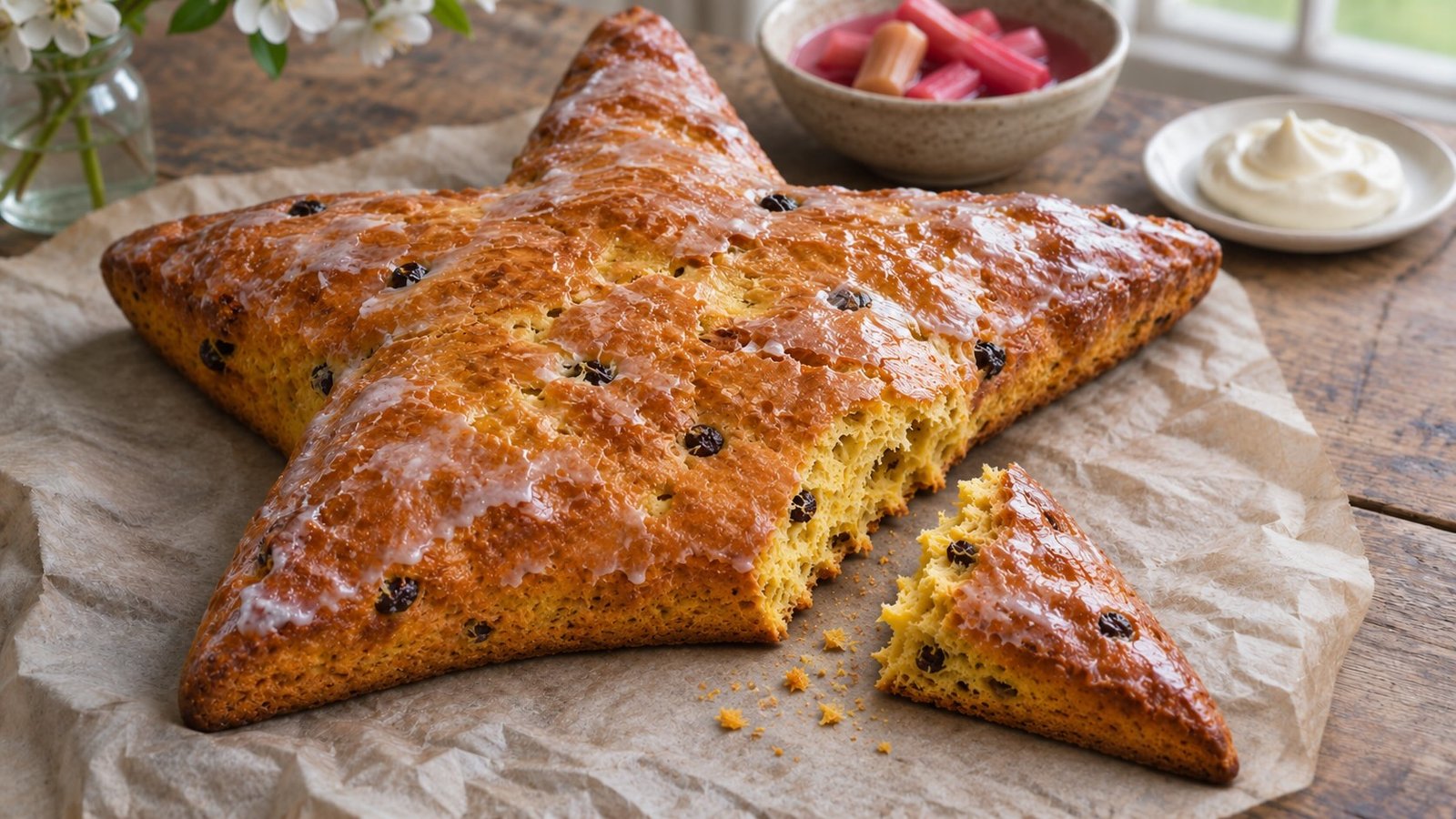
Most Easter cakes ask you to preheat the oven. The old Devizes simnel asks you to put a pan on as well. In the Wiltshire town, bakers made a star-shaped cake packed with currants and lemon peel, with saffron for colour and fragrance. Then they boiled it, baked it and glazed it. You can imagine a visiting baker watching all this and quietly deciding to buy one.
Simnel goes back to medieval breads made with fine wheat flour. The name probably comes from the Latin simila, meaning fine flour. Over time, simnel cakes became associated with Mothering Sunday, the fourth Sunday in Lent, as well as Easter. There’s also a folk tale about Simon and Nell disagreeing over whether to boil or bake their cake. They did both, apparently settling the argument and supplying a wonderfully convenient explanation for the name.
The Wiltshire Museum archive preserves a Devizes recipe that calls for three pounds of currants and two pounds of lemon peel. It also tells the baker to prove the mixture well and use a cloth to firm it up before shaping. Then comes the brief instruction to boil it. How long? The recipe moves straight on to the oven. Whoever wrote it evidently expected the baker to know when to fish out a star.
Elsewhere, simnel took another shape. In Shrewsbury, bakers enclosed a rich fruit cake in a thick, saffron-coloured flour-and-water crust. They boiled it before baking, too. Bury had its own simnel tradition, with nineteenth-century accounts pairing it with bragot, a sweet spiced ale. Today, the familiar Easter version has marzipan in the middle and on top, often with eleven balls for the apostles other than Judas. In Devizes, the star does the decorating.
The flavour is somewhere between saffron bread and a very fruity Easter bun. Currants give each bite a little chew, while the candied peel keeps the sweetness sharp. Try a slice with strong Assam, or pour a dry cider if you’re serving it after lunch. Meanwhile, a spoonful of crème fraîche and some poached rhubarb will turn it into pudding. A sliver of mature Cheddar works nicely with a leftover slice the next day.
Currants contribute some fibre, although the candied peel and glaze make this firmly a teatime treat. A small wedge goes a surprisingly long way, especially if you’ve also put the Easter eggs on the table. The recipe below contains wheat, milk and egg.
Devizes Simnel Recipe
This home adaptation makes two small stars, each serving four. A brief poach keeps the old boil-then-bake sequence, and the smaller stars are easier to lift out of the pan.
For the dough, gather 300 g strong white bread flour, 5 g instant yeast, 30 g caster sugar and 4 g fine salt. You’ll also need 150 ml whole milk, a generous pinch of saffron threads, one medium egg, and 40 g softened unsalted butter. Set out 130 g dried currants and 60 g finely diced candied lemon peel. For the glaze, use 25 g caster sugar and two tablespoons of water.
Warm the milk until steaming, add the saffron and leave it for 15 minutes. Once lukewarm, stir it into the flour, yeast, sugar and salt with the beaten egg. Knead for five minutes, then work in the butter and knead until smooth. Fold in the currants and peel, cover and leave until nearly doubled, about 90 minutes.
Meanwhile, heat the oven to 190°C or 170°C fan and line a baking tray. Divide the dough in two and flatten each piece into a thick disc. Pinch five broad points around each disc to form a star and tuck in any exposed currants. Cover and rest for 15 minutes.
Bring a wide pan of water to a gentle boil. Lower in one star on a wide slotted spatula, poach for 30 seconds per side, then drain and transfer it to the tray. Repeat with the second star. Bake for 25–30 minutes, until deeply golden and at least 93°C in the centre. Meanwhile, heat the glaze ingredients until the sugar dissolves. Brush the syrup over the hot stars, then cool them on a rack before slicing.
Post Comment