Denby Dale Pie and the Art of Feeding a Village
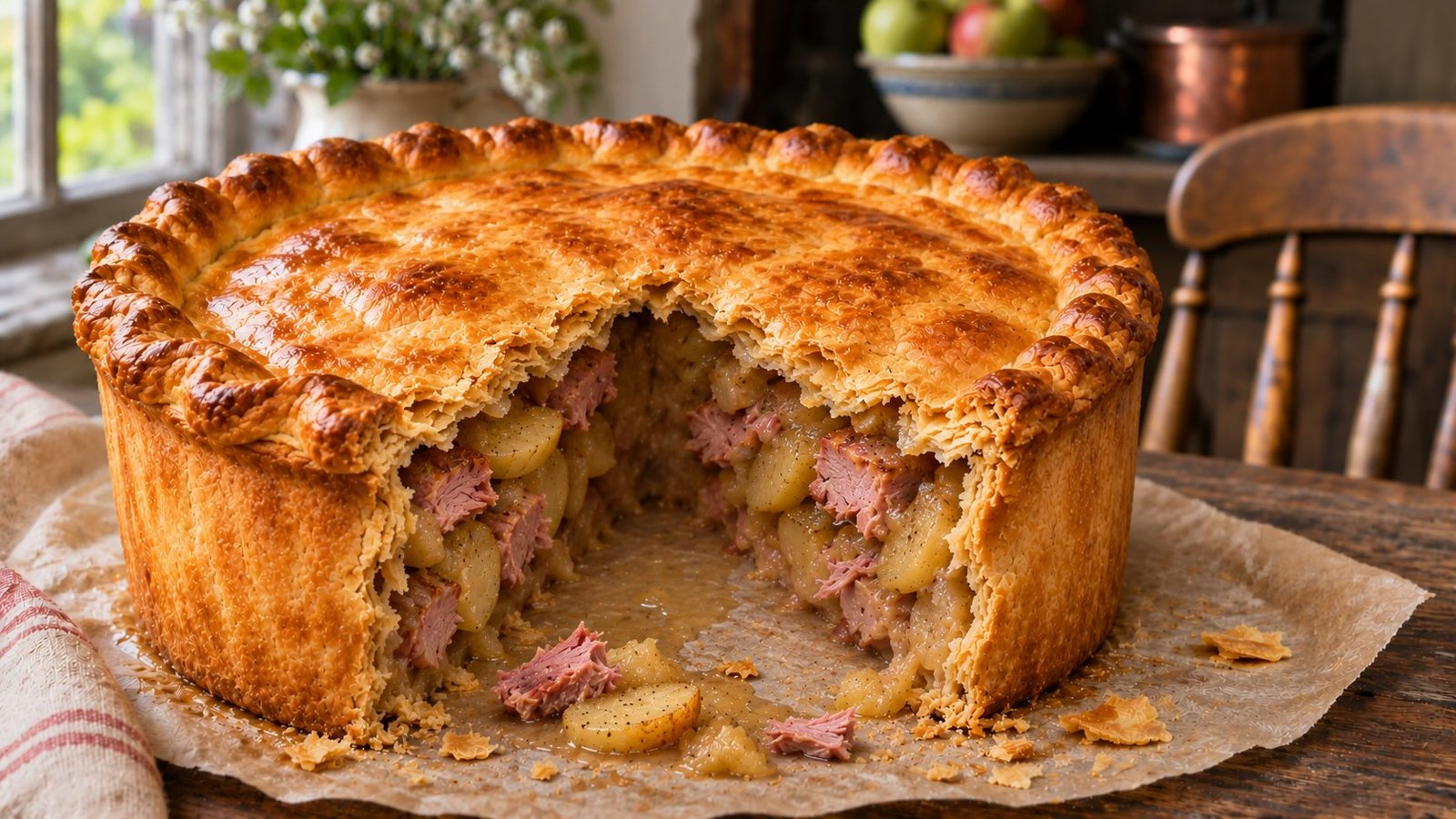
In Denby Dale, West Yorkshire, the news of Wellington’s victory at Waterloo called for a bigger baking dish. According to the village’s Pie Hall, the 1815 celebrations involved two sheep, twenty fowl and half a peck of flour. The pie went into an oven at the Corn Mill and was shared among villagers. Imagine being the person who had to decide whether there was enough pastry left to patch the lid.
Local tradition puts the first pie in 1788 and associates it with George III’s recovery from illness. The Pie Hall’s account describes a game pie baked at the White Hart Inn, though the original filling is undocumented. By 1846, the repeal of the Corn Laws gave villagers another reason to get baking. Flour prices were part of the politics of the day, which made pastry a particularly apt way to mark the occasion.
However, the Golden Jubilee pie of 1887 ran into trouble after standing for days in hot weather. It ended up buried in quicklime, and the village baked a replacement a week later. They called it the Resurrection Pie, which was surely more tactful than calling it the Second Attempt. Later, the 1928 pie raised money for Huddersfield Royal Infirmary, while the 1964 bake helped fund the village’s Pie Hall. The village baked another giant pie for the millennium in 2000.
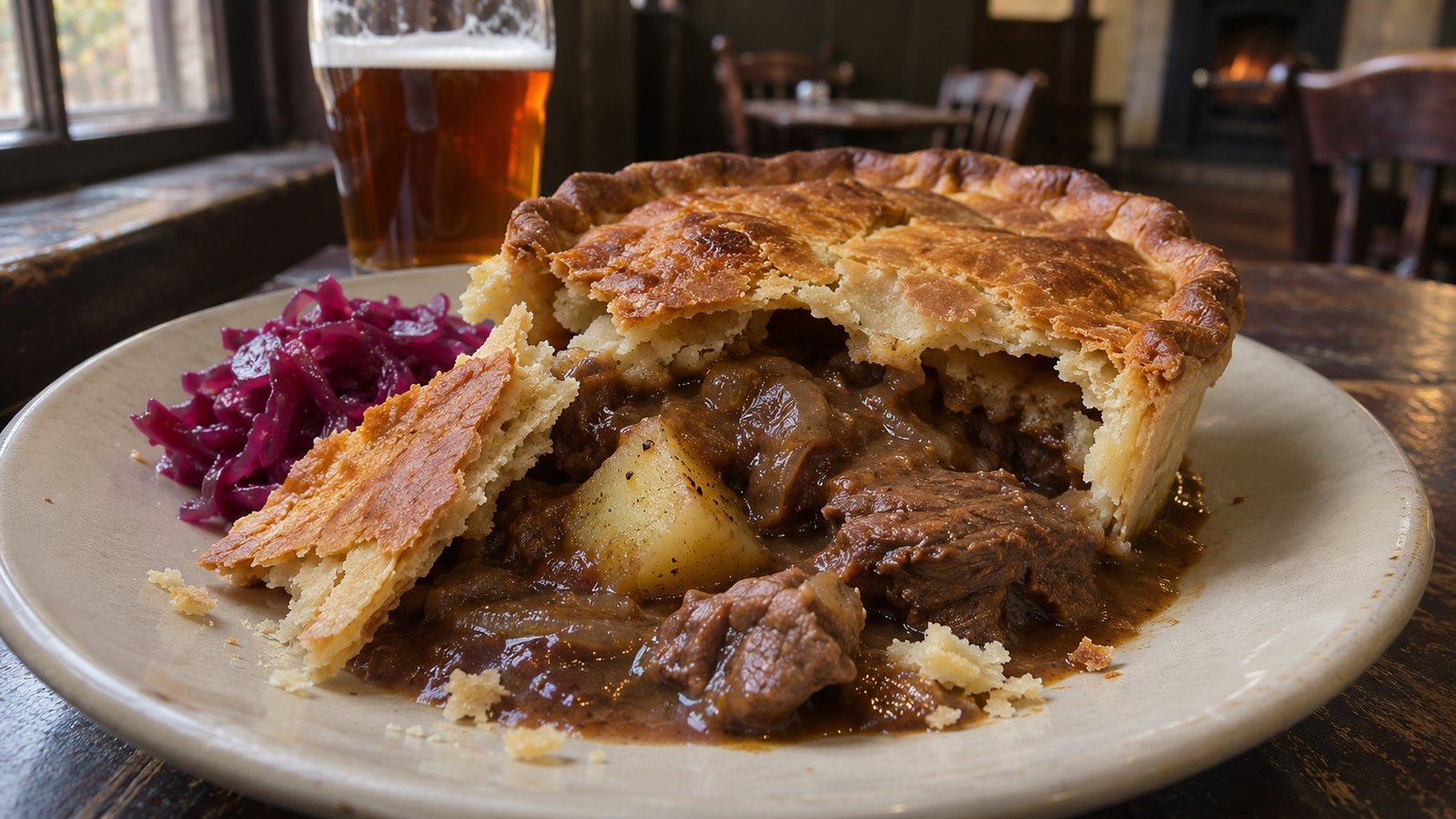
The fillings changed with the occasion. Early accounts mention game, mutton and poultry, while later pies sometimes included potatoes alongside the meat. For a Sunday table, beef and potato make a fitting Yorkshire version, with onions cooked down until they practically disappear. Alternatively, use lamb shoulder for a nod to the Waterloo pie. Either way, the pleasure is in sharing a single dish and seeing who gets the corner with the most pastry.
A Yorkshire bitter has enough malt to sit happily alongside the beef and enough bitterness to cut through the buttery lid. Alternatively, try a dry cider or a glass of unsweetened apple juice. Pickled red cabbage adds a sharp crunch, while steamed greens are good for catching stray gravy. Mushy peas work too, especially if you’re serving the pie for supper and fancy something you’d order at the chippy.
Beef brings protein and iron, while potatoes make the filling substantial enough to serve with a simple side. However, buttery pastry and salty stock can make this a rich meal. Reduced-salt stock gives you more control over the seasoning, and a generous helping of greens adds fibre. The recipe below serves six, which should be enough for a household and a couple of neighbours.
Denby Dale beef and potato pie
For six servings, use a deep 26 cm pie dish. For the filling, gather 700 g diced braising steak, 2 tbsp rapeseed oil, 2 sliced onions and 2 tbsp plain flour. You’ll also need 500 ml reduced-salt beef stock, 1 tbsp Worcestershire sauce, 1 bay leaf and 2 sprigs of thyme. Peel and cut 450 g floury potatoes into 2 cm chunks. Keep salt and black pepper handy.
For the lid, rub 125 g cold cubed butter into 250 g plain flour and a pinch of salt until the mixture resembles breadcrumbs. Stir in 3–5 tbsp cold water, a little at a time, until the dough holds together. Then flatten it into a disc, wrap it and chill for at least 30 minutes. Beat an egg for glazing.
Pat the beef dry and brown it in batches in the oil. Set it aside, then soften the onions in the same pan for about 8 minutes. Stir in the flour for a minute and gradually add the stock, scraping up the browned bits. Return the beef and add the Worcestershire sauce and herbs. Cover and simmer gently for about 1½ hours, until the beef is nearly tender.
Next, add the potatoes and simmer uncovered for 15–20 minutes until just tender and the gravy coats a spoon. Remove the herbs, taste for seasoning and transfer the filling to the pie dish to cool. Meanwhile, heat the oven to 200°C conventional or 180°C fan.
Roll the pastry about 4 mm thick. Dampen the dish rim, lay the pastry over the filling and crimp the edges. Then cut a steam slit and brush the lid with beaten egg. Bake for 30–35 minutes, until the pastry is golden and the gravy bubbles at the slit. Rest for ten minutes before serving.

Post Comment